On Crete, where mountains soar, and the land unfolds into wild gorges, sweeping plains and tranquil meadows, orchids emerge like delicate enchantments of colour and wonder. Seventy species bloom across the island, fourteen of them found nowhere else on earth, each carrying a whisper of myth.
One ancient tale tells of Orchis, a handsome wild youth born of a nymph and satyr, who met his fate during the wild revelry of the Dionysus festival. Drunk and reckless, he attempted to violate a priestess and was condemned to death by Dionysus (the god of wine) himself. Even though his Father begged for mercy, resurrection was denied. Instead, his scattered remains softened in the Earth and blossomed, transforming into the first orchid flower. From this mythic metamorphosis came a lineage of extraordinary beauty, where Cretan orchids appear in an astonishing array of shapes and hues, ranging from deep purples and wine-reds to soft yellows and greens, or intricate patterns of spots or lines.
Some resemble spiders, sawflies, monkeys, butterflies, or curious little creatures of the undergrowth. Others mimic the bodies of female bees, luring males close in a delicate dance of pollination. They thrive in olive groves and forests, on rocky slopes and semi-mountainous areas, or wherever the island’s wildness allows them to spread their roots and rise.
The Ancient Greeks called these plants ‘Satyrion’, believing that the Orchis italica, also known as the Wavy-leaved monkey orchid below, resembled tiny satyrs. They also linked the flowers to Aphrodite, the goddess of love, as well, seeing them as symbols of fertility, beauty and the subtle power of longing. Once added to love potions or used as healing tonics, orchids carried both restorative and aphrodisiac properties. Orchids were later used to treat chest pains, paralysis, TB, gastrointestinal disorders, cholera, boils, piles, muscle pains and more.
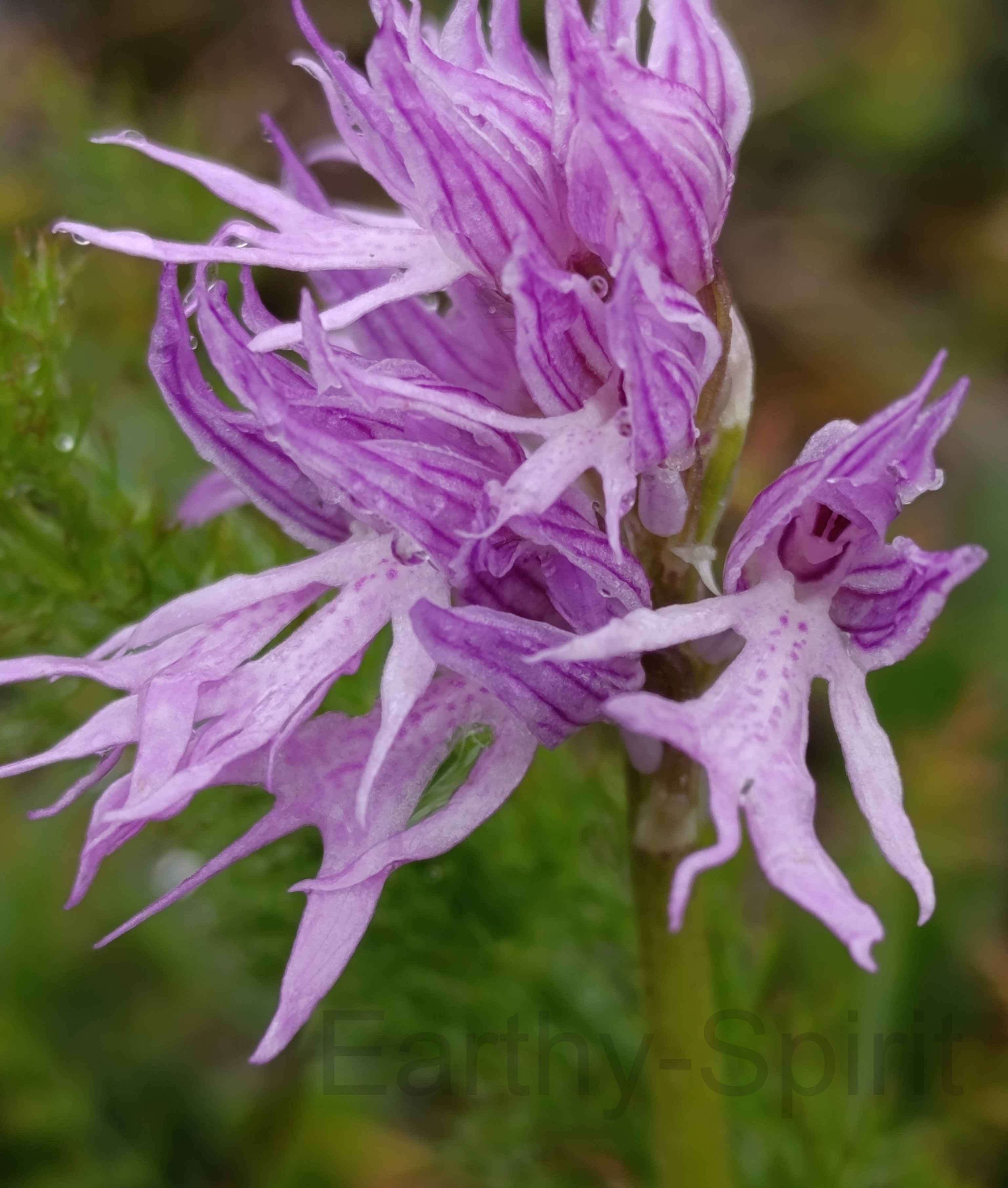
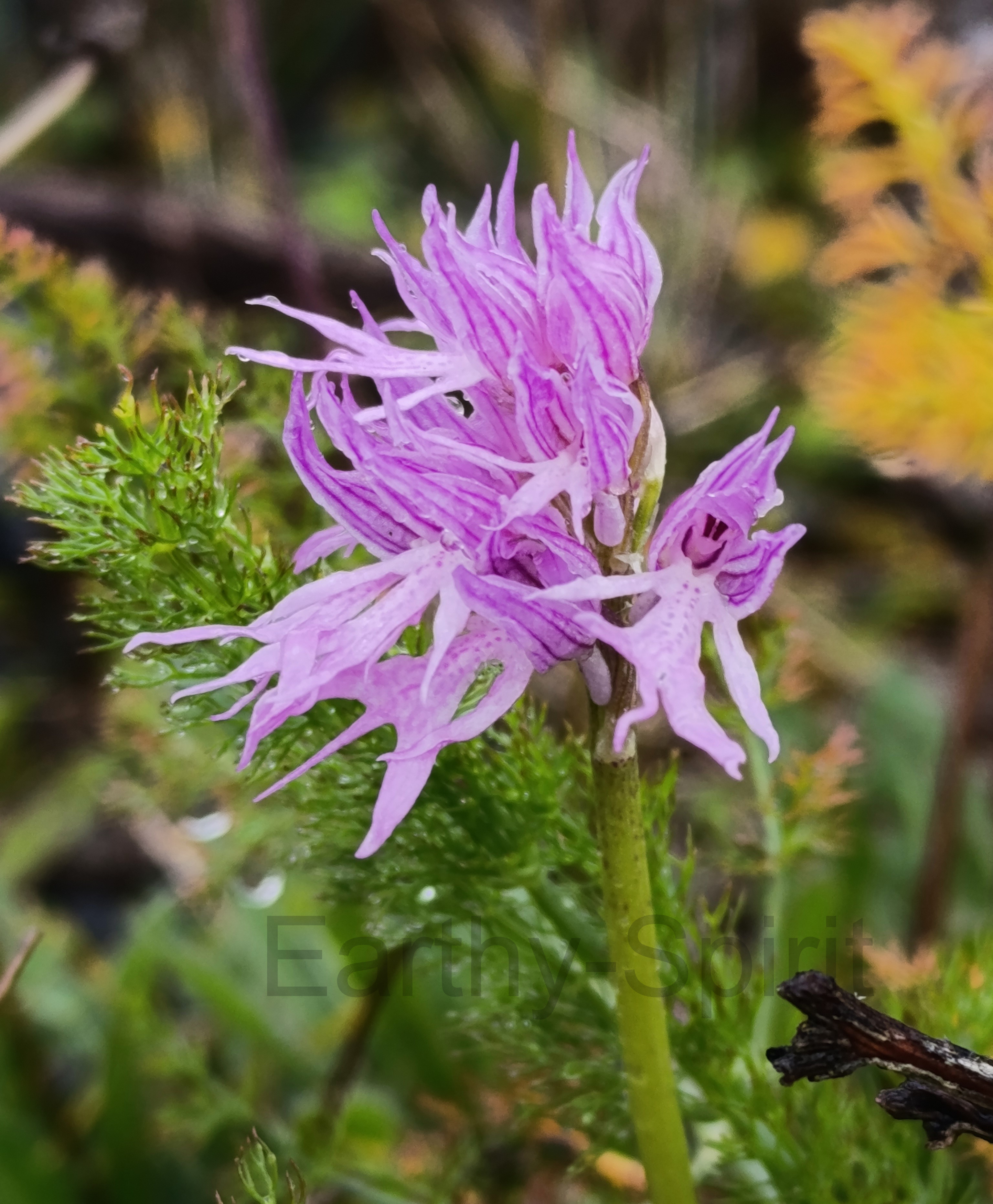
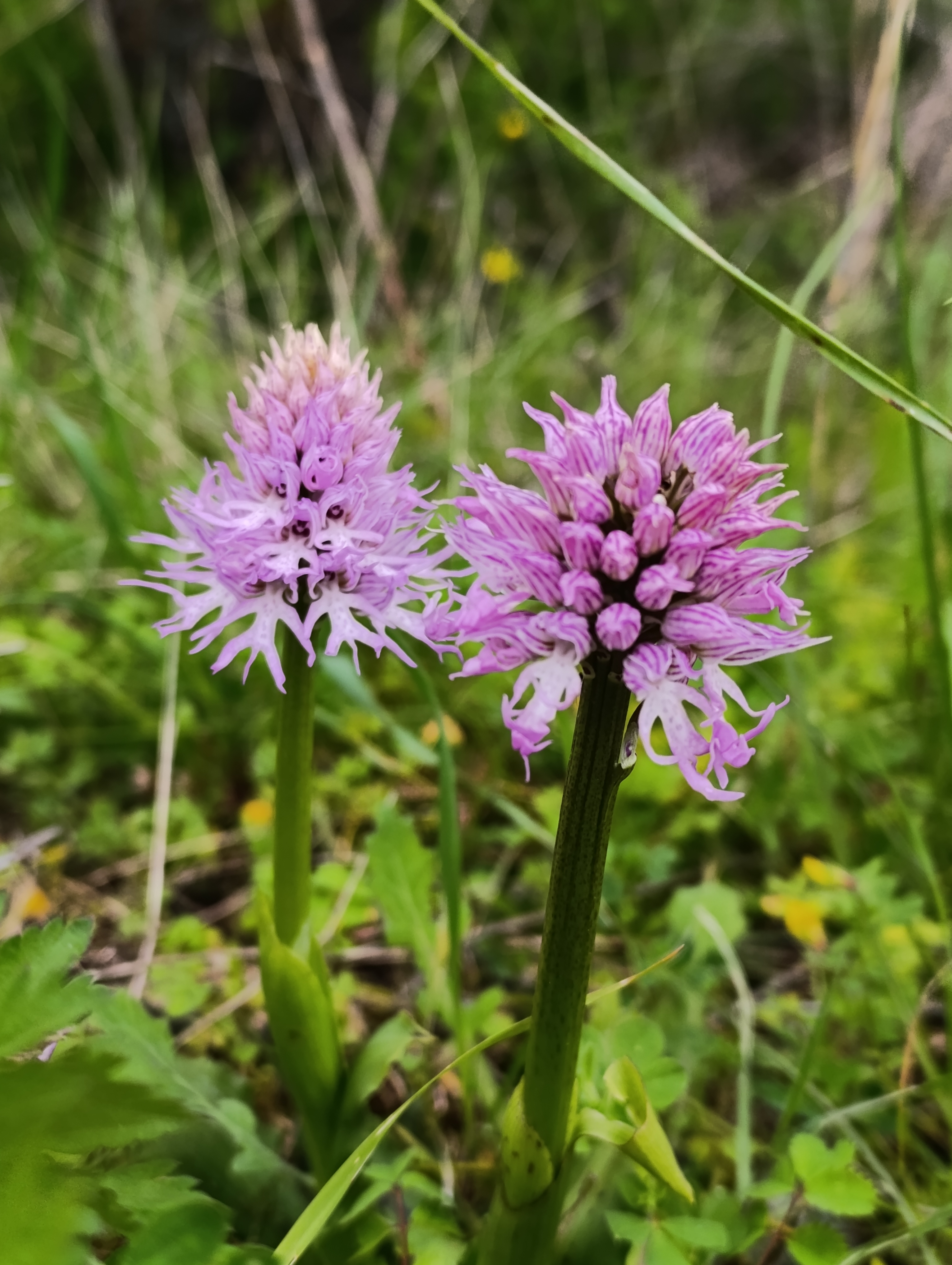
This orchid, Orchis italica, the wavy-leaved monkey orchid, also called the naked man orchid, forms rounded or pyramid-shaped spikes tightly packed with flowers. Their colours range from soft white to deep pink, each bloom shaped like a tiny satyr or monkey, complete with a smiling face, body, limbs, and a playful tail or phallus. The upper petals and sepals gather into a hood with pointed, striped, ‘ears’, giving the plant its unmistakable character. At the base, wavy-edged leaves form a rosette, sometimes marked with dark spots. This species thrives across the Mediterranean, especially in pinewoods, grasslands, and along the edges of olive groves and fallow fields.
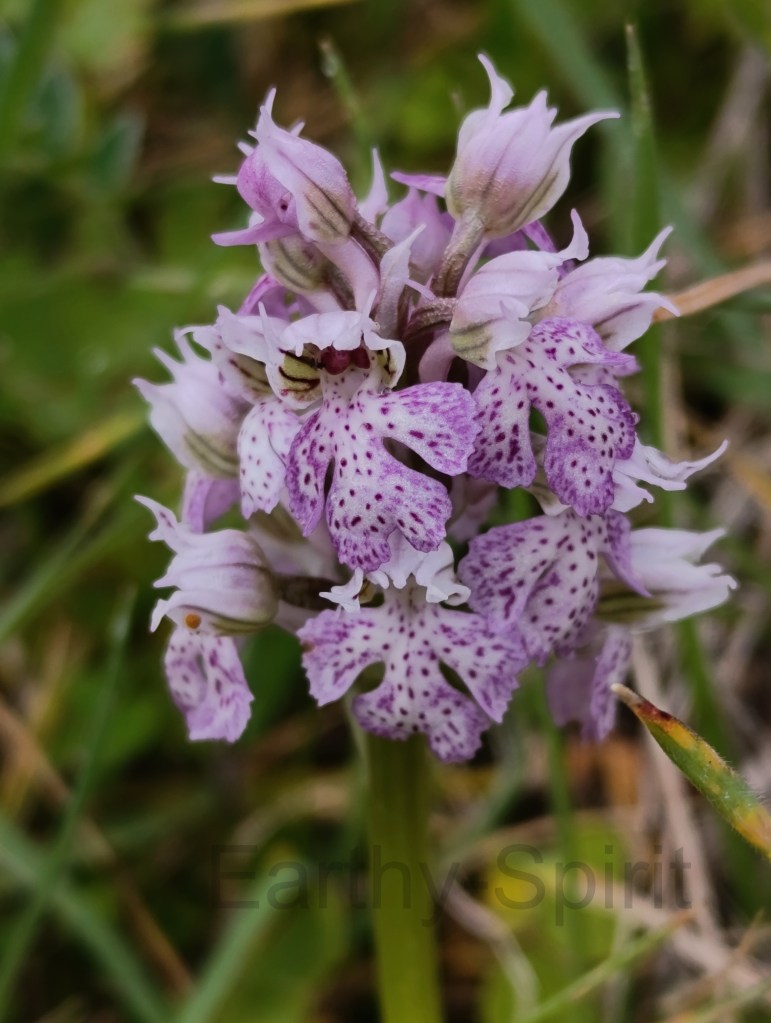
Orchis lactea, the milky orchid, carries white to pale pink flowers dusted with dark pink spots. Its three-lobed lip has gentle wavy edges, and the sepals are often striped with green. The oval to lace-shaped leaves form a basal rosette, and the plant blooms from February to April. Growing to 10 to 20 cm tall, it is native to the Mediterranean, Greece, Turkey, and parts of North Africa, favouring grassy meadows, open forests, low scrubland, and the margins of olive groves.
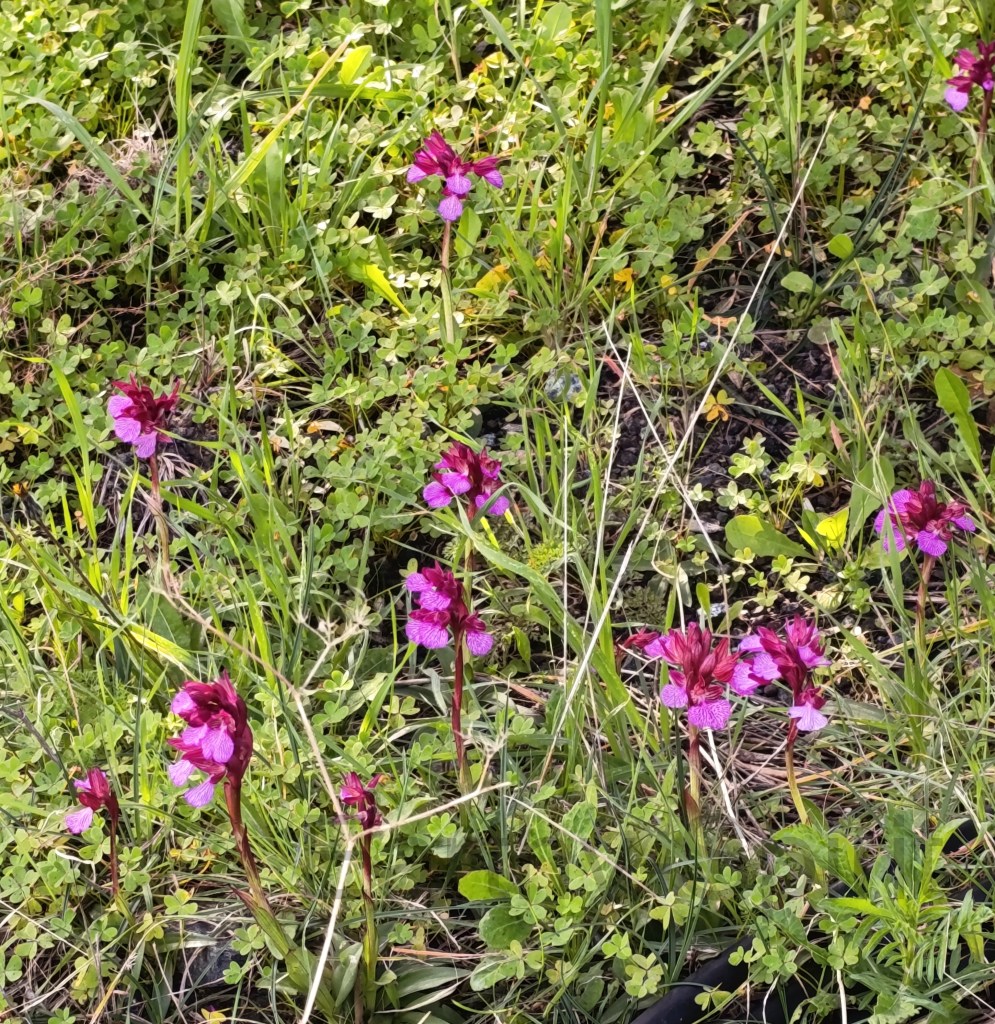
The butterfly orchid, Orchis papilionacea ssp. Heroica below unfurls flowers that resemble a butterfly in flight from March to June. The sepals and petals are usually darker than the lip, veined in deep red, while the lip itself is paler with pink veins and soft spotting. Its blooms gather into a loose spike, and the plant grows in rocky places and low scrub across Europe and North Africa.
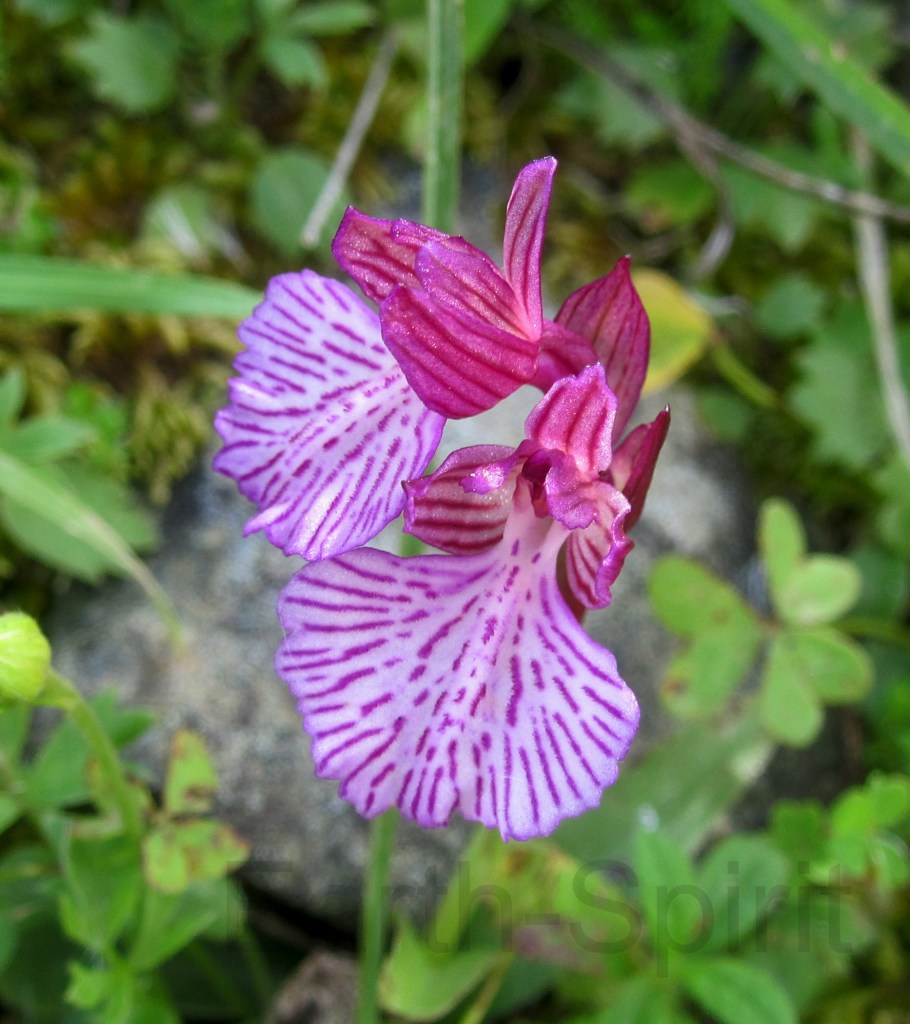
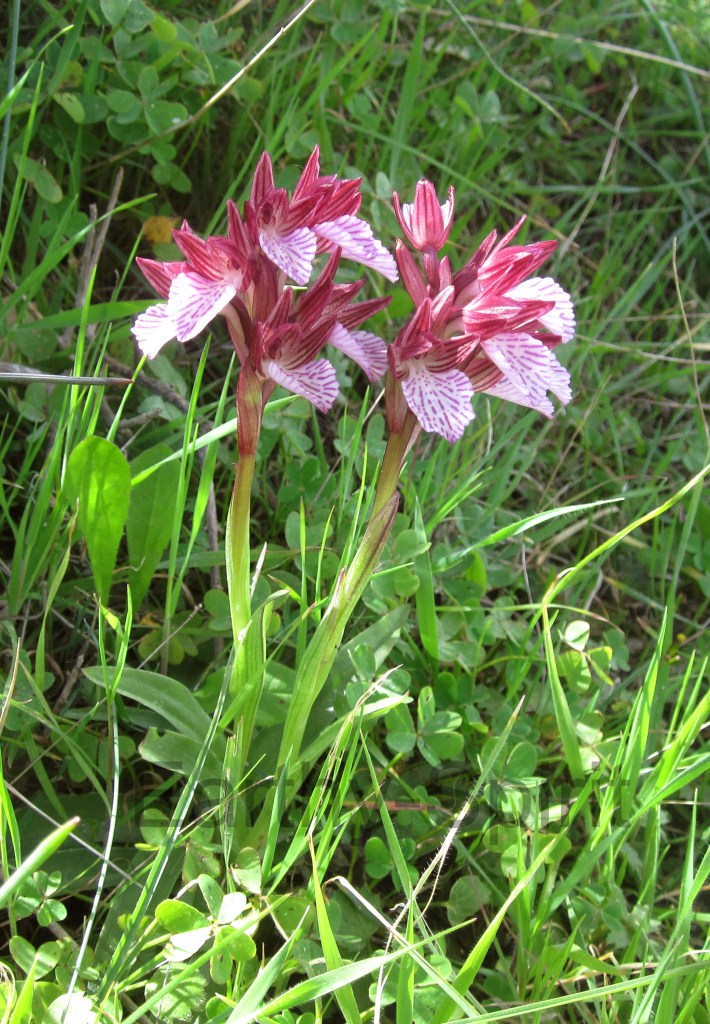
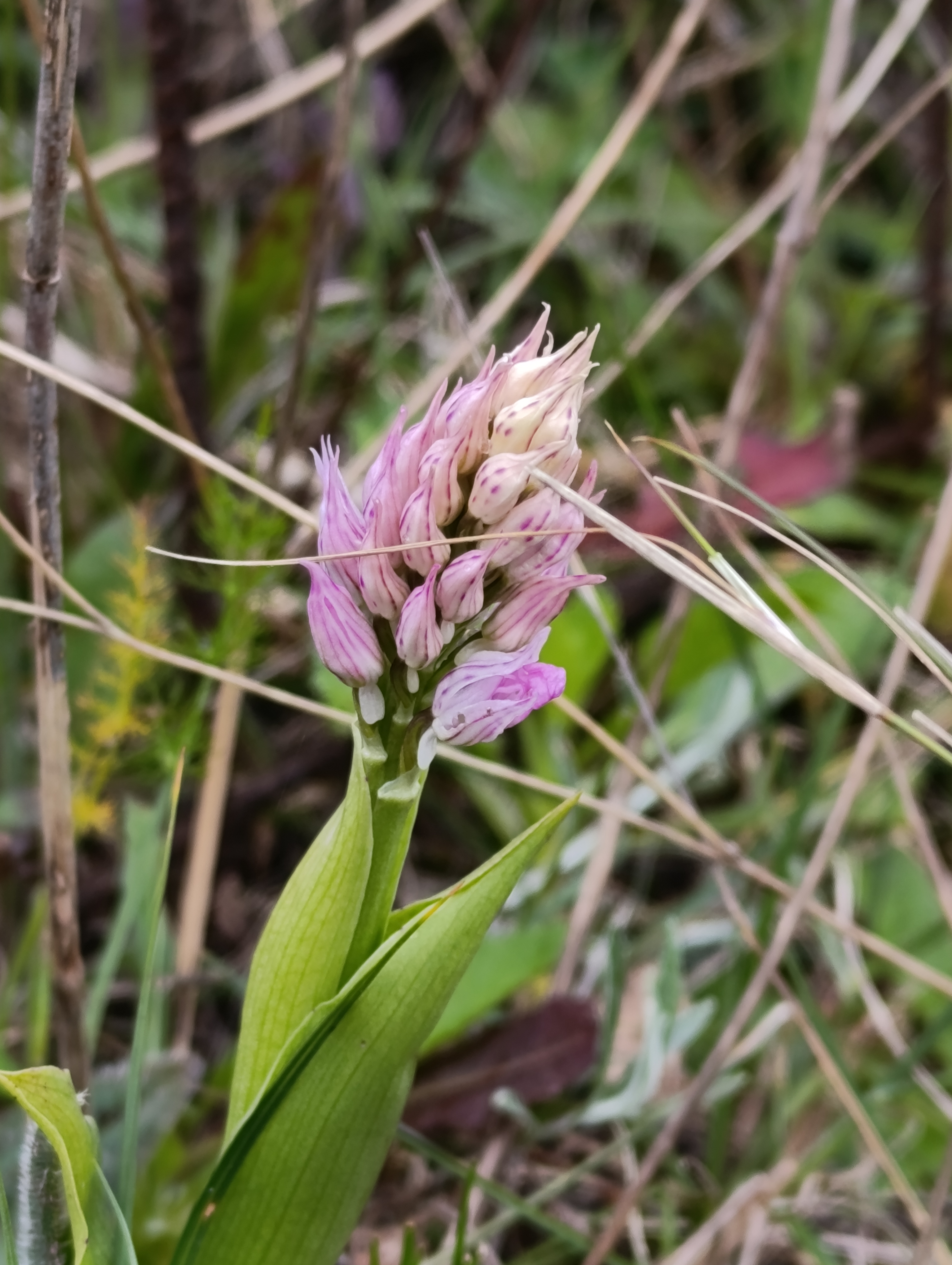
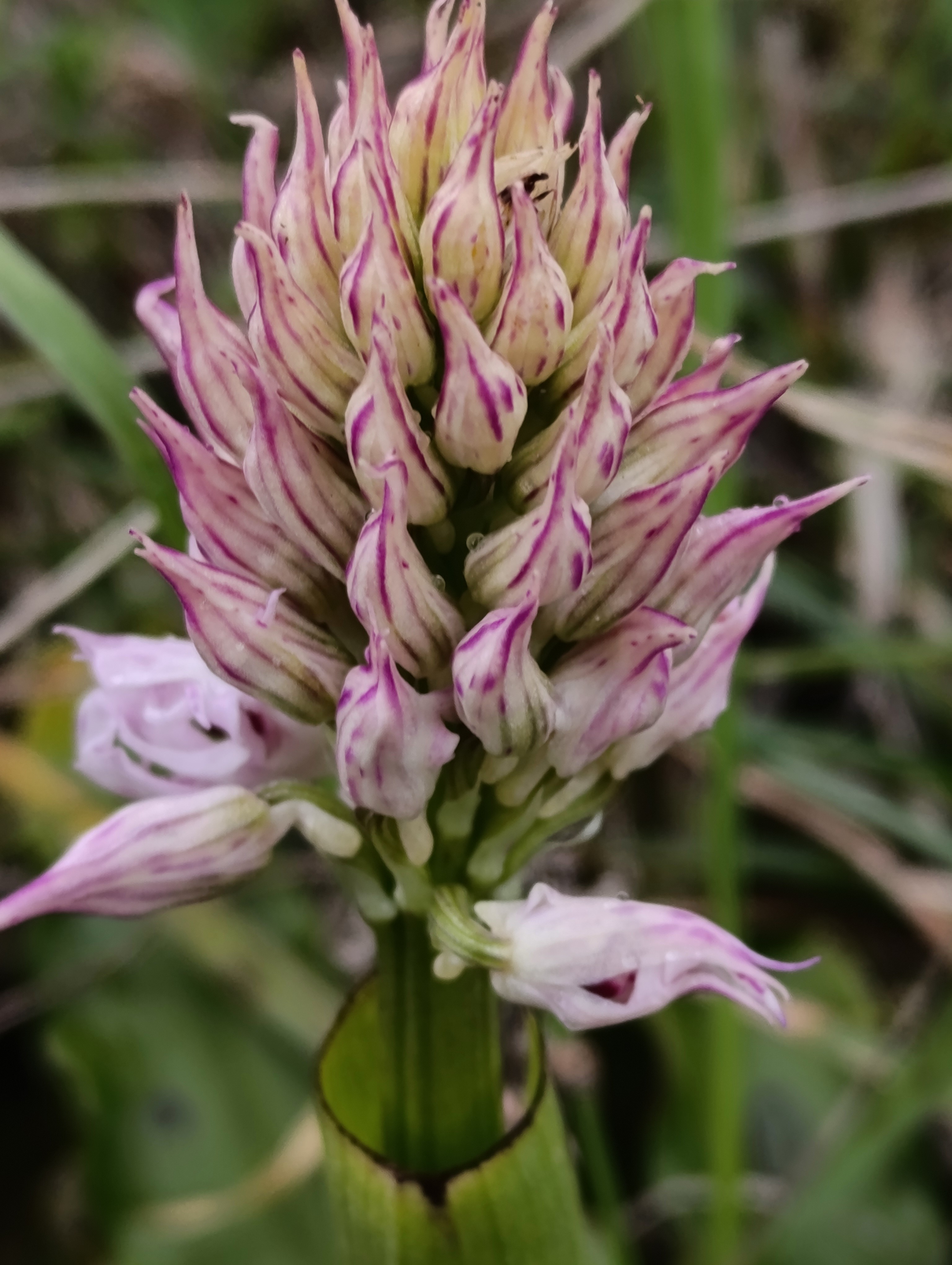
An orchid, opening its first blooms in spring, within the undergrowth.
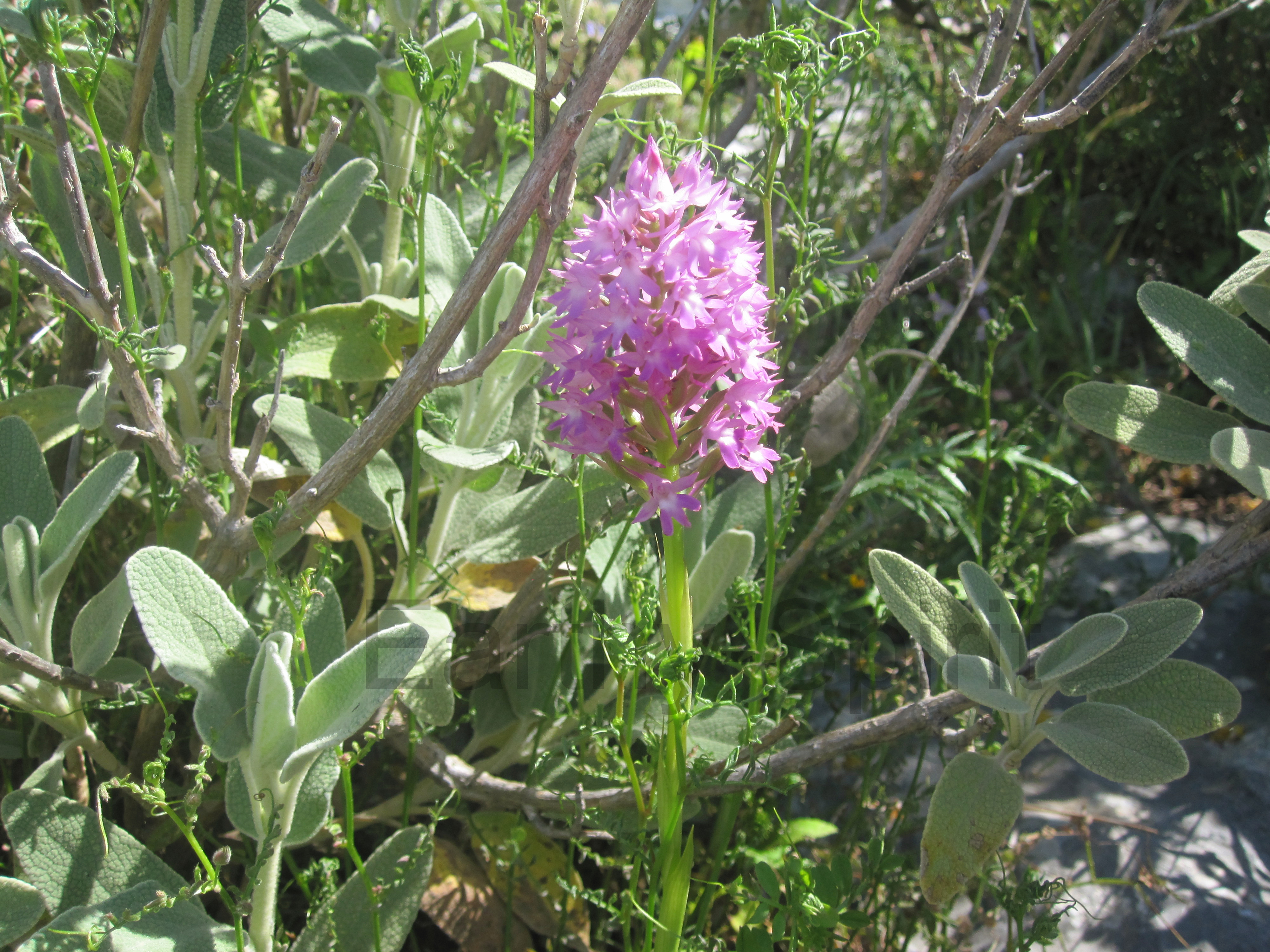
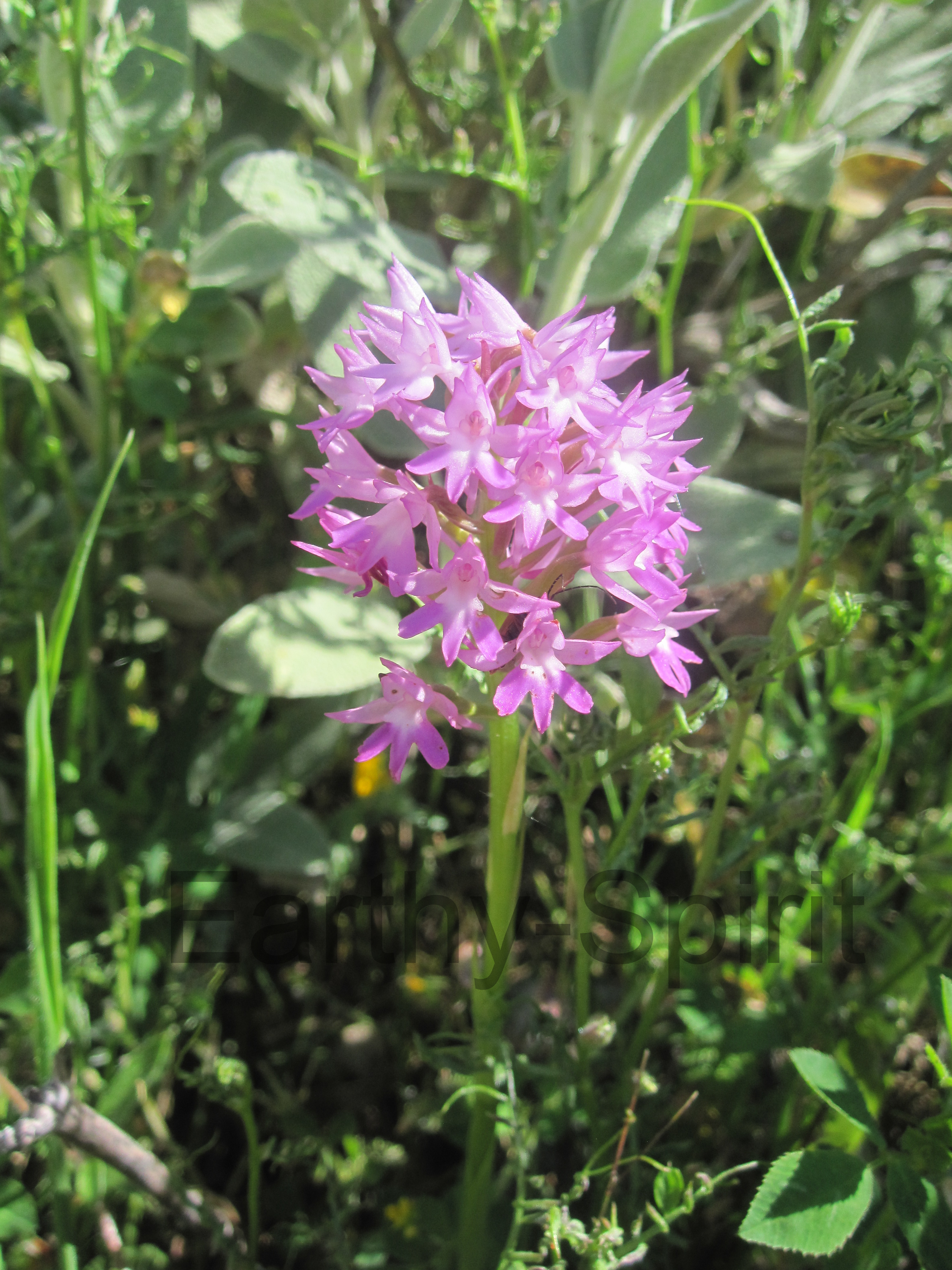
The Pyramidal orchid, Anacamptis pyramidlis above, is a familiar sight in central and southern Europe. Its pyramid-shaped flower spike forms a dense cluster of white, pale pink to purple blooms on a slender stem 15-40 cm tall. The upright lance-shaped leaves often wither before flowering, although smaller leaves continue up the stem. It grows in scrubland, meadows and open grasslands.
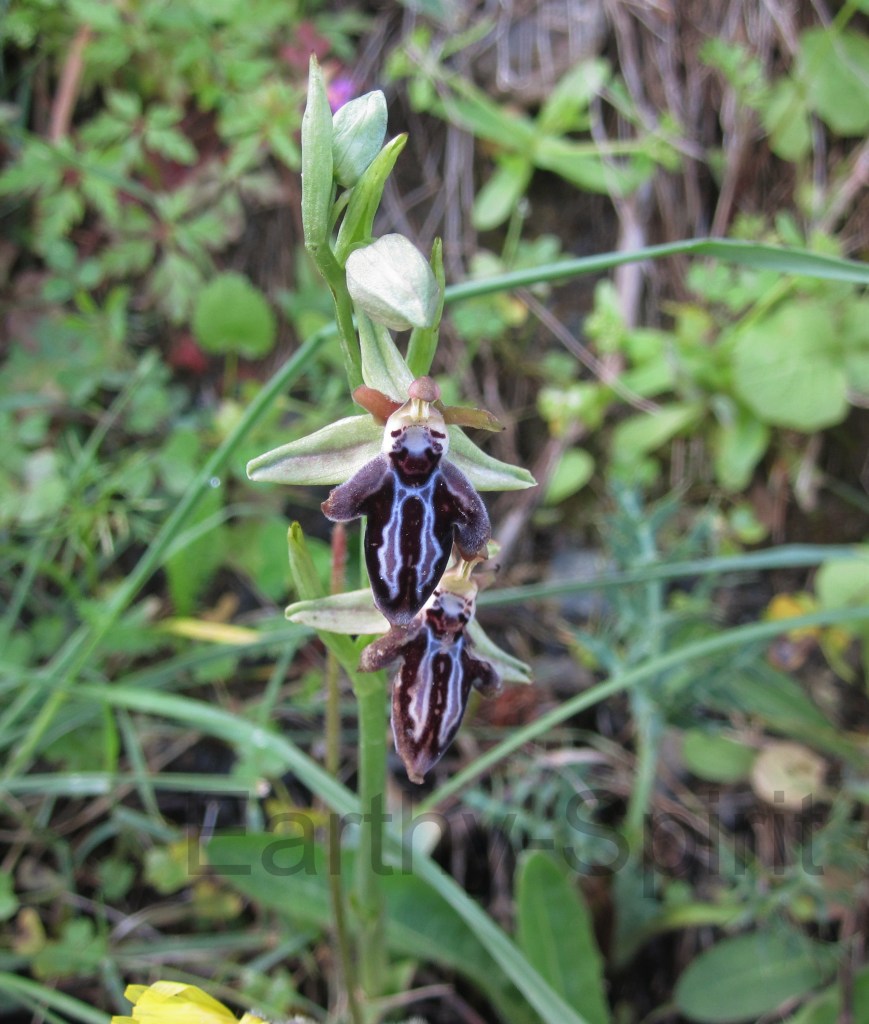
The Grecian spider orchid, Ophrys spruneri, is a rare and striking species. Its flowers mimic the deep red to mauve body of a spider, marked with a metallic blue ‘H’ in the centre. Narrow petals range from red to green, and the pink sepals are darker beneath. Native to Greece, Crete, and the Ionian islands, it grows in scrubland and among olive groves. Its leaves are oblong and tinged with purple.
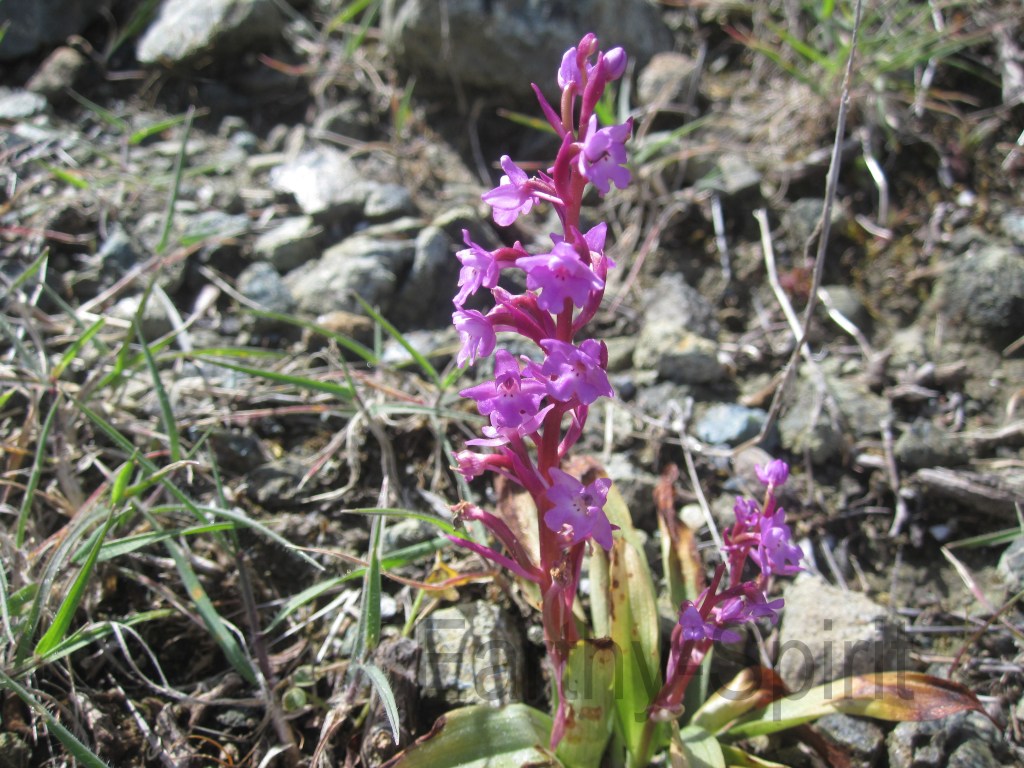
Orchis quadripunctata, the four-spotted orchid above, is a low-growing species reaching 5-40cm. Its dark red stem supports white to pink flowers, with a three-lobed lip, paler at the base and marked with up to four deep purple spots. At ground level, a rosette of oblong to narrow ovate leaves anchors the plant.
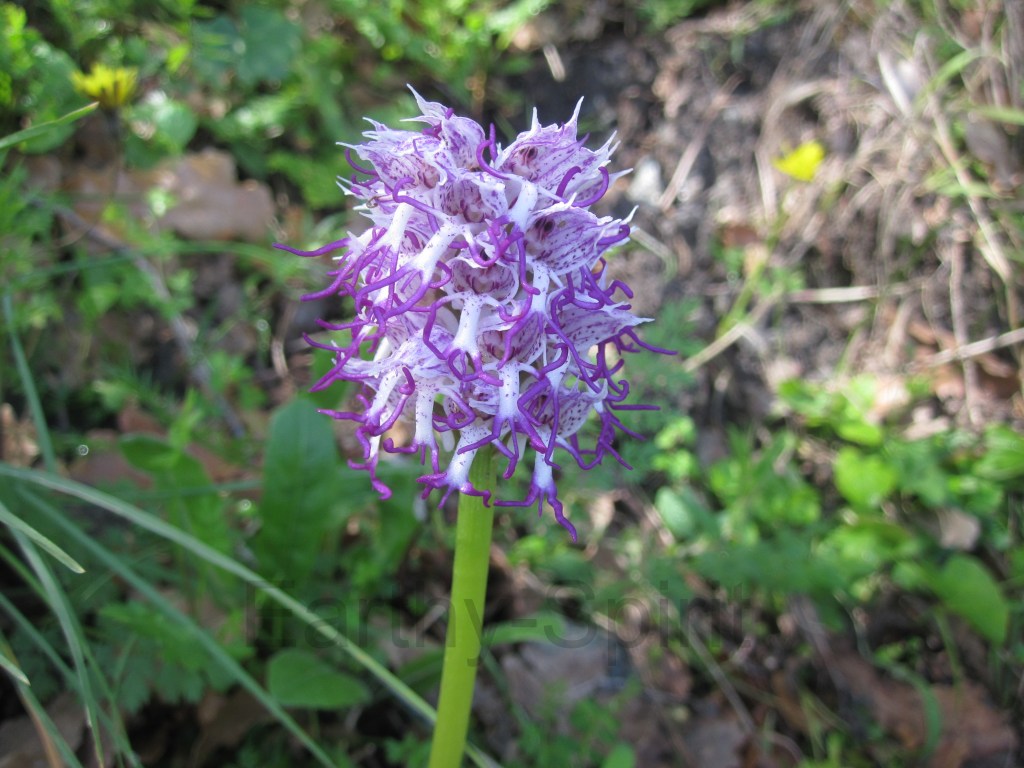
The monkey orchid, Orchis simia, shares a family resemblance with Orchis italica, and the two are thought to hybridise in the wild. Its white flowers, tinged pink at the edges, form delicate ‘limbs’ that resemble a tiny monkey with a tail, while the sepals and petals create the impression of a head. This rare species grows in scrubby thickets and open woodland.
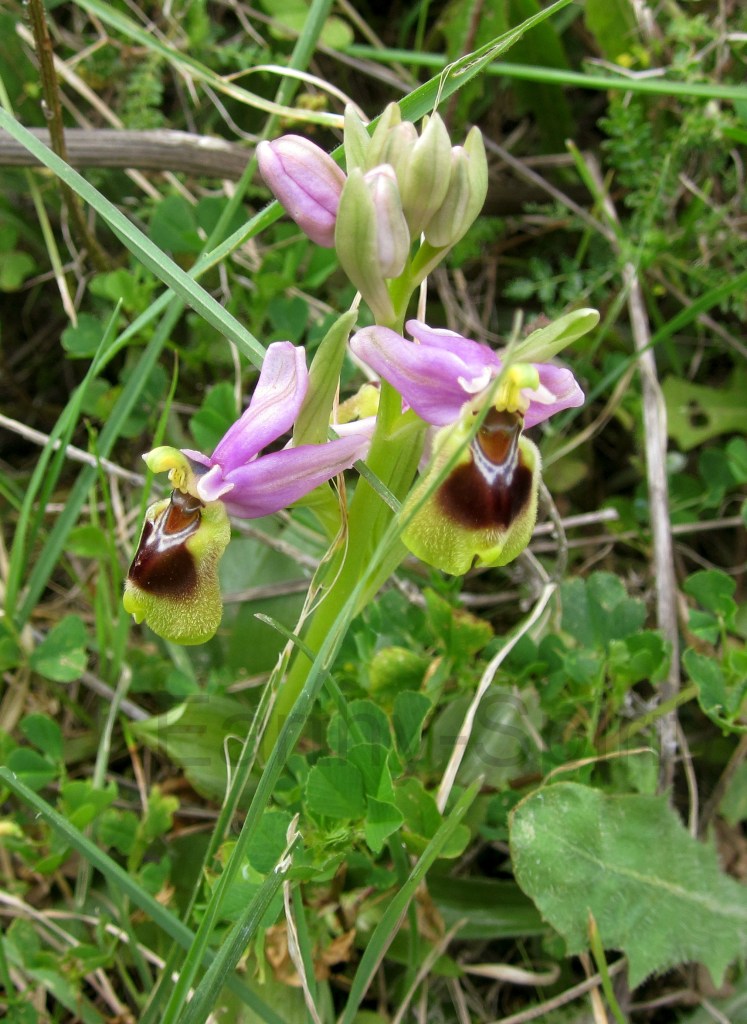
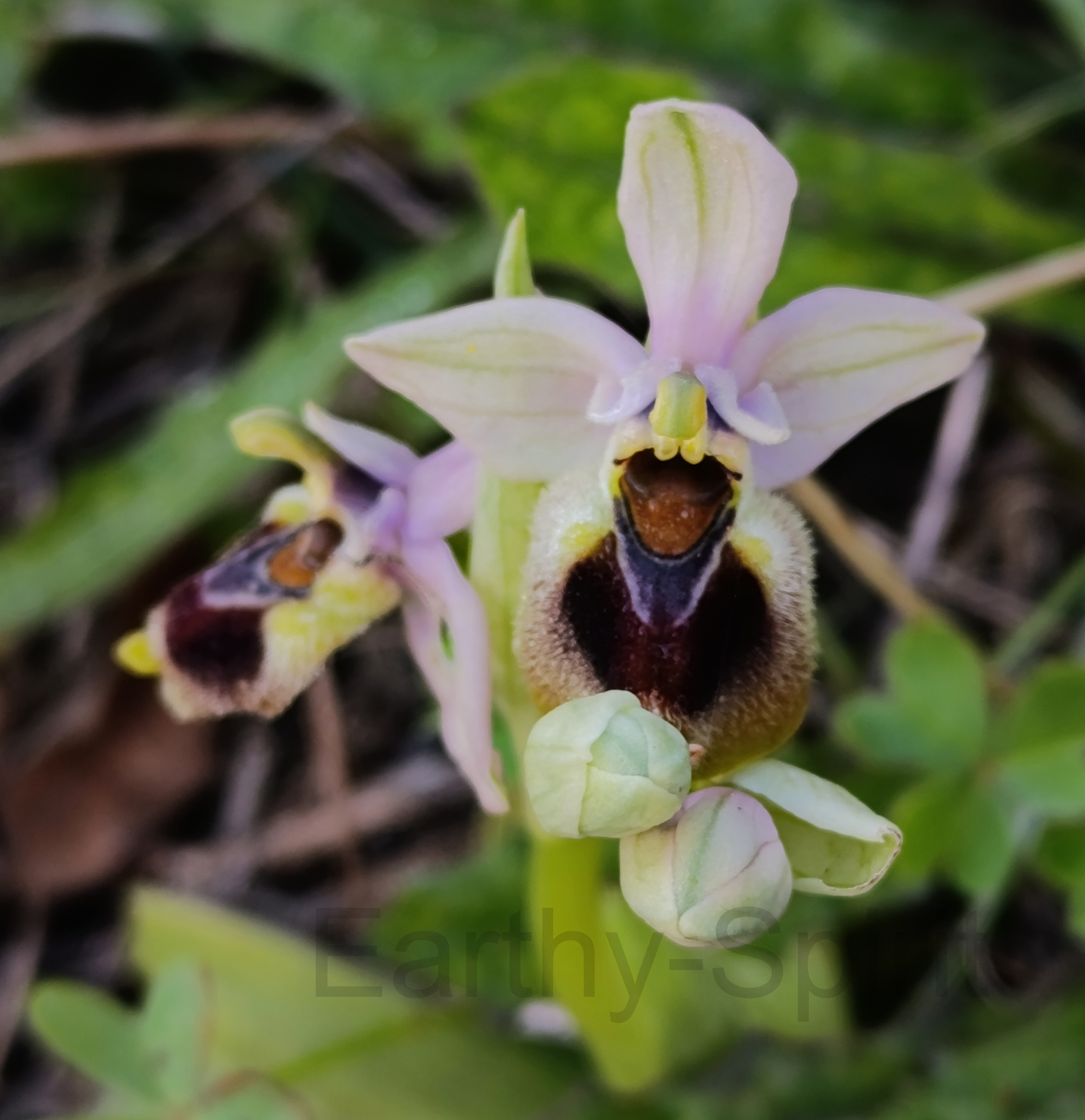
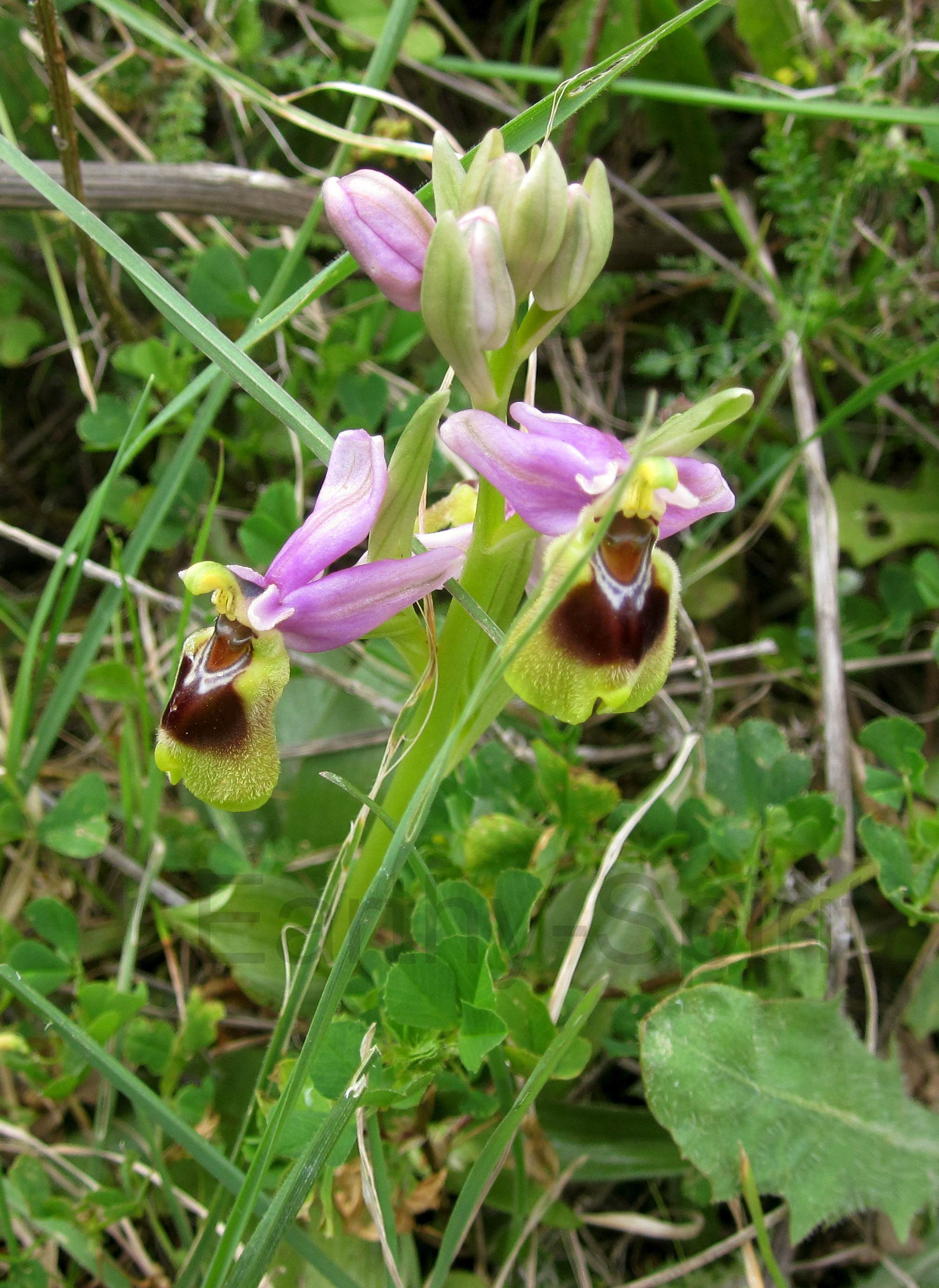
The sawfly orchid, Ophrys tenthredinifera, produces flowers that imitate a female sawfly—along with its shape, colour, and even scent—to attract pollinating males. The lip is dark brown, edged with yellow, and framed by pink sepals and petals; the plant often carries 10–20 blooms in a single inflorescence. The name Ophrys, meaning “eyebrow,” refers to the hairy fringe on the lip. It is native to the Mediterranean and parts of North Africa.
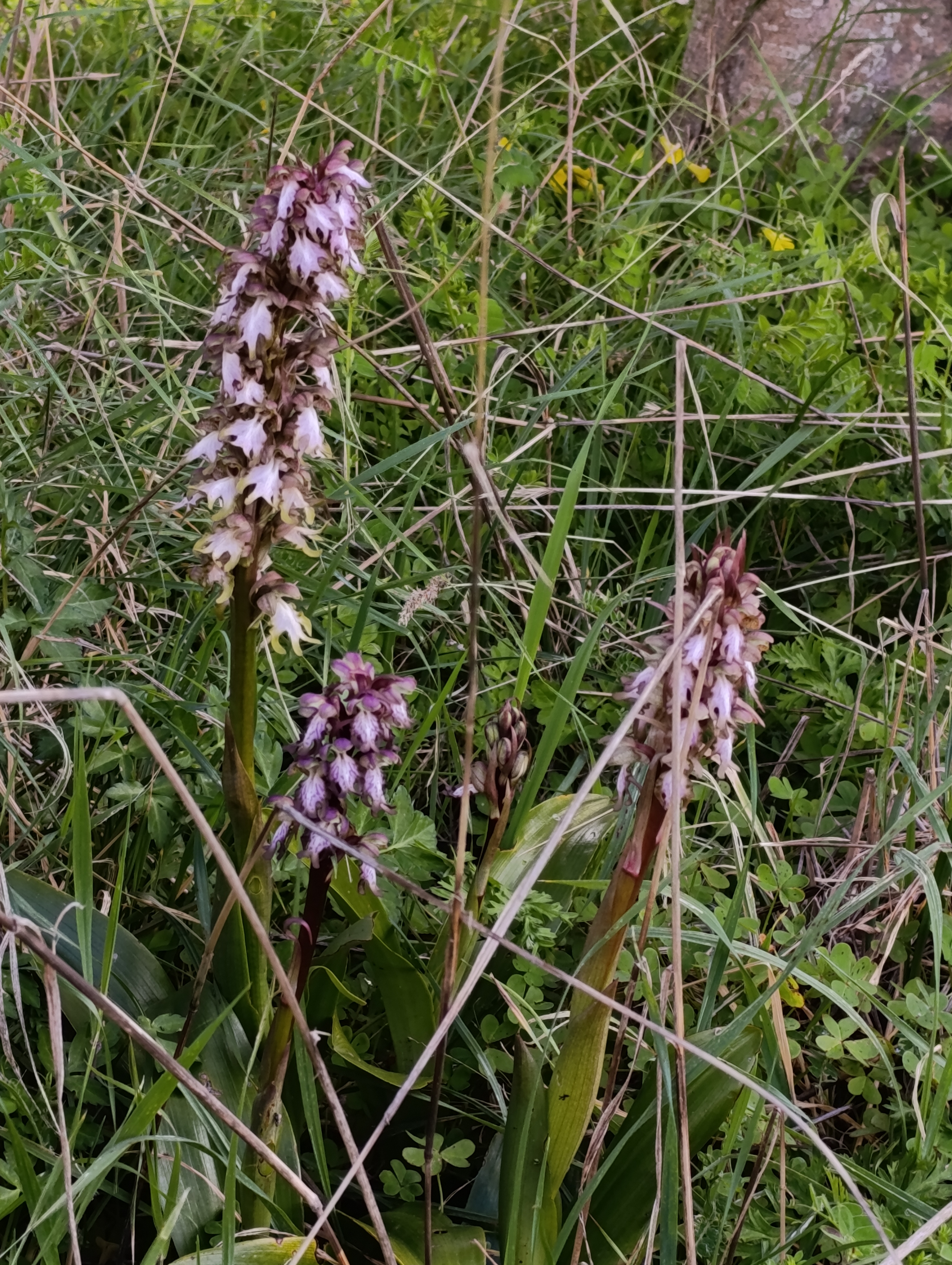
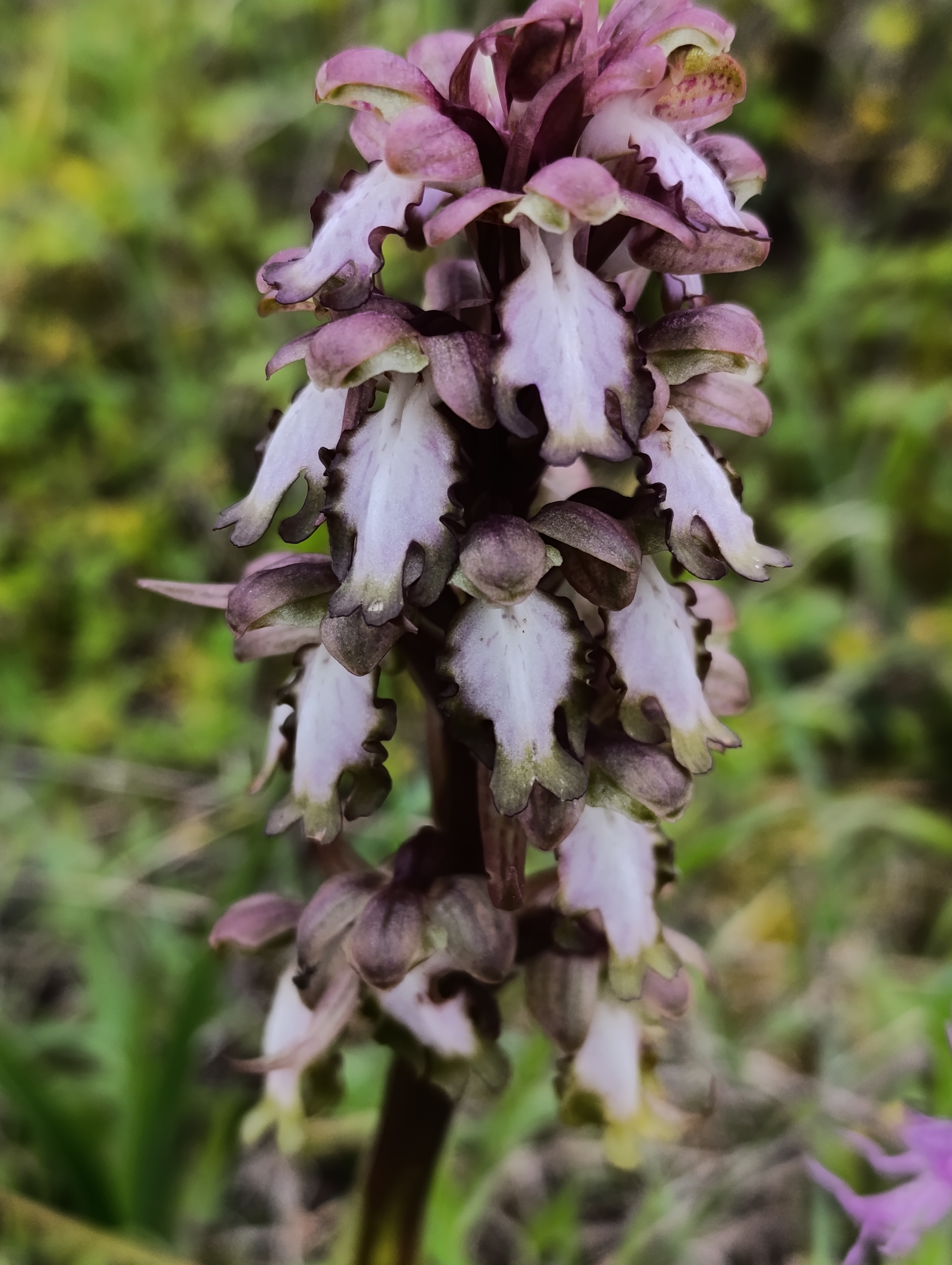
Robert’s giant orchid, Barlia robertiana, growing at the edge of a grassy olive grove, pictured above.
Endemic Orchids of Crete
In ancient Greece, orchids were once seen as gifts from the gods; plants of mystery, beauty, and hidden power. Crete, with its rugged mountains and shifting light, is home to several species found nowhere else on Earth.
Cephalanthera cucullata — the hooded orchid, bearing 3–10 white flowers shaped like tiny caps.
Himantoglossum samariense — the rare strap‑tongue orchid, with widely spaced spikes of 12–20 intricate flowers.
Epipactis cretica — another Cretan rarity, carrying up to 20 green‑red ovate flowers along its stem.
Across the world, more than 28,000 orchid species are known—one of the most diverse plant families on Earth. Yet around 860 of these species are now considered vulnerable or endangered, reminding us how delicate and precious these wild beauties truly are.
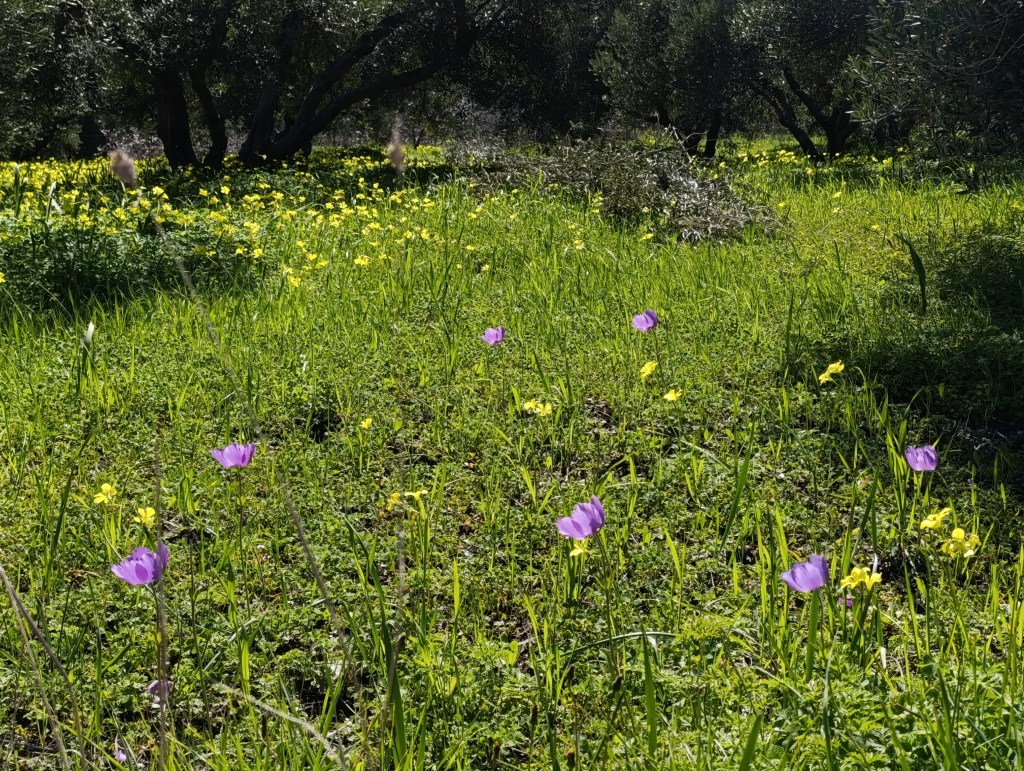
Wildflowers of Crete in Spring.
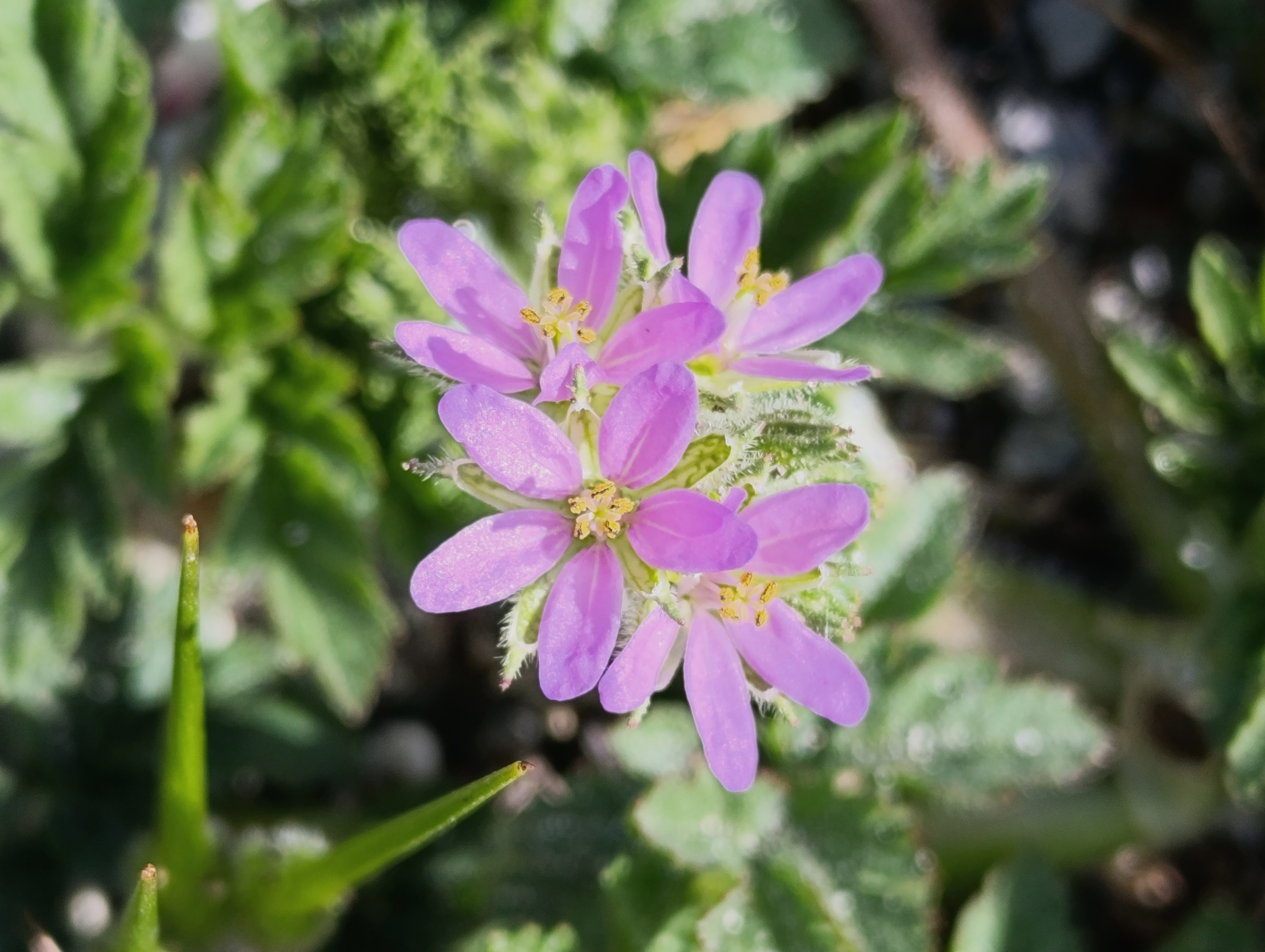
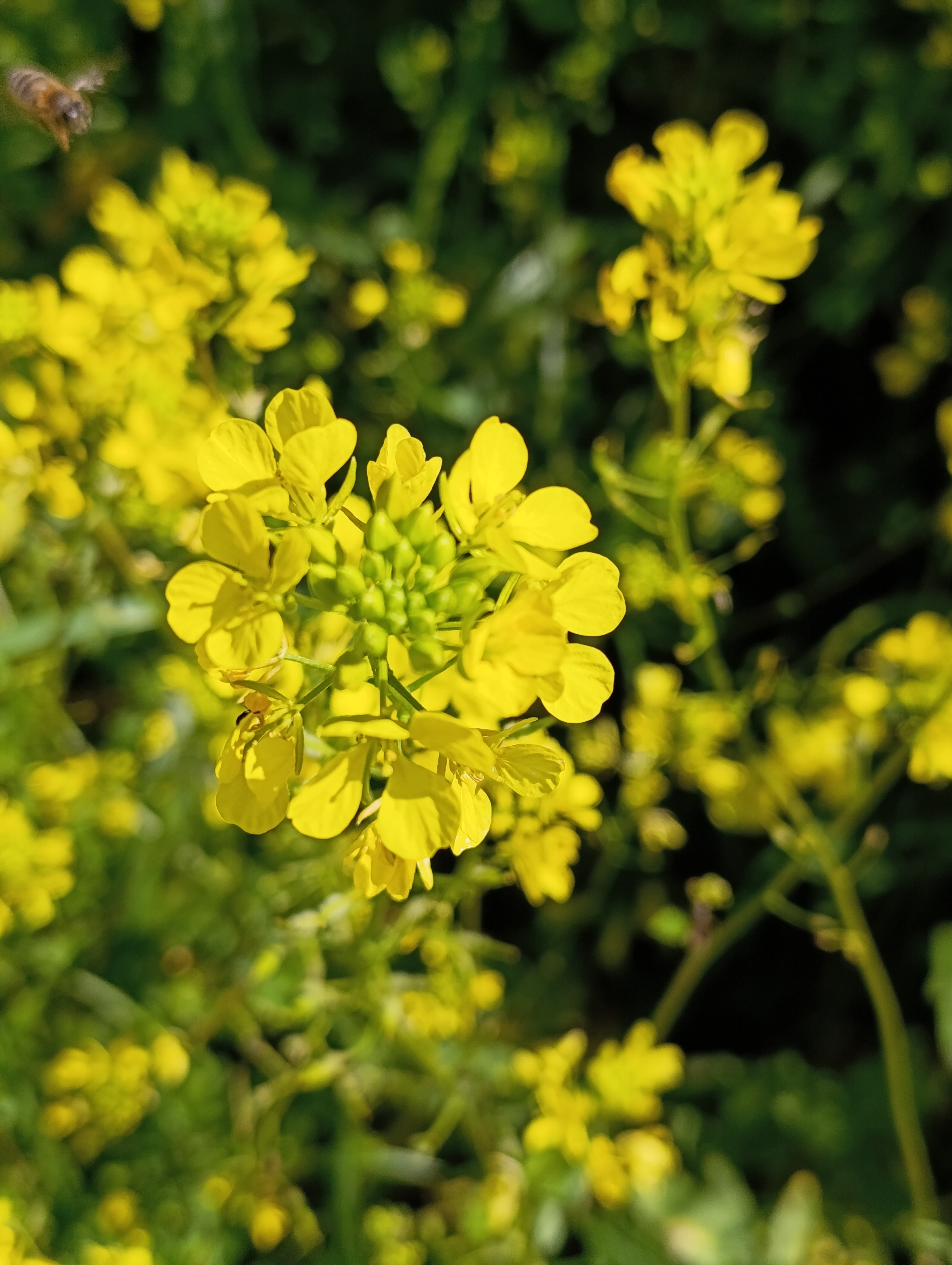
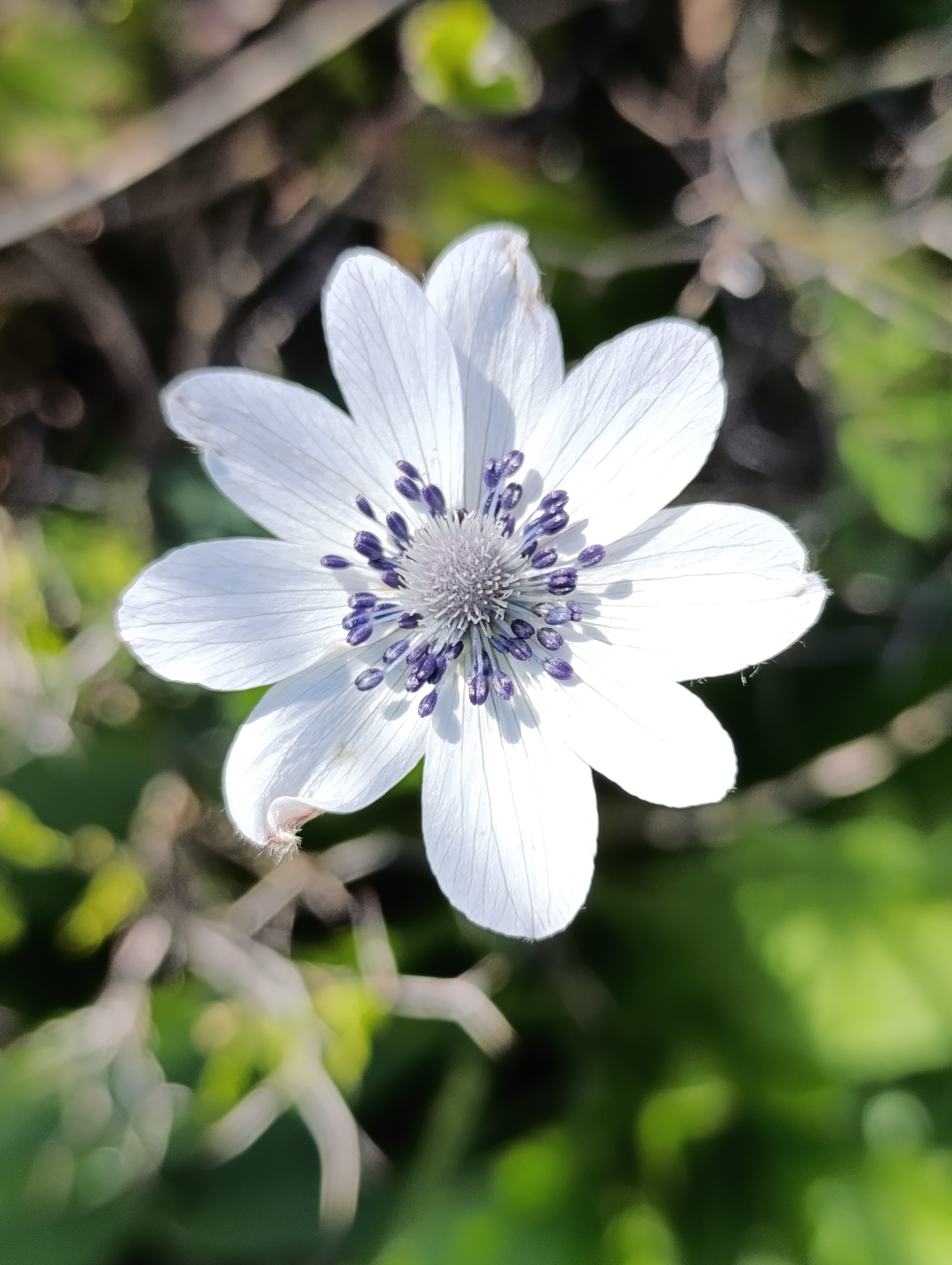
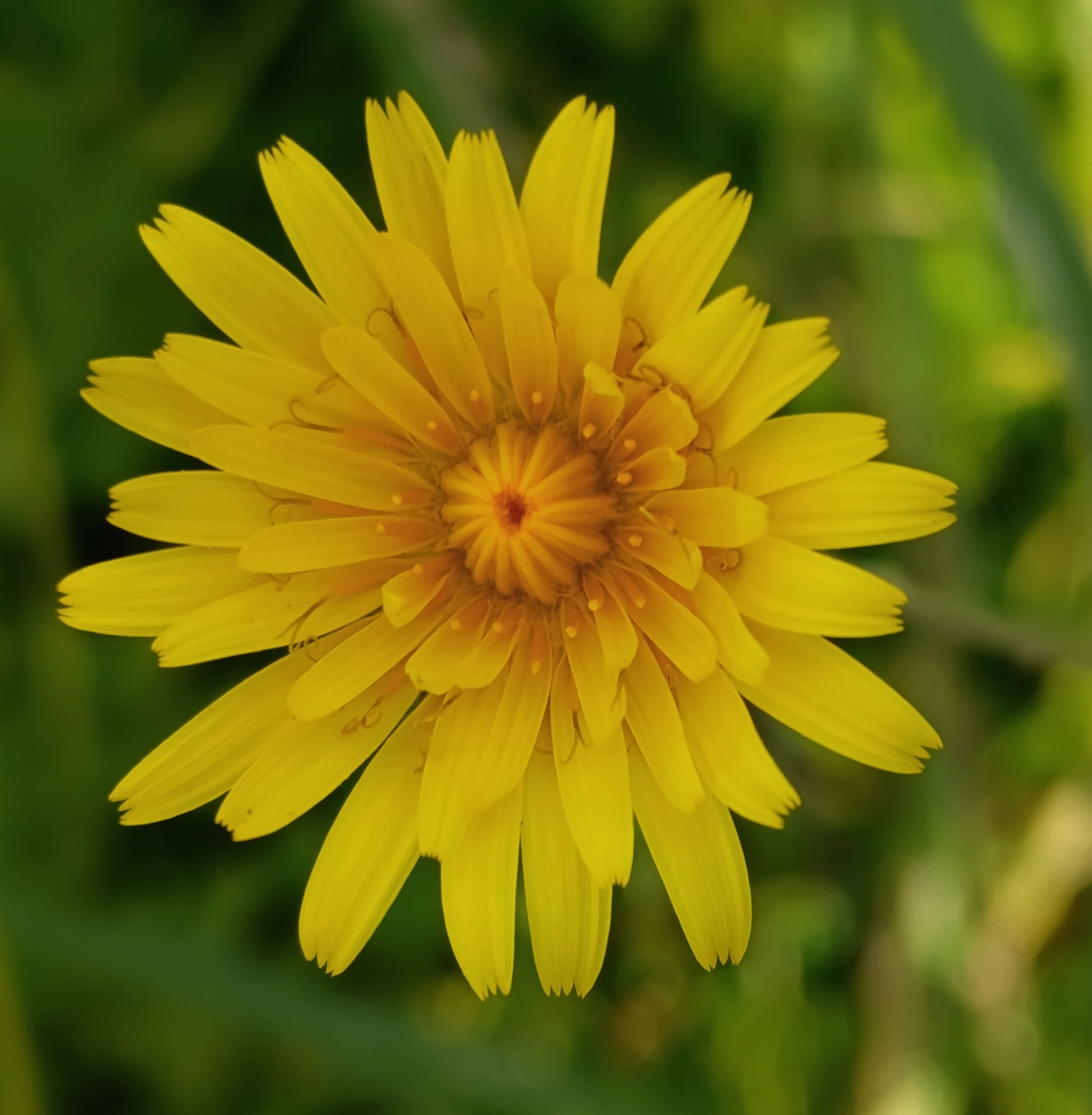
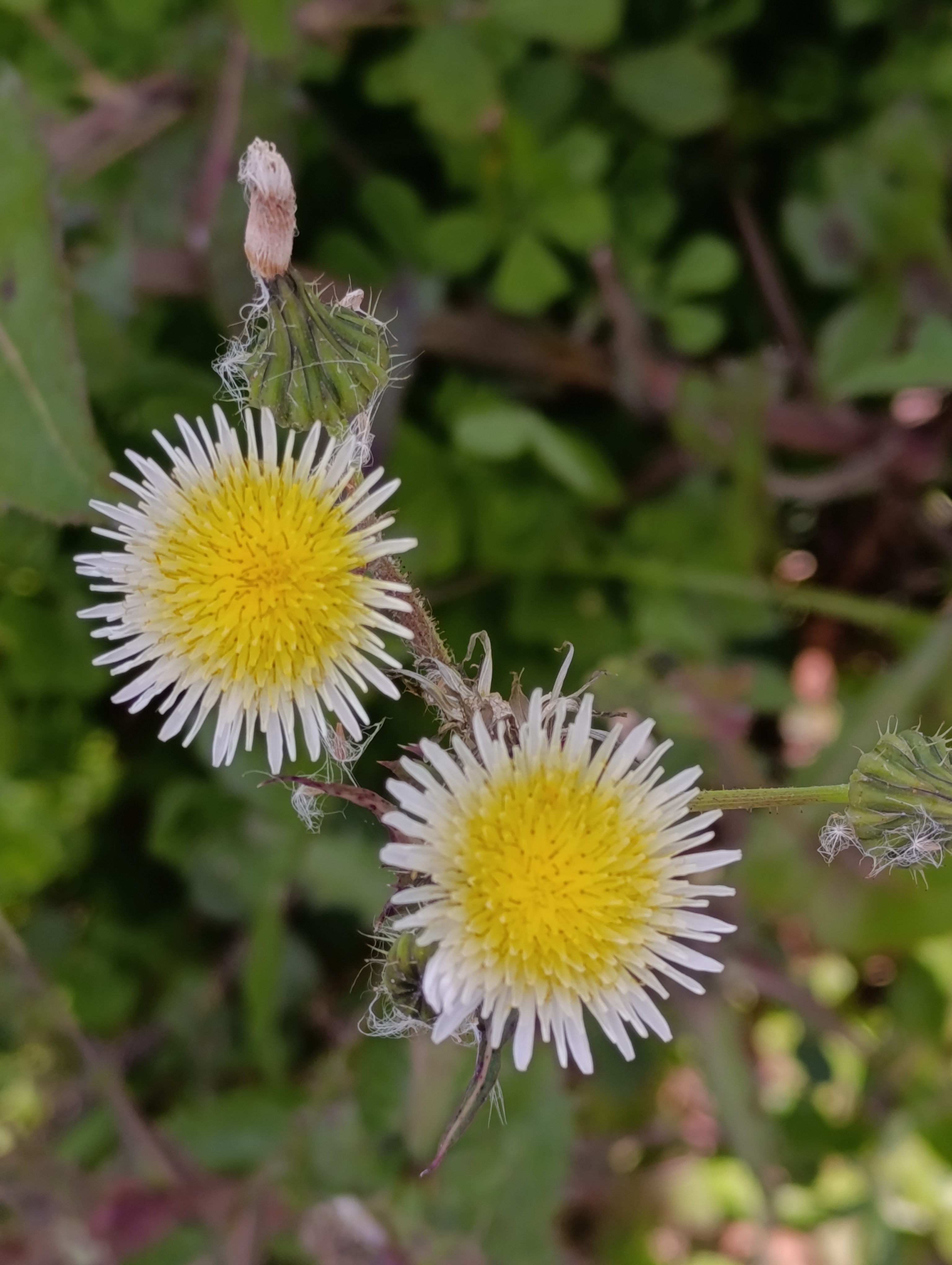
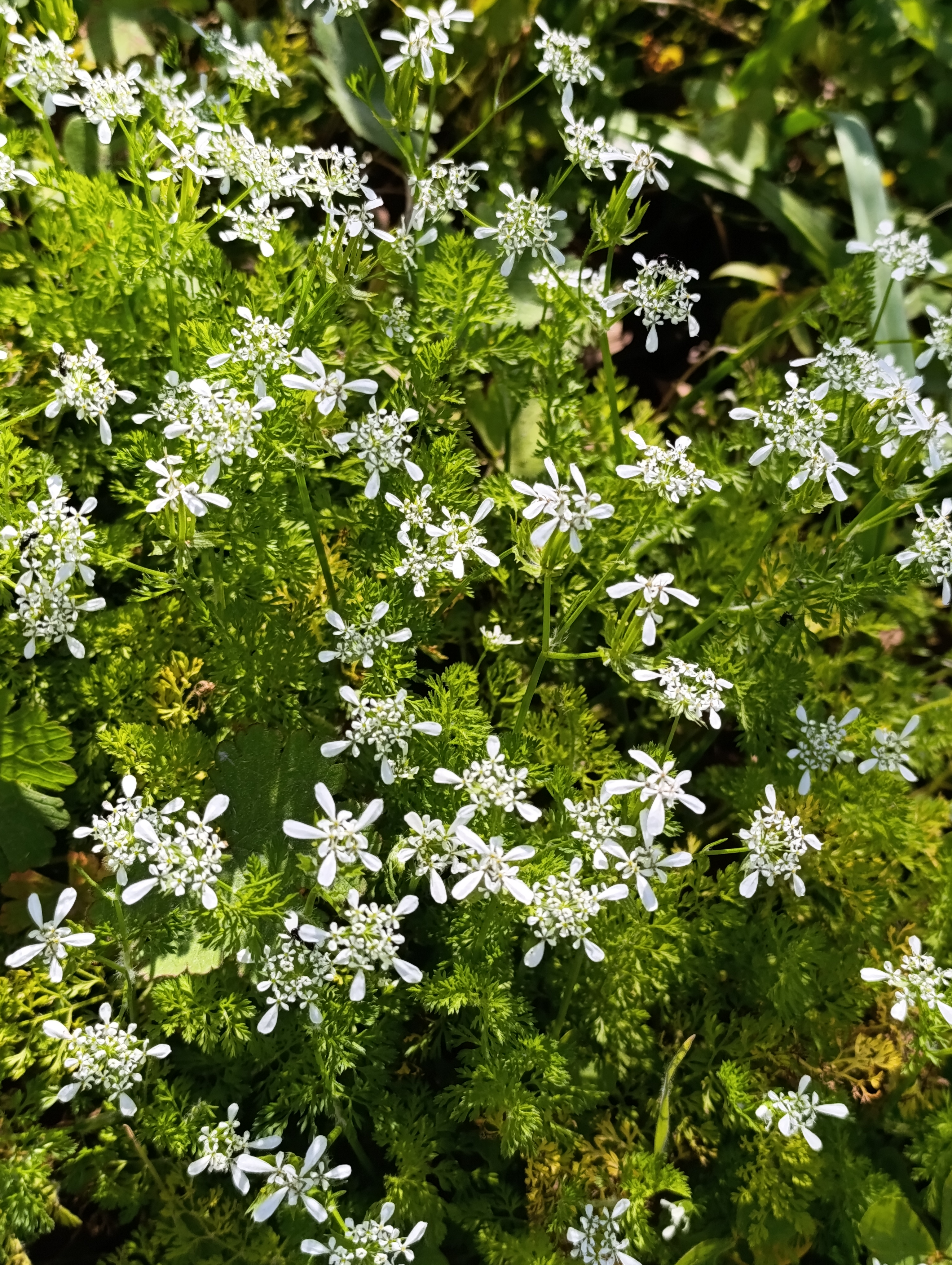
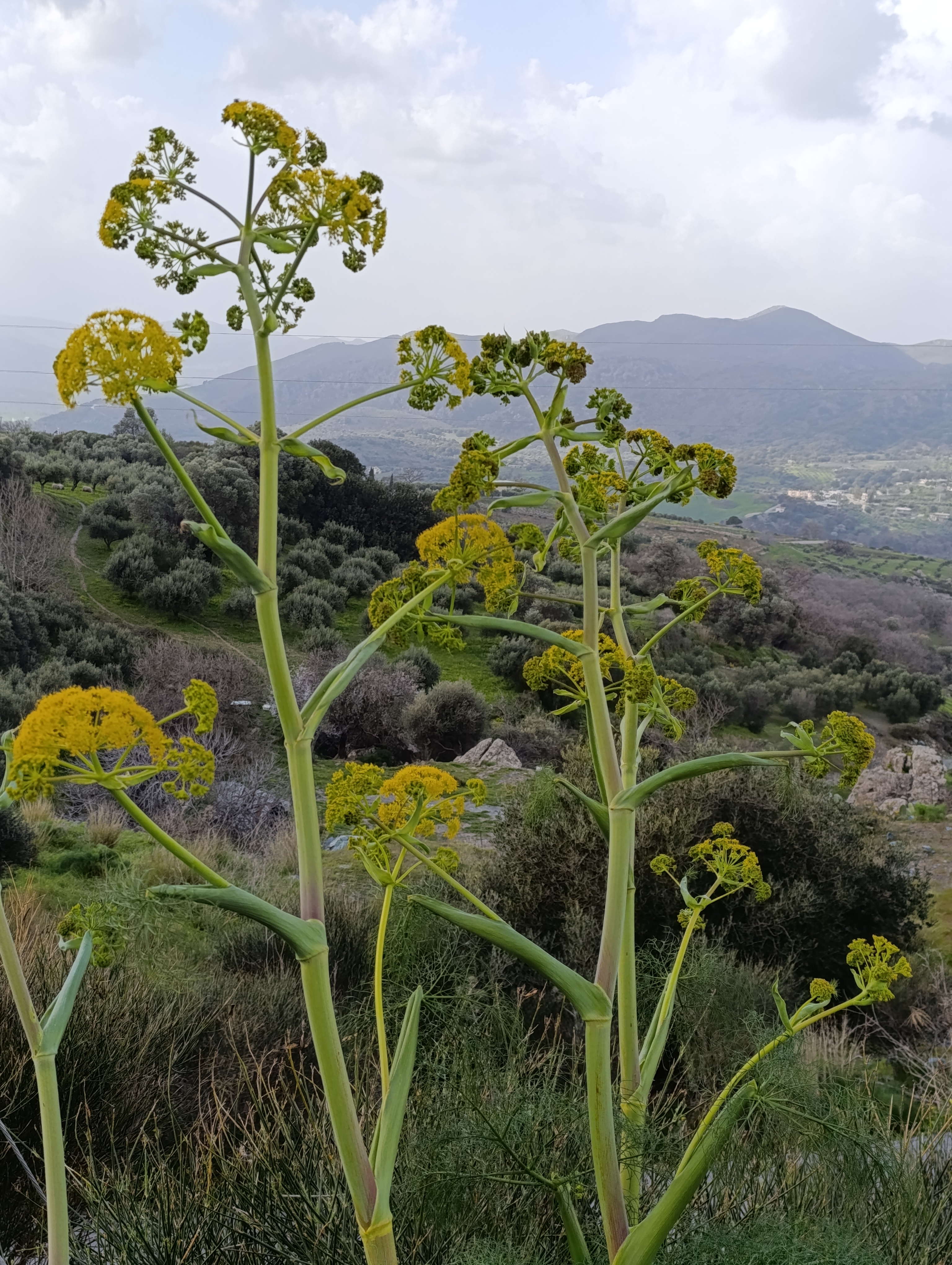
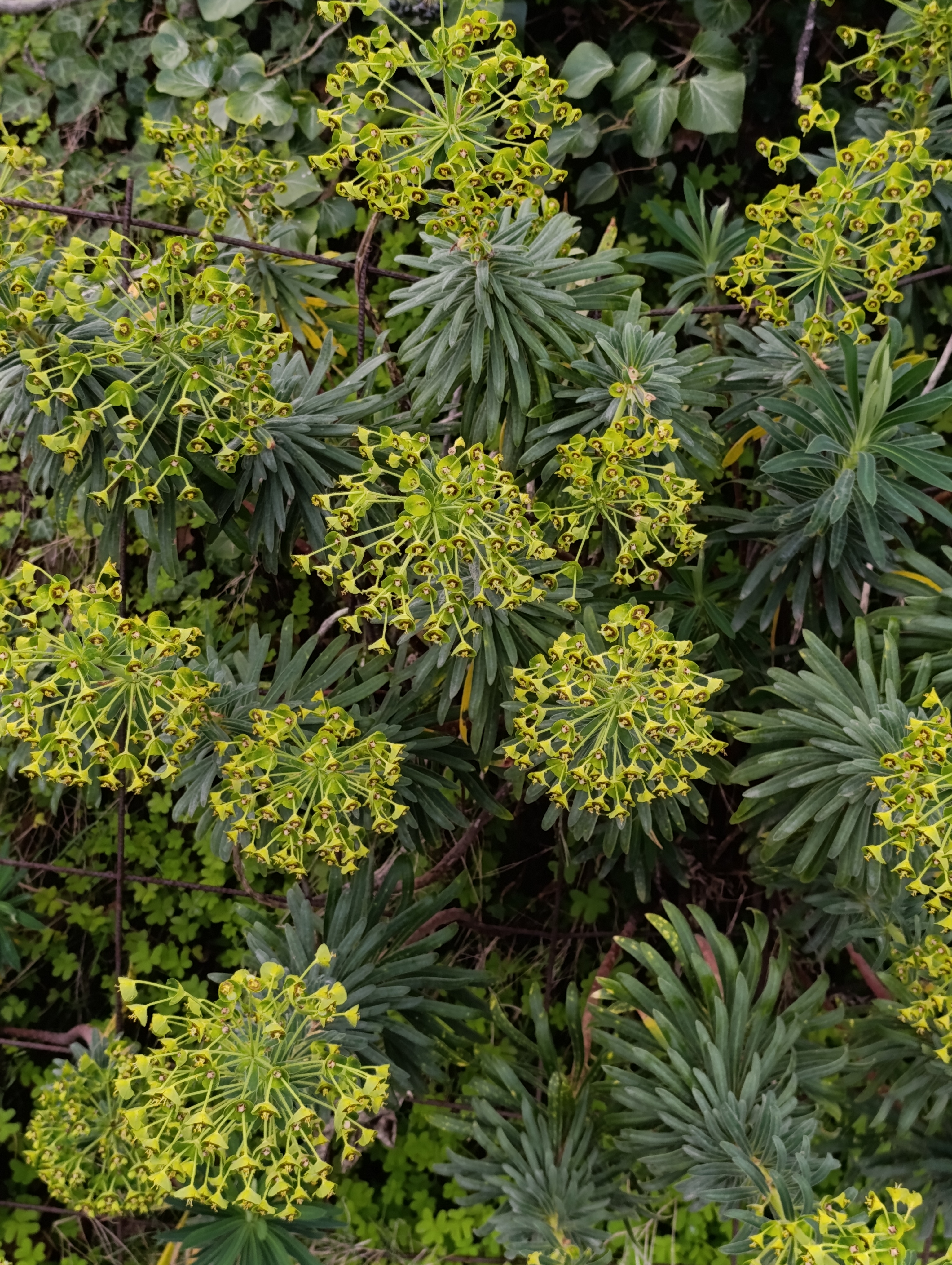
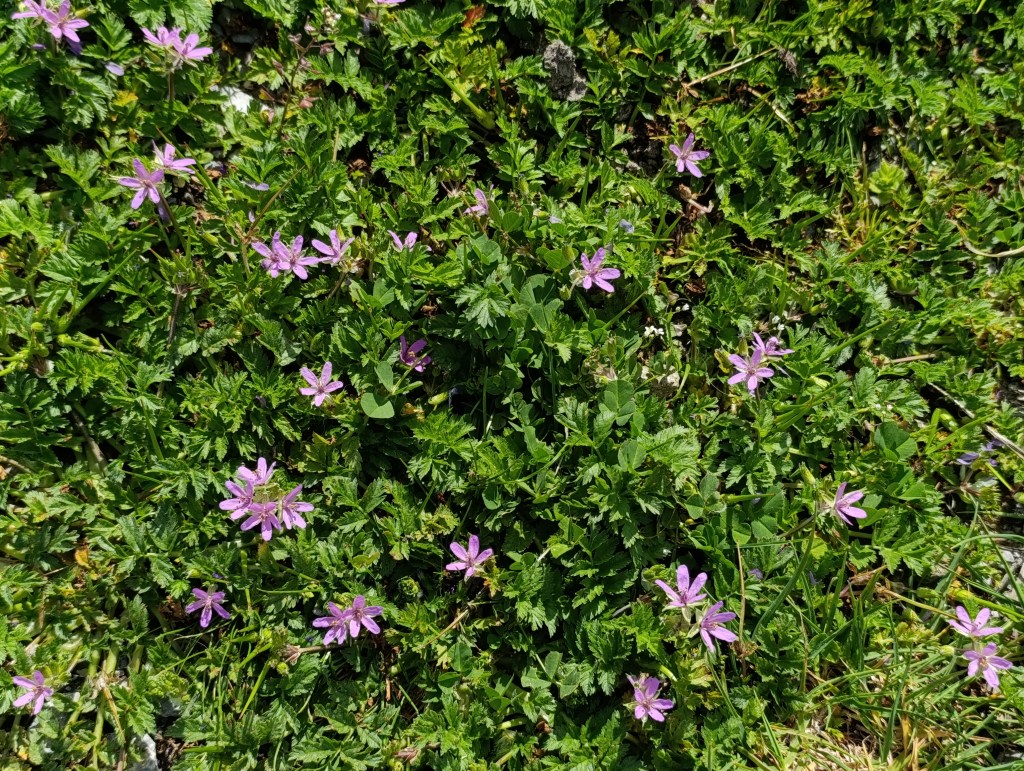
Yet amid the enchanting orchids, a vibrant tapestry of wildflowers bursts forth: delicate erodiums, vivid anemones, golden Erysimums, Mediterranean spurge, towering fennel, and cheerful daisies scattered across the countryside.
To walk among Crete’s orchids is to be reminded that the Earth is always speaking, quietly, patiently, in the language of form and colour. These flowers, born of both myth and evolution, invite us to slow down and notice the subtle rhythms of the land. They ask us to remember that beauty isn’t just an ornament but a way life adapts, endures, and expresses itself in endlessly surprising ways. May these small, intricate beings encourage us to walk more gently, to listen more deeply, and honour the divine intelligence of the living world that holds us.
 Earthy Spirit
Leave a comment