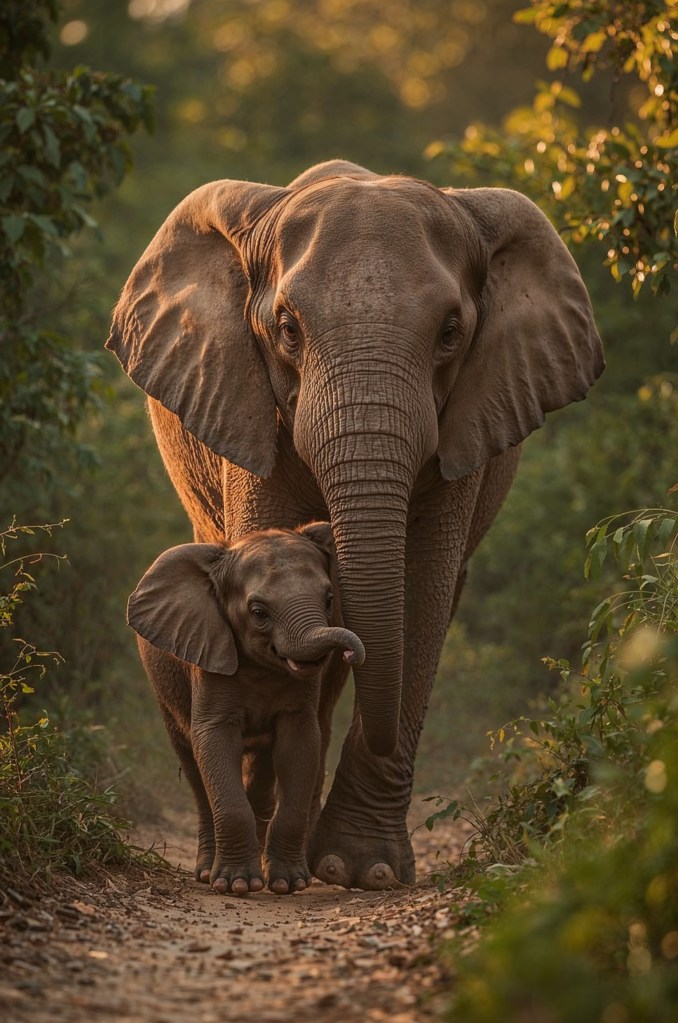
The African forest elephant lives in the dense, humid tropical forests of West and Central Africa. Females gather in social groups of around twenty, moving with their young through the the forest as they spend their days grazing. With remarkable strength and precision, they grip, twist, pull, and compress grass, fruits, seeds, leaves, and tree bark with their trunks before guiding it into their mouths—consuming up to 300 kilograms of vegetation each day. Smaller than their savanna relatives, forest elephants have grey skin with sparse black hairs, more oval‑shaped ears, a rounder forehead, and straighter, downward‑pointing tusks. They are often called the “mega‑gardeners of the forest” for their extraordinary ability to disperse seeds from at least 96 plant species across vast distances. Many of these seeds germinate in their dung, making forest elephants essential architects of their ecosystem.
African forest elephants are listed as critically endangered, with populations having declined by an estimated 86% due to poaching for ivory, habitat loss, and the fragmentation of once‑continuous forests broken up into isolated patches through expanding agriculture, construction, roads, and railways. The African savanna elephant is also classified as endangered on the IUCN Red List.

