
With the Beauty of Our Planet
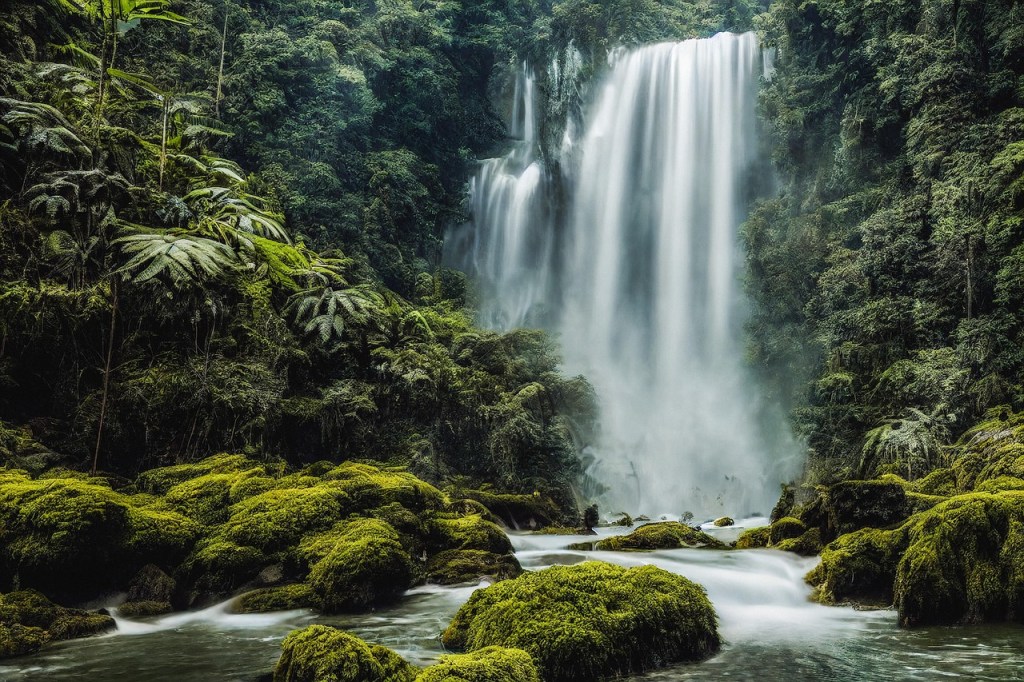
This website invites you to reconnect with nature and explore the beauty of our planet, from the Alpine grasslands and coniferous forests to the Mediterranean shrublands and tropical savannas. Everywhere on Earth, you can discover captivating places and encounter awe-inspiring lifeforms…
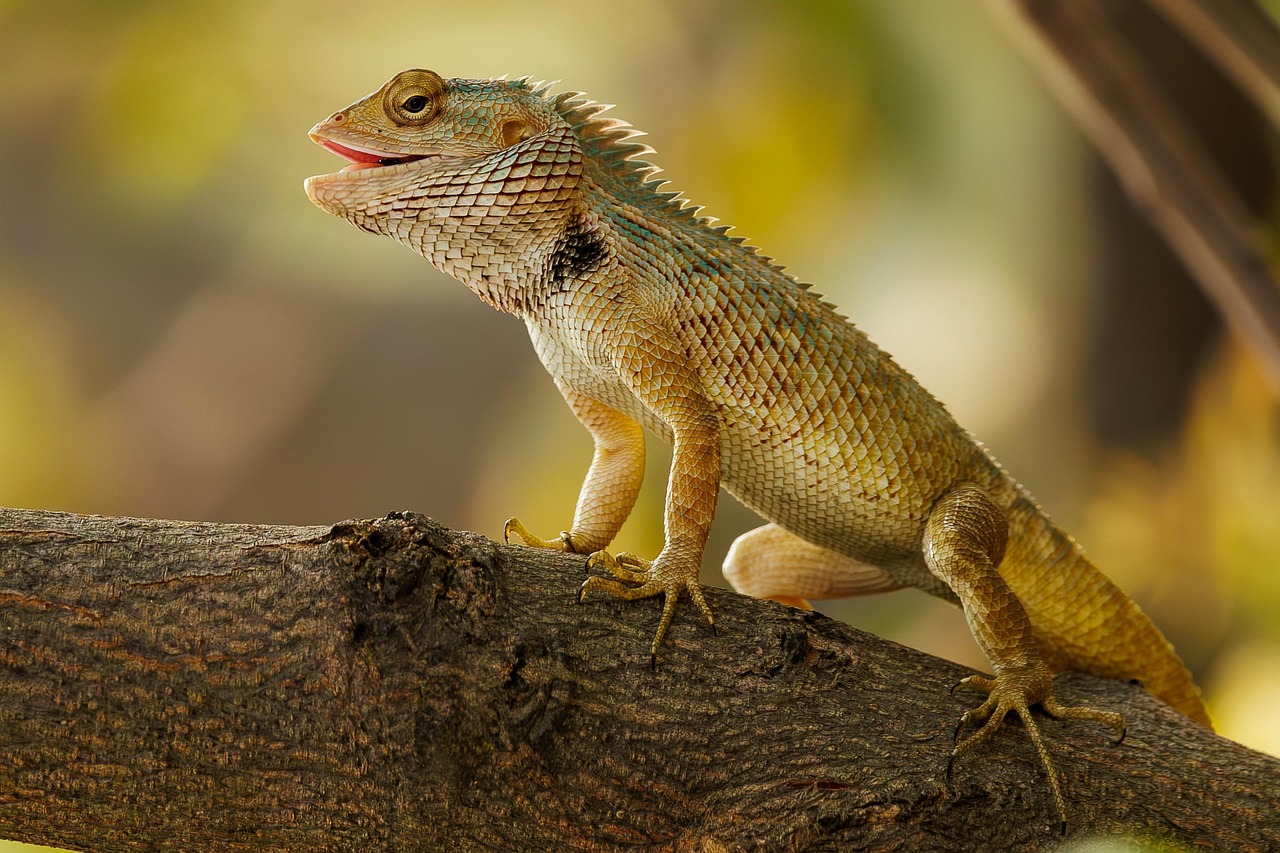
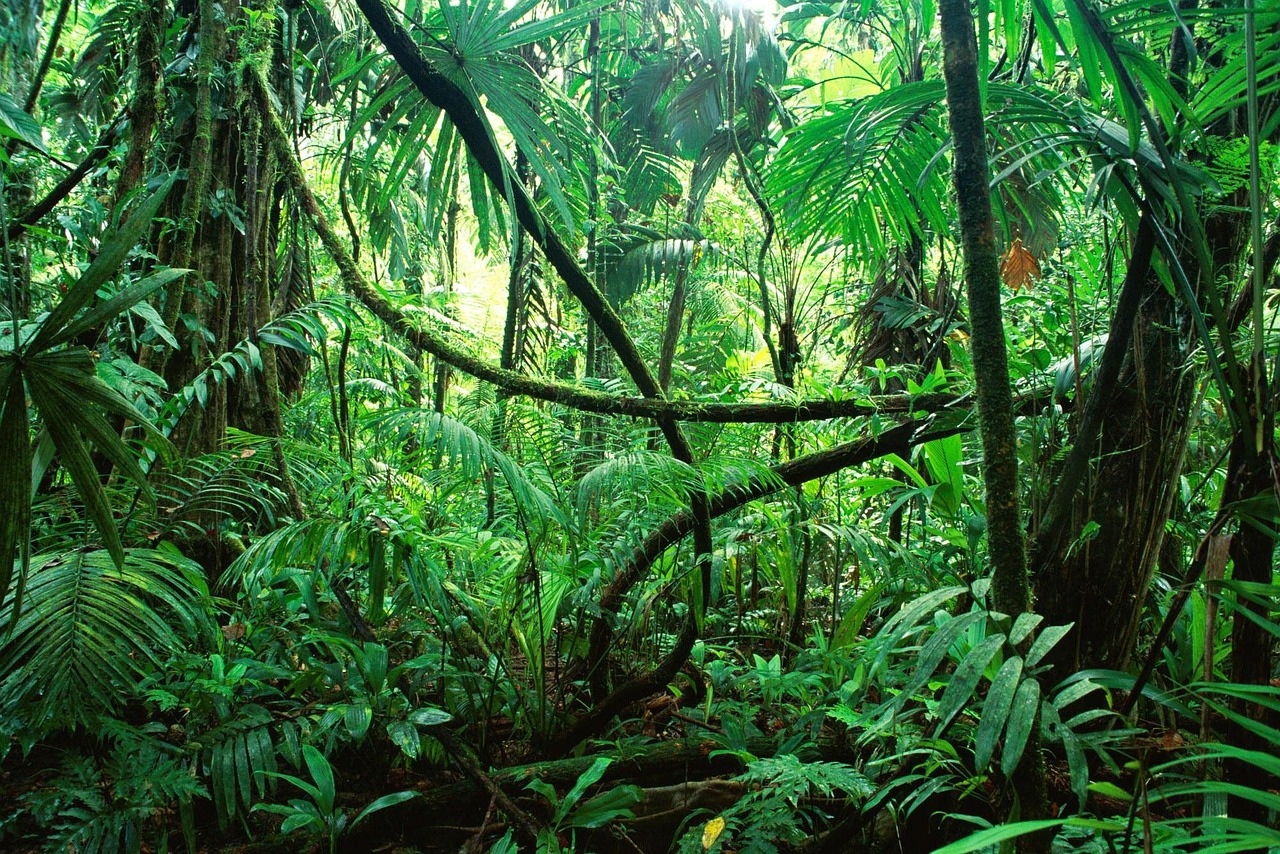
We are endlessly surrounded by the Earth’s beauty, a world shaped with extraordinary wonders. When we soften our pace, and truly observe, nature reveals to us just how magical it is. Its easy to be distracted in our busy lives, forgetting that we live in a world filled with wonder. Yet it is always there, waiting to be found.
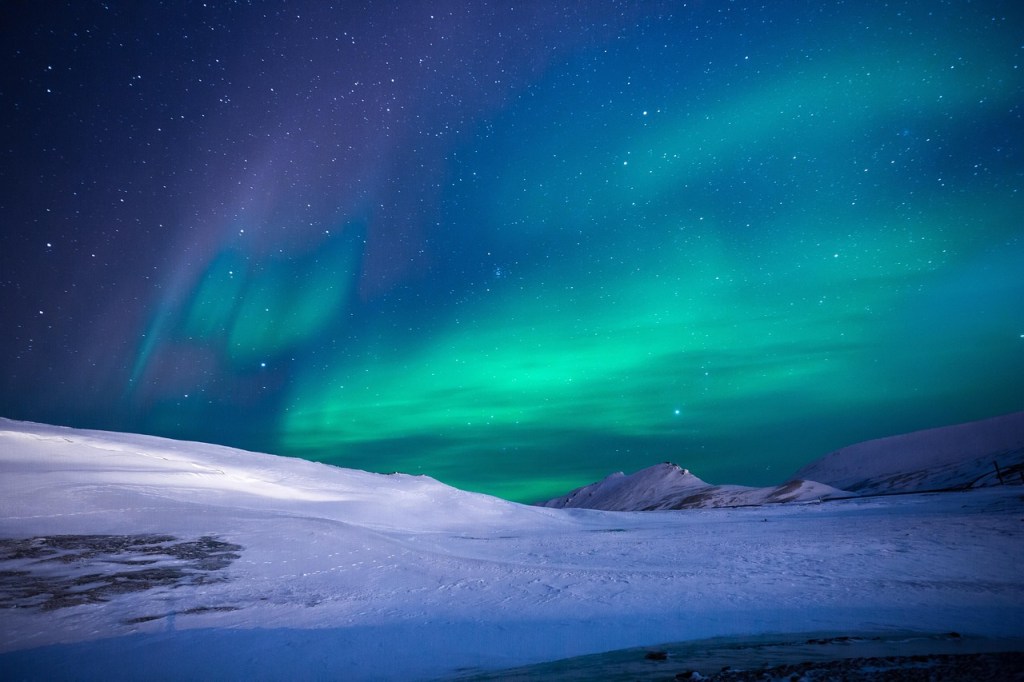
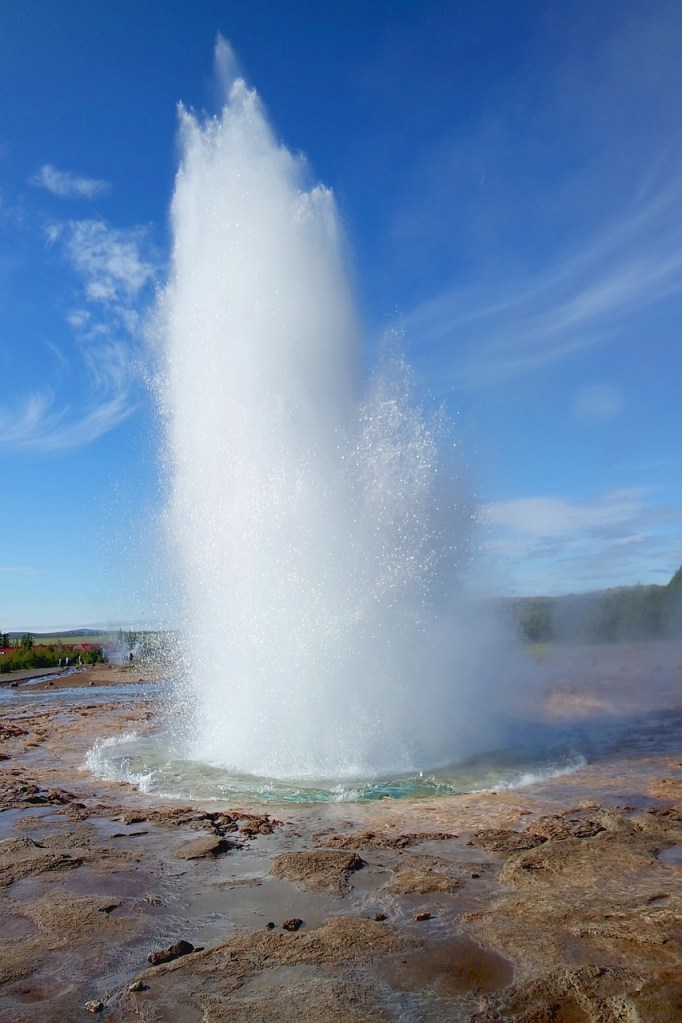
Everywhere we turn, the Earth offers moments that feel almost otherworldly. The Polar lights sweep across the sky in shimmering waves, painting the night with vibrant colours that seem like they were borrowed from dreams. Deep in the Austrian mountains, ice caves glow with frozen blue chambers, as if carved by the breath of winter itself. In Iceland, the ground breathes in sudden bursts of steam- geysers eject scalding water skyward, reminding us that fire still stirs beneath our feet.
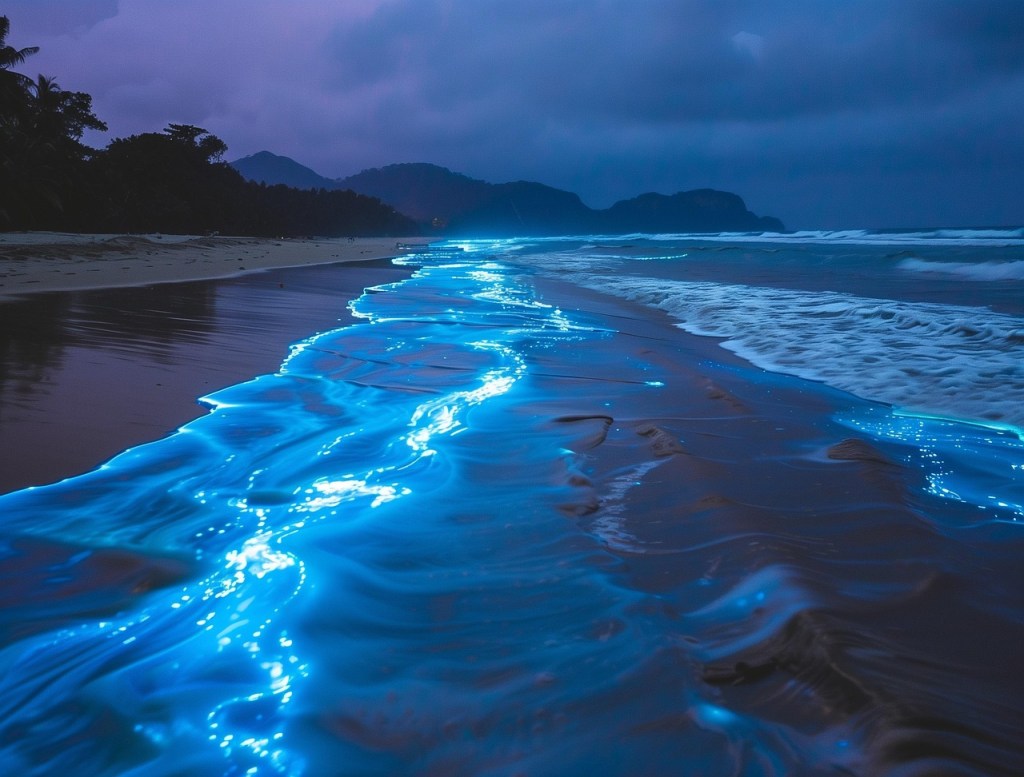
And along the shores of the Maldives, bioluminescent plakton awaken after dark, scattering their vivid blue light across the waves, until the sea becomes a shimmering tapestry of stars.
Even the smallest wonders hold their own enchantment, every snowflake that drifts from the sky is a tiny, fleeting masterpiece-no two ever alike. Each one is a reminder that nature creates with infinite imagination.
The Amazing world of Bioluminescence
Bioluminescence is one of nature’s most miraculous abilities-a soft, living glow that occurs in a variety of species such as insects, fish, jellyfish, crustaceans, cephalopods, and even certain fungi and bacteria. These beings create their own light through a natural chemical reaction, using special pigments that illuminate their bodies within. This glow serves many purposes: attracting a mate, luring prey, communicating across dark waters, blending into the shifting light of the sea, or confusing predators with their sudden flashes. Most bioluminescence light appears in shades of green or blue, colours that travel the farthest through waters and night.
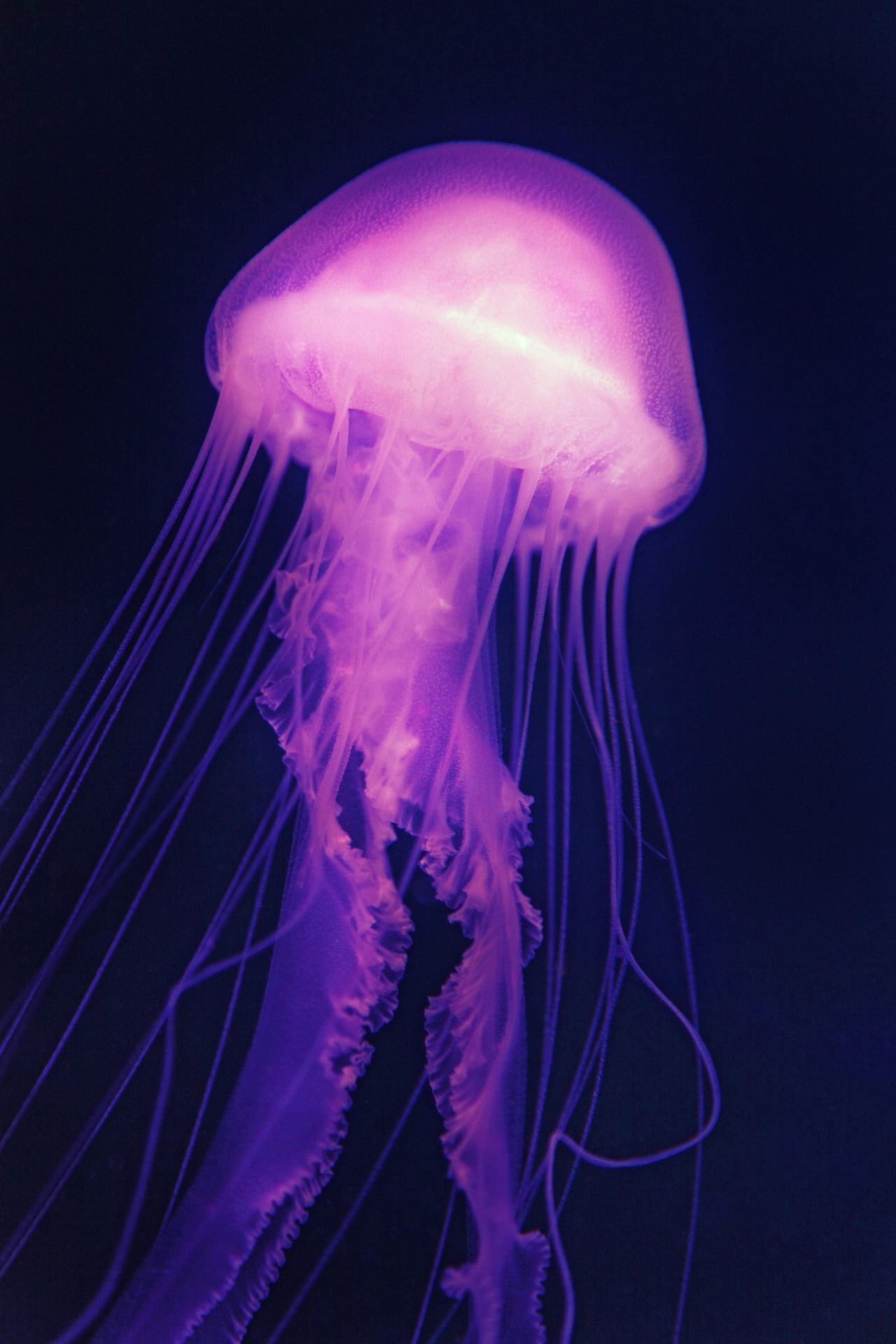
As we follow this delicate language of light through the living world, certain creatures embody it in many mesmerising ways. Among them is a jellyfish whose glow feels almost otherworldly- a drifting spark that turns the dark waters into something alive with colour and movement.
The purple striped jellyfish, Pelagia noctiluca, moves with rhythms in warm, open seas- carried by currents, guided by wind, and often travelling in shimmering groups that drift like slow-moving constellations. Although native to tropical and warm-temperate waters, they also appear in the Mediterranean and the Gulf of Mexico, each individual jellyfish glowing in soft hues of pink, mauve, yellow or brown. Its bell forms a delicate, translucent umbrella edged with fine frills, while eight slender tentacles and four graceful oral arms trail beneath. When the sea is stirred by waves or passing boats, this jellyfish reveals its hidden magic; striking purple lights that pulse through the waters, earning its name ‘night light’ (from the Latin noctiluca).
Its life begins as a fertilised egg that transforms into a free-swimming larva. Drifting until it finds a suitable surface- or something simply floating freely- it settles, becomes immobile, and grows into a tiny polyp capable of feeding and reproducing.
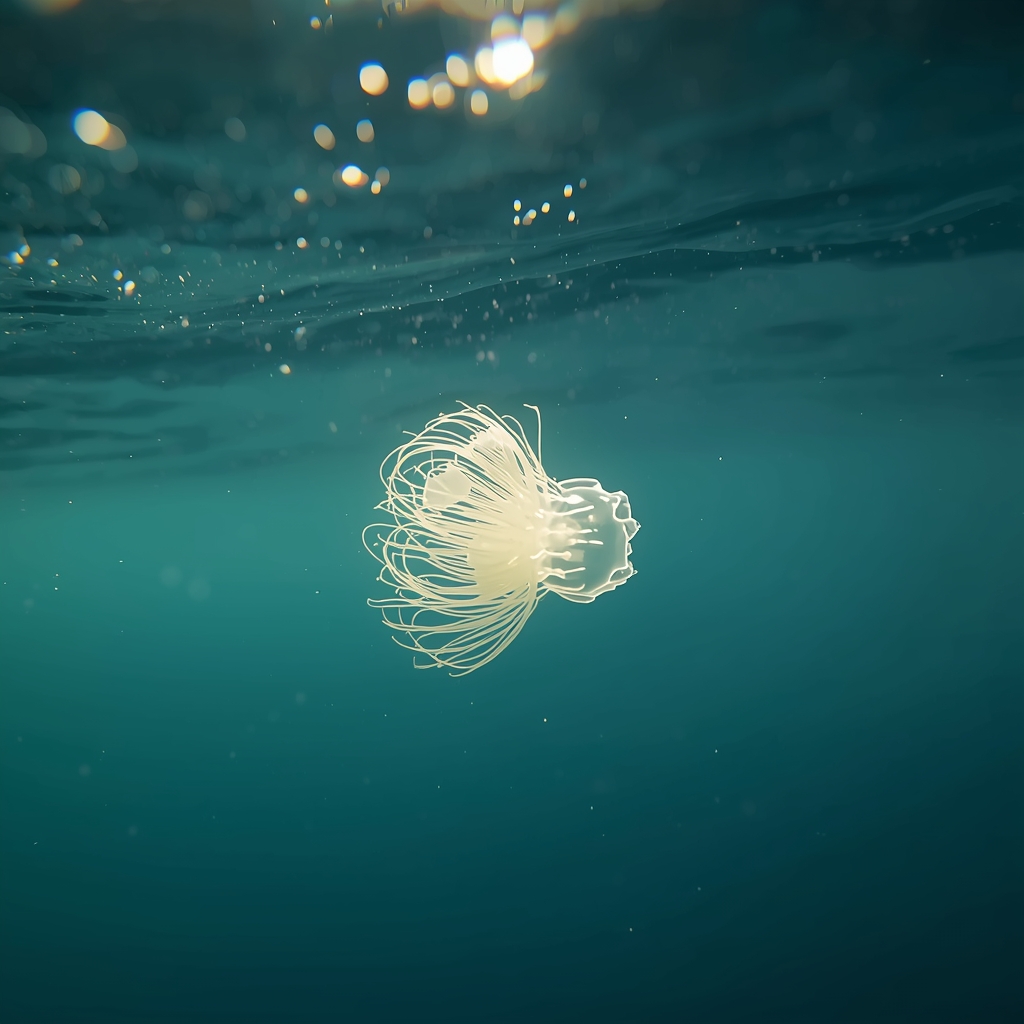
Eventually, it develops into the medusa we recognise today, living only a few months yet leaving a lasting impression of beauty and mystery. The purple striped jellyfish reminds us how many extraordinary wonders exist in places we rarely see- and how even the most delicate beings carry their own unique brilliance.
Another remarkable expression of living light is the New Zealand glowworm, Arachnocampa luminosa, tiny larvae whose presence can turn an entire cave into a cathedral of stars. Its blue-green radiance is produced through the reaction between a luciferase enzyme and a light-emitting compound called luciferin, a silent biochemical magic that feels more ancient than memory itself.
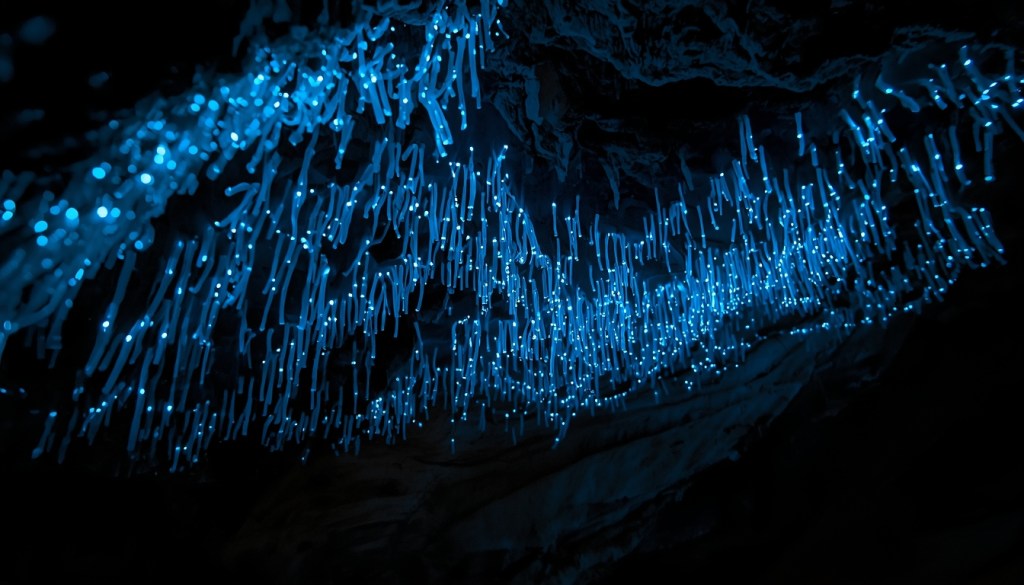
Such places cradle them like sacred chambers-cool, dark, and moist, offering shelter from the wind & weather, and the water that sustains their shimmering lineage, a necessity for survival and reproduction. From the ceilings of these hidden realms, they weave long, silken threads that descend like beaded curtains. Each droplet glistens with sticky mucus, waiting to ensnare small winged insects drawn towards their ethereal glow. In this twilight sanctuary, their light brings both wonderment and snare- a reminder that even the softest glow can shape the hidden realms of the Earth and so the cave glows with a silent otherworldly pulse- as if Mother nature herself were dreaming in vivid blues and greens, and the glowworms were her tiny lantern-spirits, guiding all who enter into the realms of mystery.
An even more captivating form of bioluminescence is the firefly, a small beetle capable of lighting up entire forests, marshes, and woodlands with their soft, rhythmic glow at twilight. Their radiance is produced by photophores-light-bearing organs in the abdomen, by a chemical reaction between luciferase and a light-emitting compound called luciferin, releasing pulses of yellow, green, or pale red light.
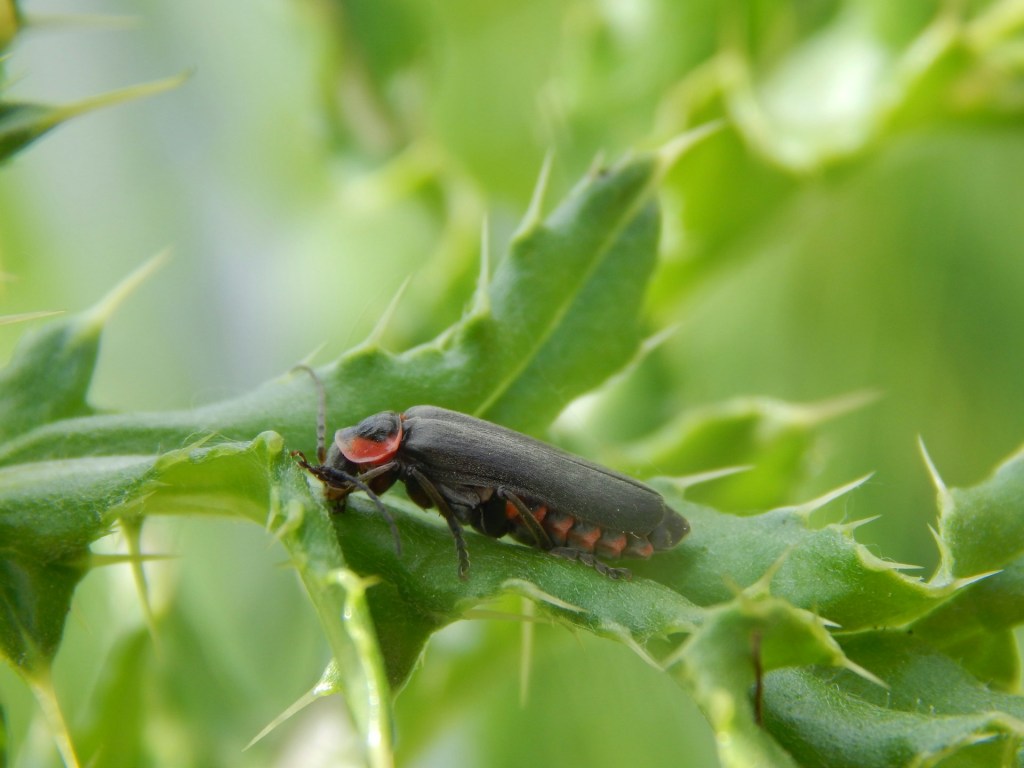
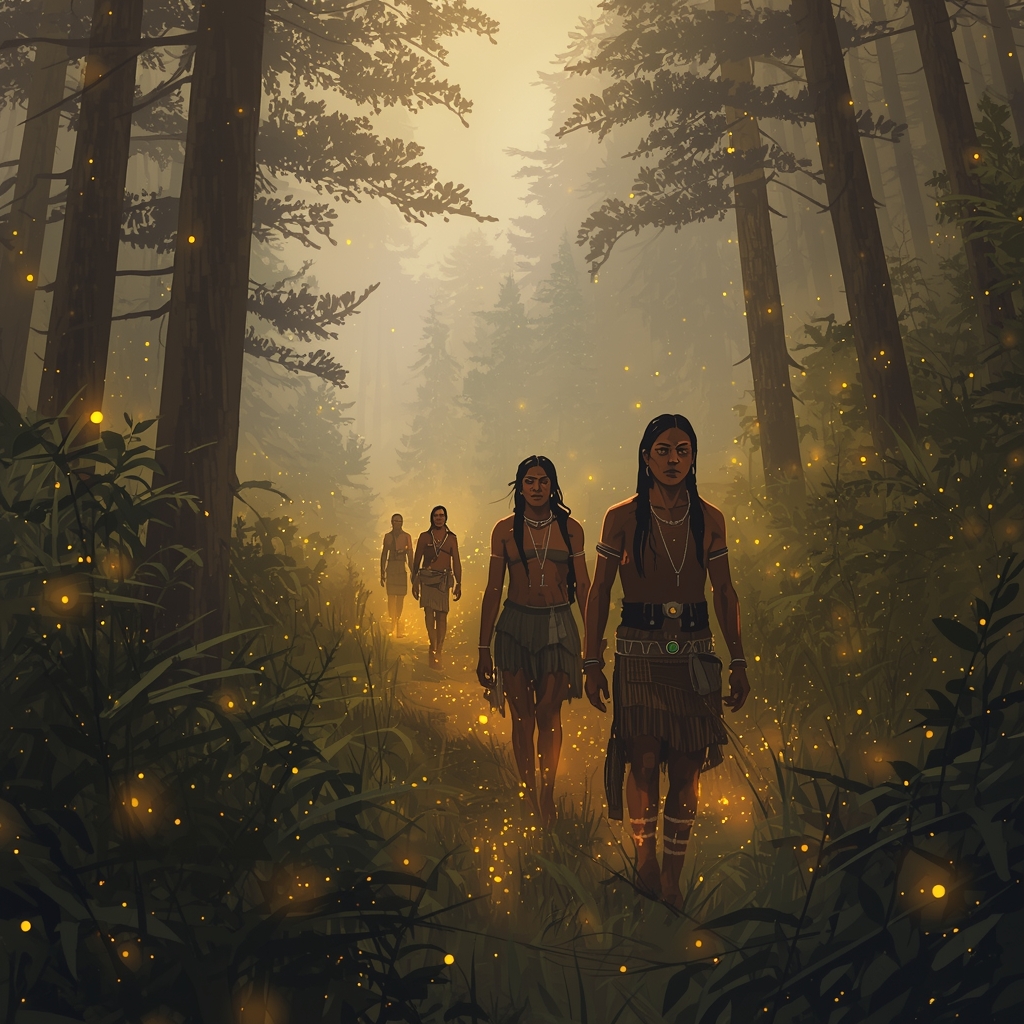
During the heat of summer, billions of fireflies rise from the grasses, shrubs and tree canopies to perform a synchronized dance of light. Their flashes ripple through the darkness like floating embers, each signal a call, a response, and a thread in an ancient ritual of attraction, during their search for a mate. In these moments, the forest becomes the night sky and the fireflies its wandering stars.
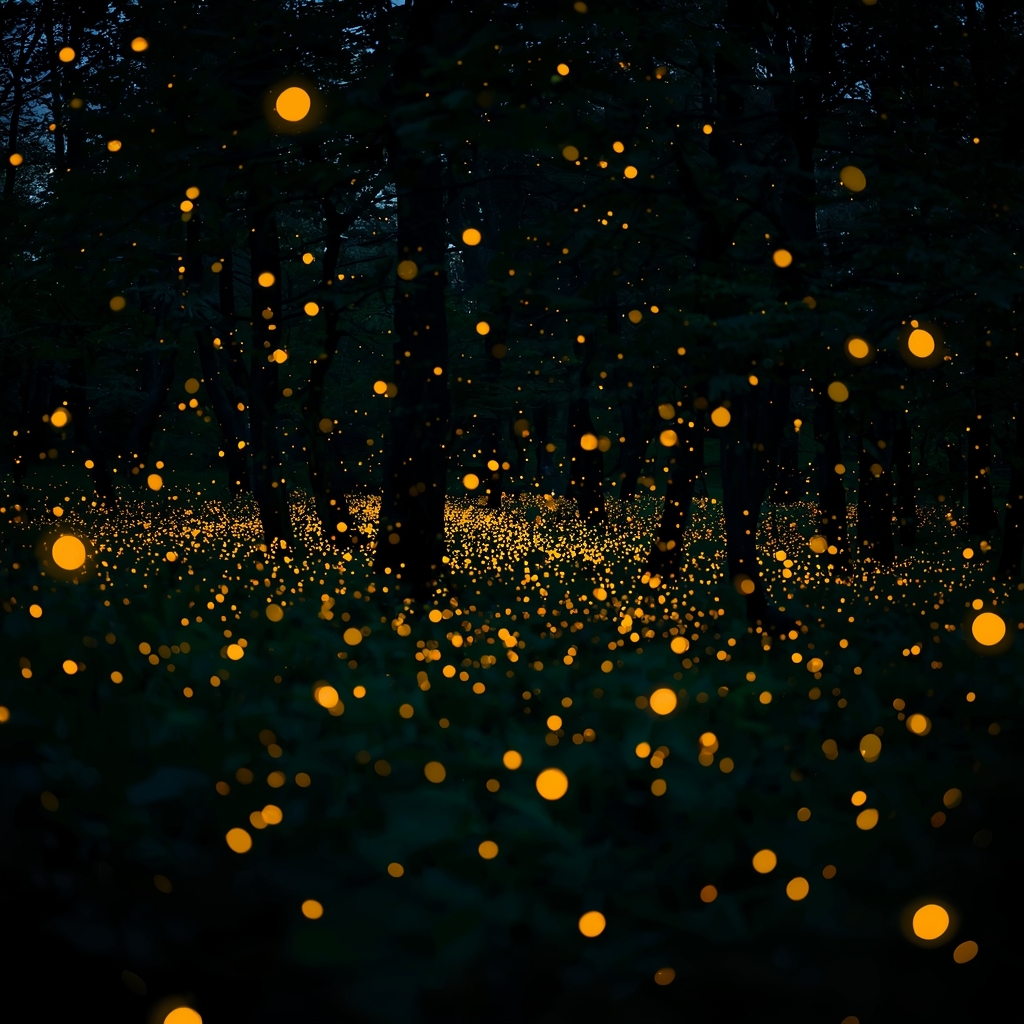
In the rural outskirts of India, this nightly miracle becomes a sacred gathering known as the Festival of Fireflies. When thousands of these illuminate beings drift through the stillness of secluded forests, transforming the darkness into a shimming tapestry of light. Villagers regard them as ancestral spirits-“The Men of Light”-emerging in May to June to watch over their descendants, bringing joy, protection, and renewal. They are honoured as emissaries of love and continuality, guardians who shift between worlds.
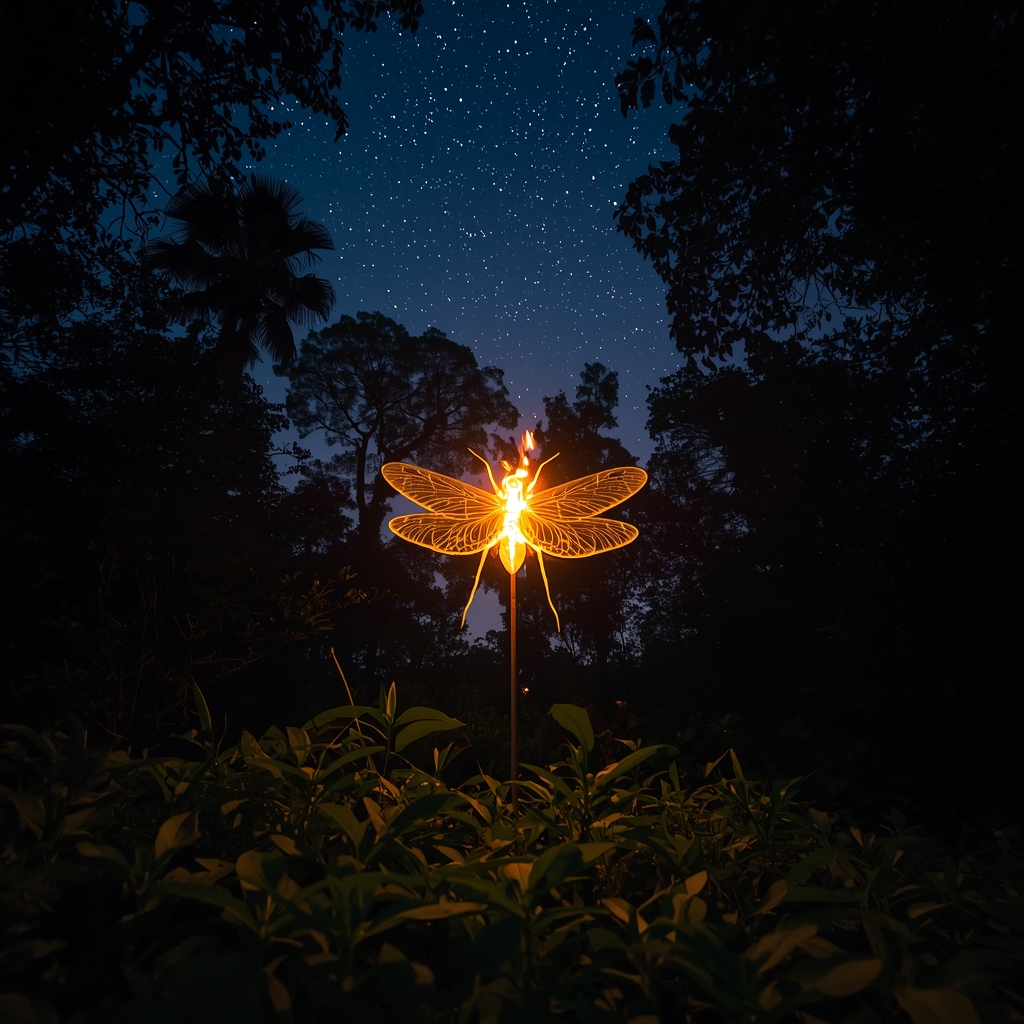
In China, fireflies are seen as spiritual guides who illuminate the path through the darkness, embodying, hope, transformation, and the delicate balance between life and death. Their presence is especially meaningful during the Qinqming festival, a 2,500 years ago tradition devoted to honouring their ancestors. During this time families clean and restore graves, offer fresh flowers, recite poems and fly kites to invite good fortune and dispel negativity. In Chinese Buddhism, fireflies can represent the journey toward enlightenment, illuminating the path to wisdom. They are seen as wandering souls in the cycle of reincarnation; every flicker is reborn before it dissolves into the night. During festivals, firefly-shaped lanterns are often hung in Buddhist temples, a gentle reminder of this spiritual journey.
In the Ojibwe traditions of the Native Amercian people, fireflies also hold a meaningful place in their spiritual world view. They are seen as symbols of hope, the beauty of the natural world, and ever-renewing spirit of life. Their glow is often associated with the sacred fire- a representation of vitality, renewal, and the deep interconnection shared by all living beings. Fireflies are also regarded as messengers carrying guidance from the spirit realm to those who are struggling or seeking direction during difficult times.
Fireflies, once a familiar summer resident, are now facing extinction in the United States, with populations also declining in Europe and Asia due to shrinking habitats, the glare of city lights, invasive species, and widespread pesticide use. The Bethany beach firefly(Photuris bethaniensis) teeters on the edge of extinction, while Florida’s Ant-loving scrub firefly (Pleotomodes needhami) and Mexico’s Amber comet firefly, native to shrublands and wetlands, are also listed as endangered. In the forests of Hong Kong, the wintry starworm (Rhagophthalmus hiemalis), a bioluminescent larva of the worm glow beetle, is critically endangered. This remarkable species lights up the forest floor with green, yellow, or red glow from each segment of its body, hiding among leaves and roots.
Also deep within the dense, moist forests of São Paulo, Brazil, wood-decaying mushrooms emerge from the bark of the Eugenia fluminensis tree, hidden beneath glossy green oblong leaves and star-white blossoms. When night falls, the mushrooms awaken. A vivid yellow-green radiance shines from their caps- A glowing lantern said by some to be gifted by ancient forest spirits.
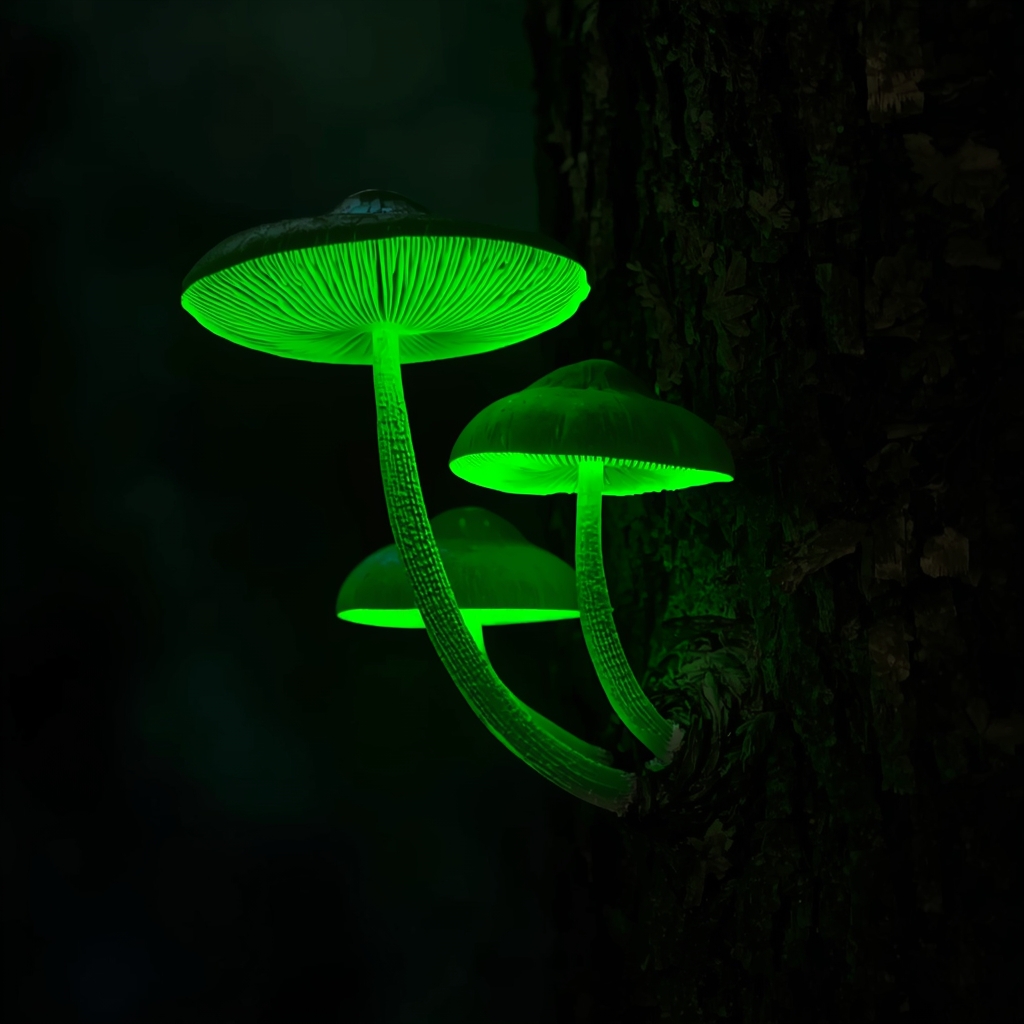
Drawn by this glow, insects drift closer, brushing against the sticky spores that cling to them like dust. Carried on their wings, the spores travel to new realms of bark and moisture, carrying a promise of a new generation. Yet their magic is not just in their glow. They are also nature’s recyclers, breaking down old bark & wood, and returning life-giving nutrients into the soil.
If this resonates with you, consider taking a moment to step outside today, even for a moment, to feel the air on your skin, notice an impressive cloud drifting over your head, listen to bird song or bask in the sunlight. The natural world doesn’t ask for much; it simply waits, patient and generous, ready to offer a breath of tranquillity or a spark of wonder, whenever you choose to relax and observe it. Let this be your reminder that connection doesn’t have to be a difficult journey. Sometimes it begins with a single flower, a walk in nature, or a simple act of acknowledging the beauty that’s already there.
 Earthy Spirit