
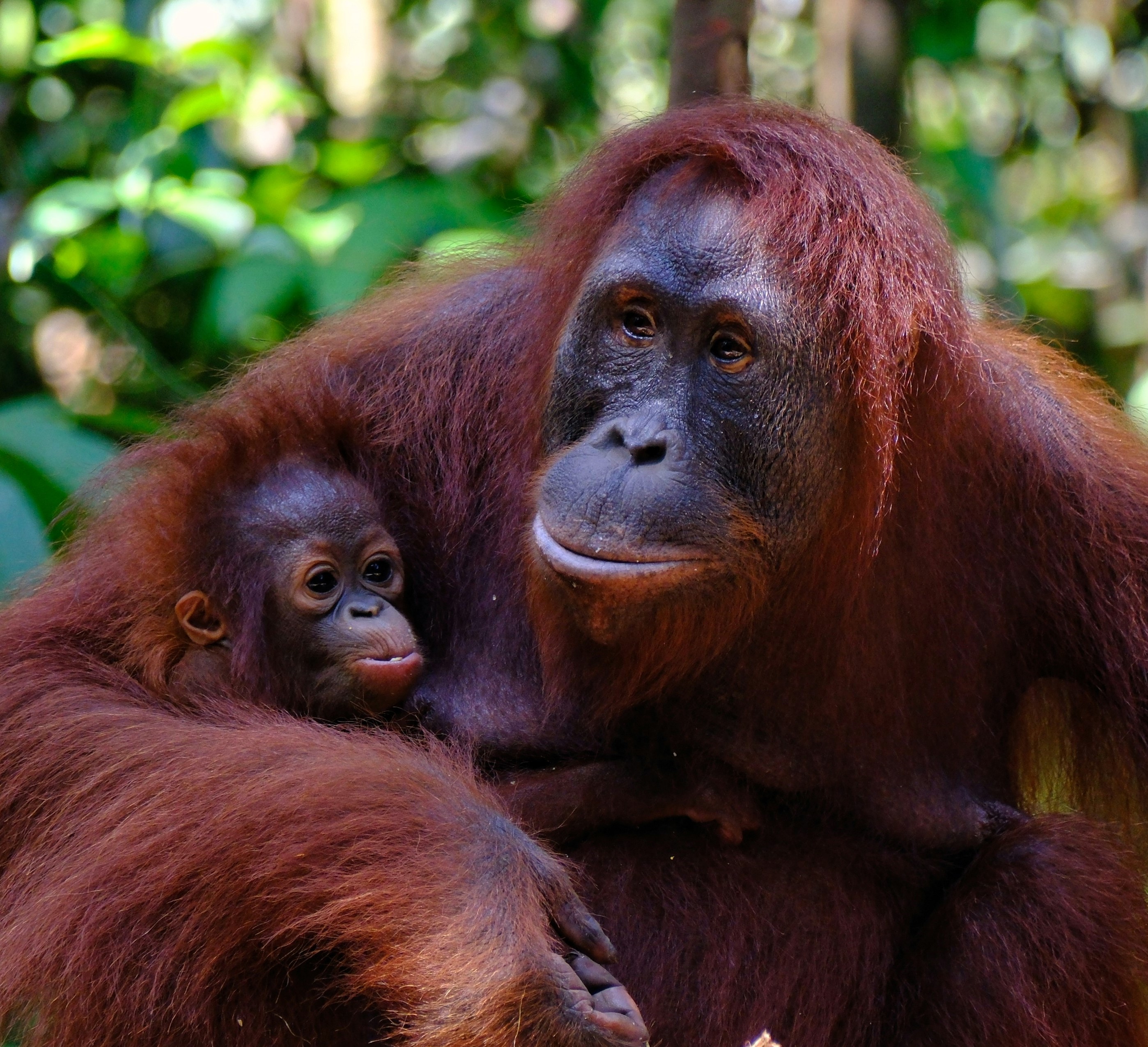
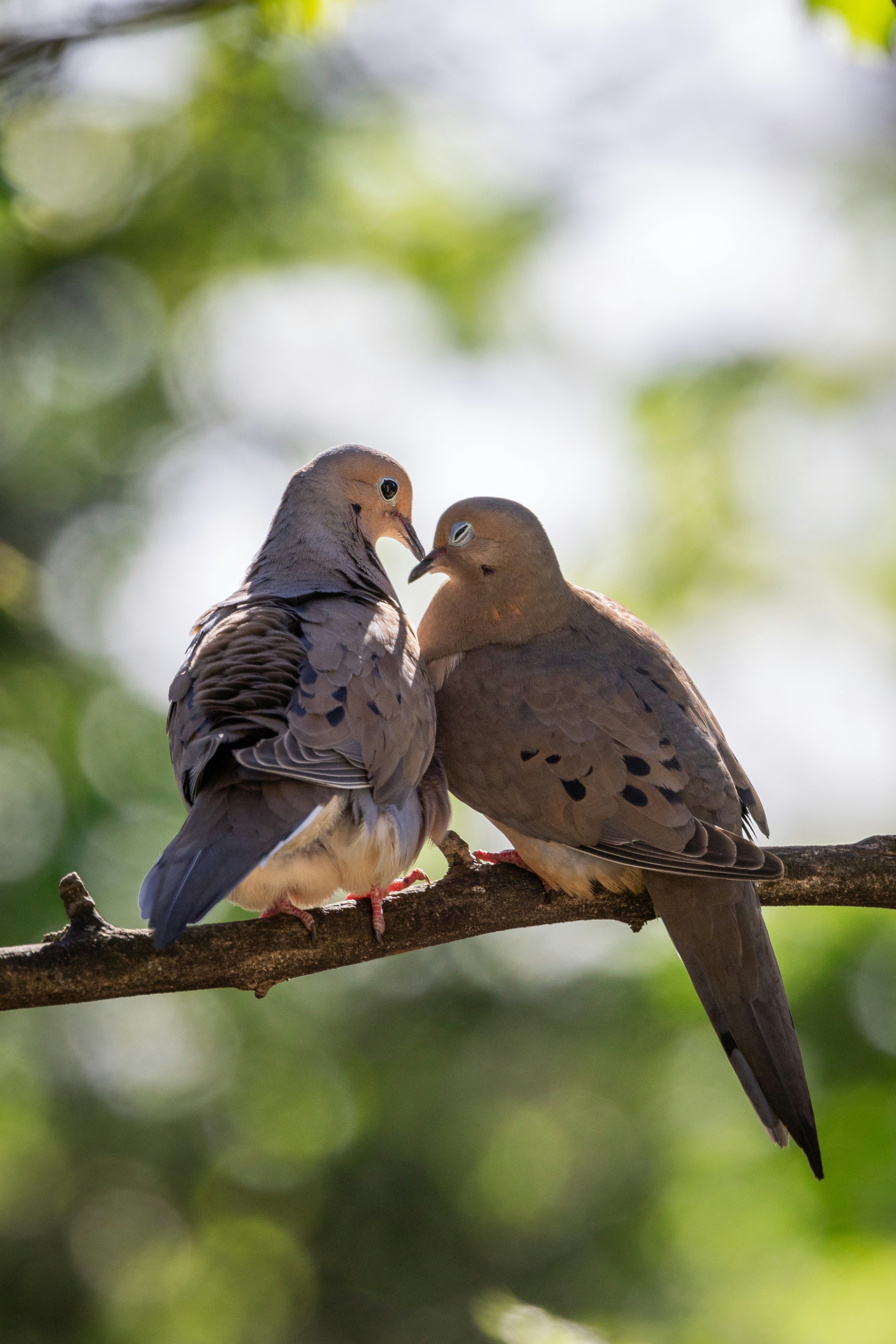
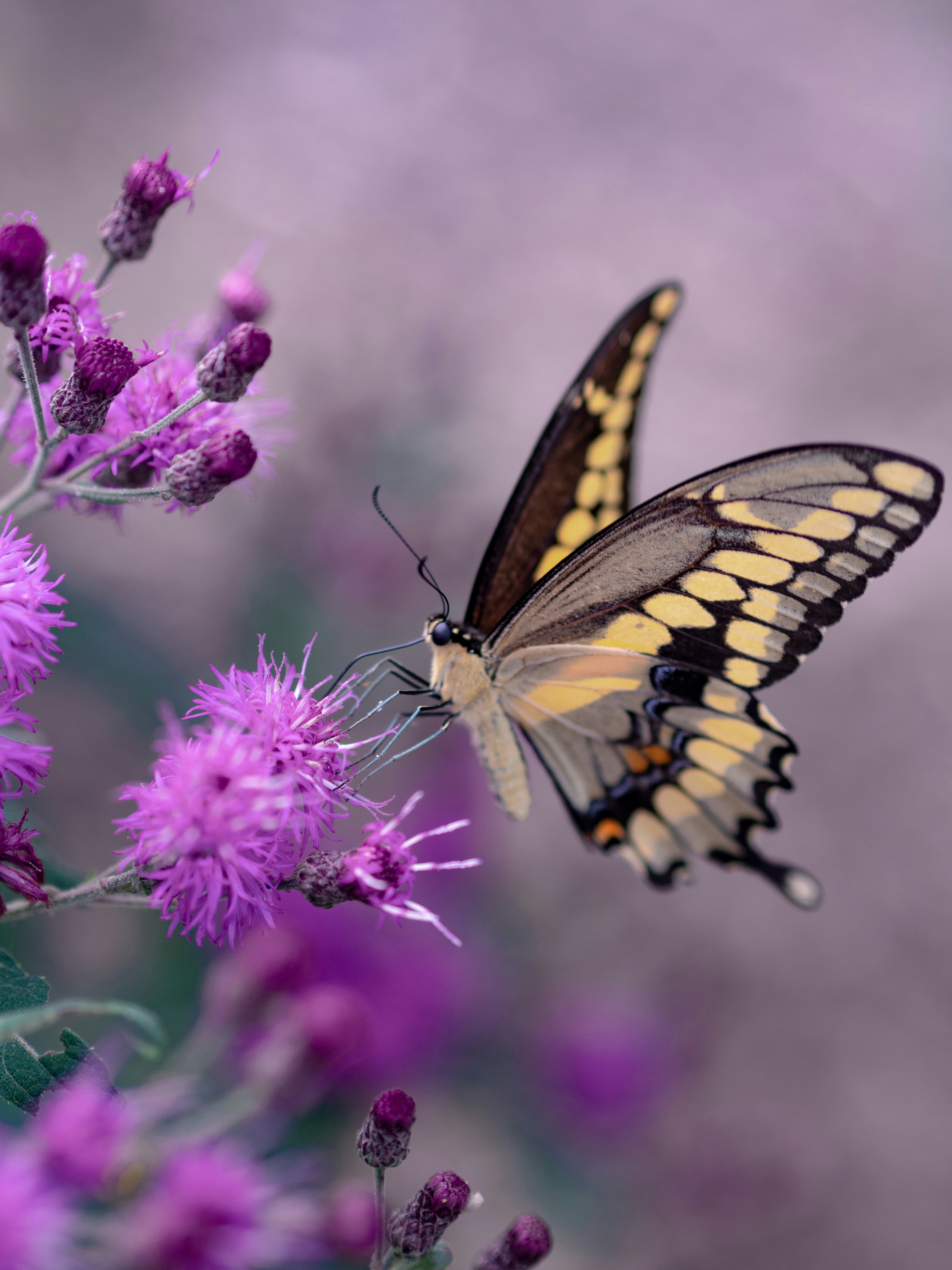
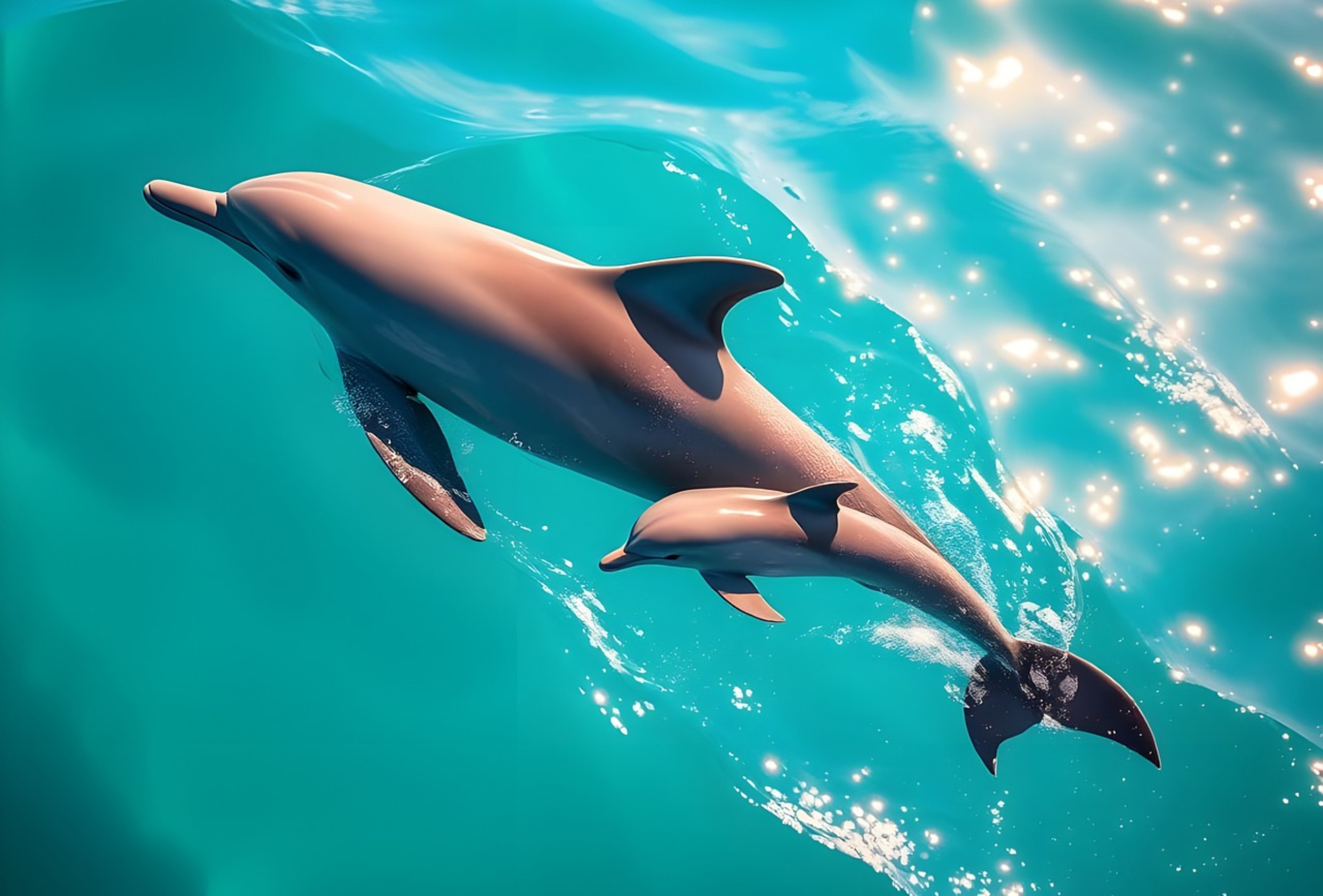
We share our planet with an amazing diversity of life, each species shaped by millions of years of evolution: the gentle flutter of a butterfly, a dolphin leaping from the sunlit ocean, an orangutan lovingly cradling its infant, and a pair of doves pressing their foreheads together in a gesture of love. The Earth is not separate from us. We are part of it, rooted in the same breath, the same soil beneath our feet, the same pulse that threads through every living being. That is why all life must be respected, cherished and preserved for future generations.
Species, ecosystems, and natural habitats are declining due to agriculture, industrial production, urbanisation, mining, logging, hunting, and trawling. As demand for crops, agricultural development, and urban growth increases, essential wildlife habitats are being lost. Focusing solely on profit is not sustainable; we must adopt ecological approaches that support both human progress and the preservation of nature for future generations.
According to the IUCN Red List, 48,600 species are now threatened with extinction. This includes mammals, birds, reptiles, amphibians, fish, crustaceans, coral reefs, and trees. Their decline is driven by habitat loss, deforestation, logging, hunting and poaching, the expansion of roads and railways, pollution, climate disruption, and the fragmentation of once‑continuous ecosystems.
To cherish life is not only an act of compassion—it is an act of ecological responsibility. The future of our planet depends on the survival of these beings, great and small. Below are just a few who now face the threat of extinction:
Pangolins
In the warm tranquil tropical forests, savannahs, and brushlands of Africa and Asia. These small, armoured mammals resemble anteaters, its body cloaked in overlapping keratin scales, the same protein in our nails, hair and skin. By night, it wanders softly, guided by scent, their long, sticky, worm-like tongues stretch to nearly one-third of their body length, reaching deep into ant nests and termite mounds, flicking their tongues rapidly to gather insects with remarkable ease.
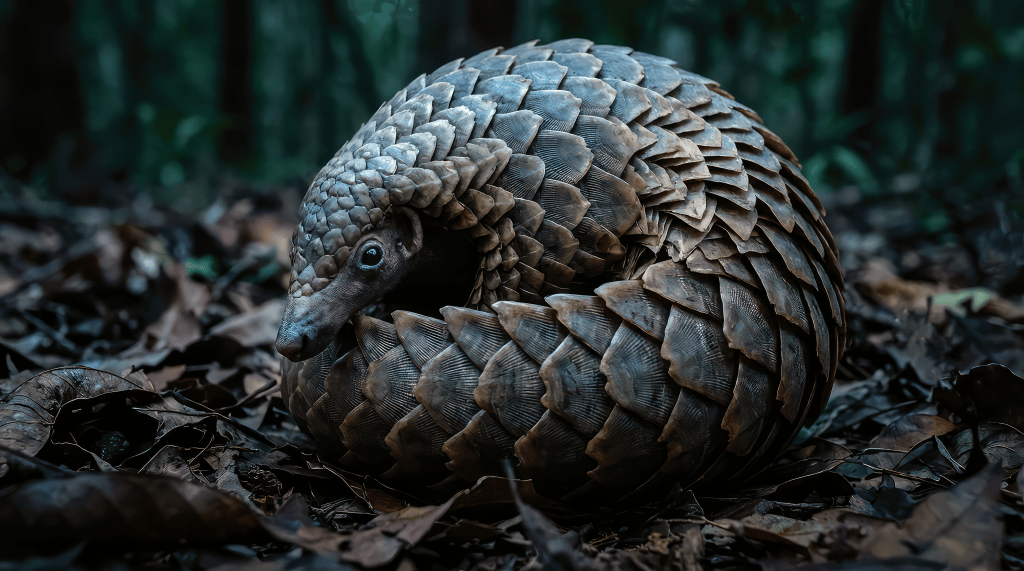
With powerful claws, a Pangolin can dig an 8-foot burrow in minutes, sealing itself inside to rest throughout the day. As it digs, it turns the soil, aerating and enriching it, a humble gardener of the ecosystem it inhabits. After birth, their young cling tightly to their mother’s tail, unable yet to walk; they rely entirely on her protection. Their family name, ‘Manes’, meaning spirit, echoes the ancient Greek and Roman deities associated with the souls of deceased loved ones. Yet these shy, gentle creatures are slipping away; all eight species are declining due to habitat loss or are hunted for their meat and scales, their lives traded in markets where tens of thousands are killed each year; in parts of Africa, their meat sells for far more than their scales.
Red Panda
High in the moss-covered conifer, broadleaf, and mixed forests of the Himalayas, Nepal, and China, the Red panda climbs through branches like a flicker of autumn light. Its thick reddish fur, ringed tail, and white markings on the ears, nose, and eyebrows create a natural camouflage that blends in with red moss and white lichen that covers the trees, while its legs and underbelly remain a deep black.
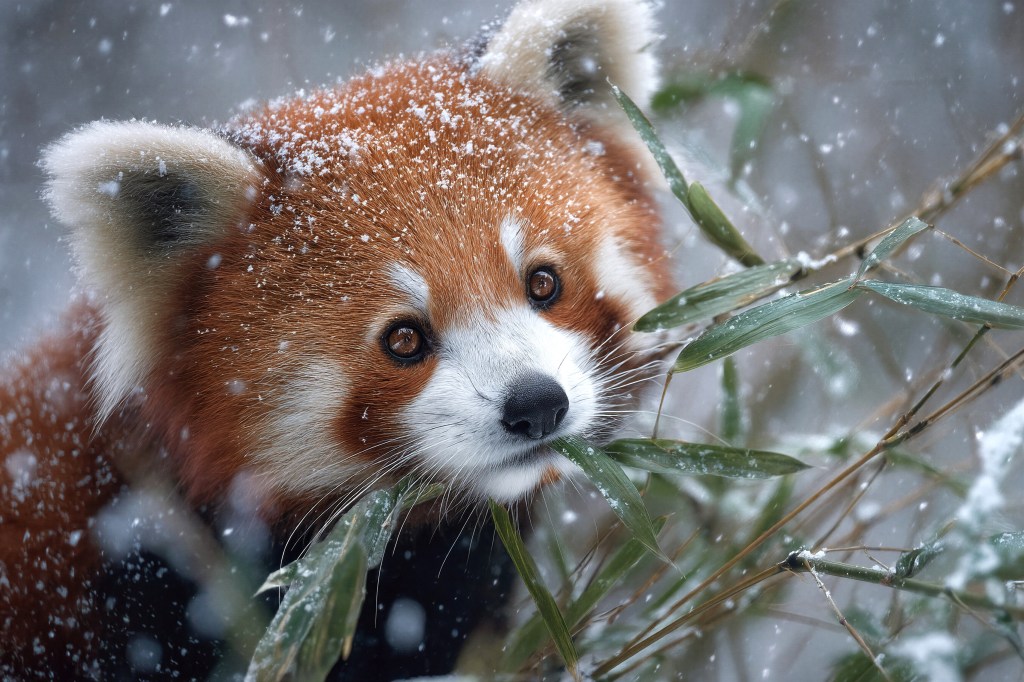
There are two subspecies: one from the high Himalayas, Nepal, with a lighter forehead and yellow-brown ear-tips and lower back, and the other from China, with a darker face and coat, curved forehead and sloping nose.
Although it shares bamboo shoots and leaves as a winter food source, the red panda is not closely related to the giant panda, but to raccoons & weasels. Its curved semi-retractile claws and balancing tail make it an exceptional climber, spending most of its life in the trees. Red pandas are nocturnal but sleep over multiple periods throughout the night, often draping their body over a branch with their legs dangling below in summer.
They are listed as endangered on the IUCN Red List, with populations still decreasing due to habitat loss, deforestation, logging, bamboo clearing and being trampled by livestock, which prevents new bamboo growth. Red pandas are also hunted and captured for their fur, skin and tail.
Okapi
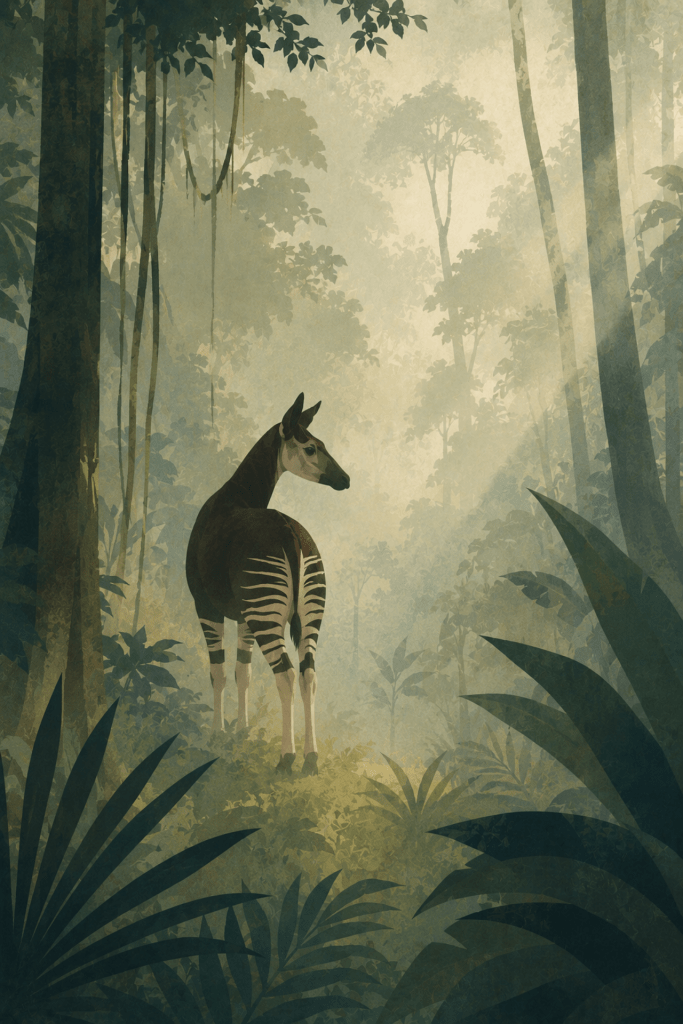
Okapi, often called the forest giraffe, lives in canopy forests of the Democratic Republic of Congo, where uppermost layers of tree branches and foliage at altitudes of 500-1,500m provide shelter, shade and food, such as leaves, buds, fruit, grasses, and ferns. The Okapi move through shafts of filtered light; its reddish-to-mid-brown coat with white zebra-striped legs acts as camouflage, imitating flickers of sunlight through the leaves, allowing it to blend seamlessly into its forest home. Closely related to the giraffe, the okapi shares some traits, such as long legs, a sturdy body, and an impressive 18-inch tongue, though the okapi is smaller in size with a shorter neck. Male okapis grow horn-like ossicones up to 15 cm long, covered with skin, used in necking battles with rival males or displays of dominance, by swinging their heads to release a forceful blow. While the females have whorls of hair or tiny ossicones. Generally regarded as shy and solitary, okapis sometimes gather in small groups, especially during breeding. A ‘chuff’ sound is used for communication.
The Okapi is classed as endangered by the IUCN due to illegal hunting and poaching for its meat and skin, along with habitat loss caused by logging, mining, and expanding urban development.
African penguin
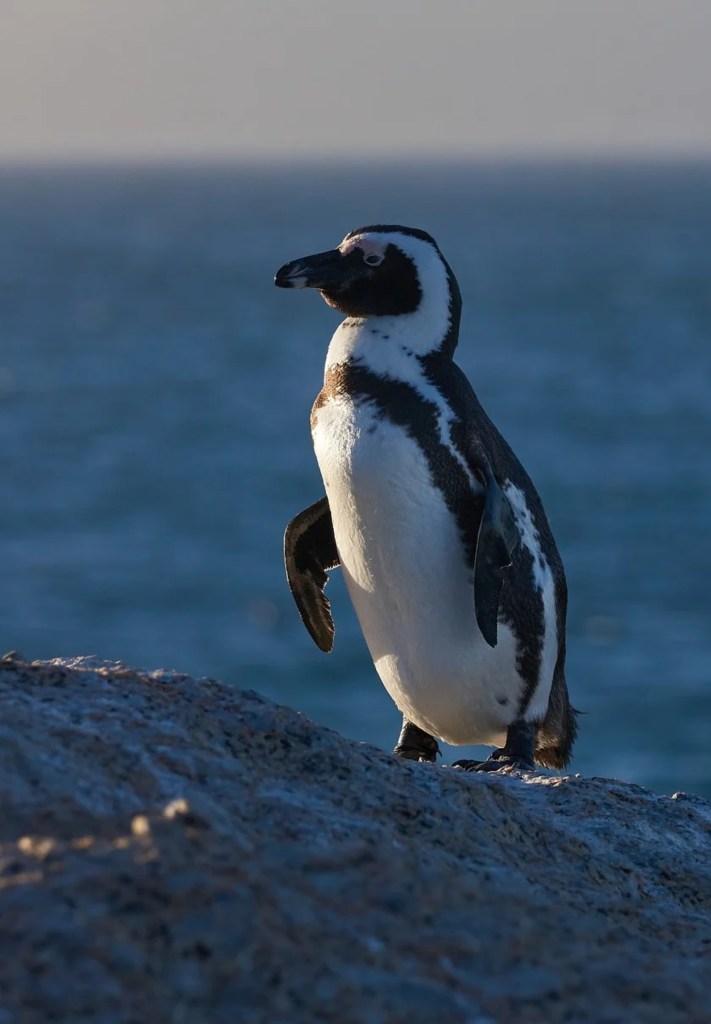
African penguins are native to the white‑sanded shores of Southern Africa and Namibia, with their largest colony found on the Dyer Island nature reserve complex off the coast of Gansbaai, South Africa. This cluster of islets—Dyer, Geyser, and Quoin Rock—provides essential habitat for these striking seabirds. African penguins are easily recognised by their black plumage, dark feet, and bright white belly marked with a curved band and scattered spots that help camouflage them underwater. A distinctive pink patch above each eye acts as a natural cooling system, regulating their body temperature. Females tend to be slightly smaller than males, with more delicate beaks, while their wedge‑shaped flippers allow them to dive as deep as 400 feet in pursuit of sardines, anchovies, and other small fish.
When a male African penguin finds his ideal mate, he presents her with his favourite pebble—a simple, tender gesture of love and affection. Once paired, they form a strong bond and remain together for many breeding seasons. Pebble‑stealing from neighbouring nests is surprisingly common, as males try to adorn their nest and increase their appeal. Together, pairs dig burrows or build guano nests in sand or soil, creating thick layers of eggshell, feathers, and accumulated guano that help insulate their chicks from predators and heat.
An Esso oil tanker spill in 1948 near Quoin Point killed thousands of penguins, followed by another major spill in 1971. By 1982, many breeding pairs relocated from Dyer Island to False Bay, where their numbers have since grown to around 3,000 at Boulders Beach. Despite this recovery, African penguins still remain critically endangered, having declined by roughly 90% since the early 20th century due to habitat loss, overfishing, and repeated oil spills. Today, conservationists construct artificial nesting sites made from fibreglass or cement to improve their chicks survival and to help support the species’ fragile future. The Galápagos penguin faces similar threats and is also considered endangered.
Sumatran Orangutan
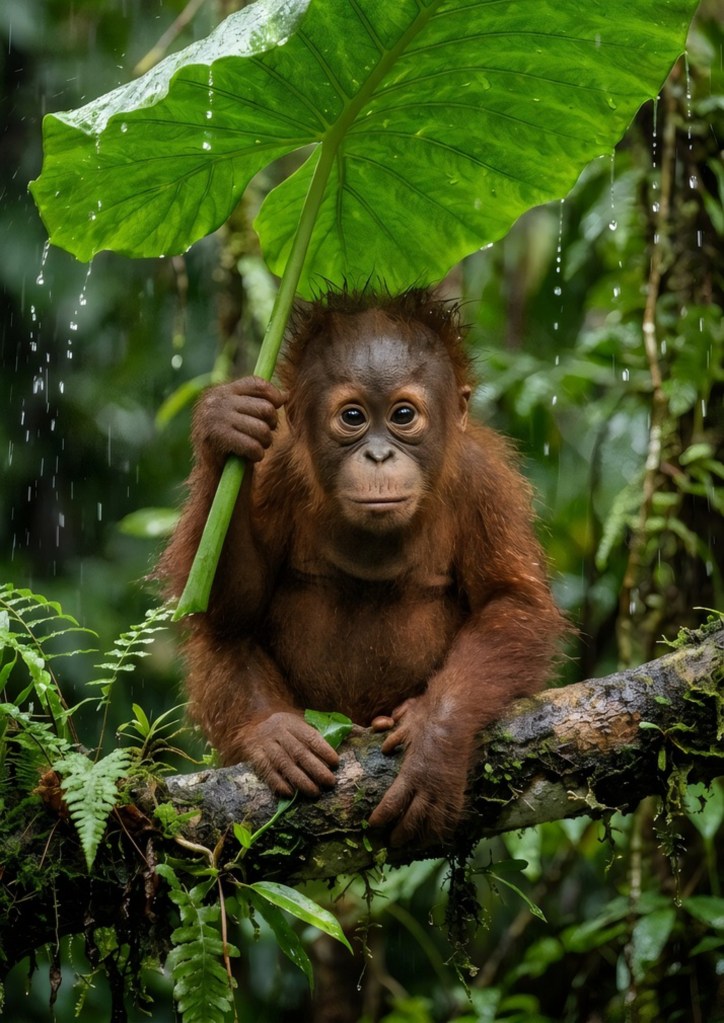
The Sumatran orangutan lives high in the montane rainforests of Sumatra, a large island in western Indonesia. These arboreal apes spend nearly their entire lives among the trees, moving with remarkable grace using long arms and flexible hands to swing through the branches. Their flowing reddish‑orange hair blends with tree bark, leaves, and mosses, offering a natural camouflage. Compared with the Bornean orangutan, this species has a slighter build, a more elongated face, and a more social nature, often gathering in groups to feed. Their diet centres on fruits and insects especially figs and jackfruits, using twigs as tools to extract seeds, ants, termites, and even honey. As they travel through the forest, they disperse seeds, playing a vital role in regenerating the rainforest and supporting the growth of new seedlings.
All three orangutan species—Bornean, Tapanuli, and Sumatran are listed as critically endangered on the IUCN Red List. Sumatran orangutans continue to decline due to extensive habitat loss driven by residential and commercial development, mining and quarrying, agriculture and aquaculture, road and railway construction, natural fires, illegal pet trade, logging, wood harvesting, hunting, and trapping.
The greatest threat comes from the rapid expansion of large‑scale palm oil plantations across Borneo and Sumatra. Palm oil, a low‑cost oil derived from the fruit of the African oil palm, is used in an astonishing range of everyday products—biscuits, cakes, ready meals, noodles, cosmetics, lotions, shampoos, toothpaste, detergents, and even diesel fuel. Despite rising prices, global demand remains high. Since 1999, an estimated 100,000 orangutans have been killed in Borneo alone, and around 80% of their habitat has been destroyed. The clearing of rainforests for plantations often involves logging and burning, wiping out the food sources and shelter orangutans depend on. Today, between 1,000 and 5,000 orangutans are still killed each year due to palm oil development. So before reaching for another product from the supermarket, remember it might be contributing to the decline of these precious rainforest apes, with whom we share 97% of our DNA.
African Forest Elephant
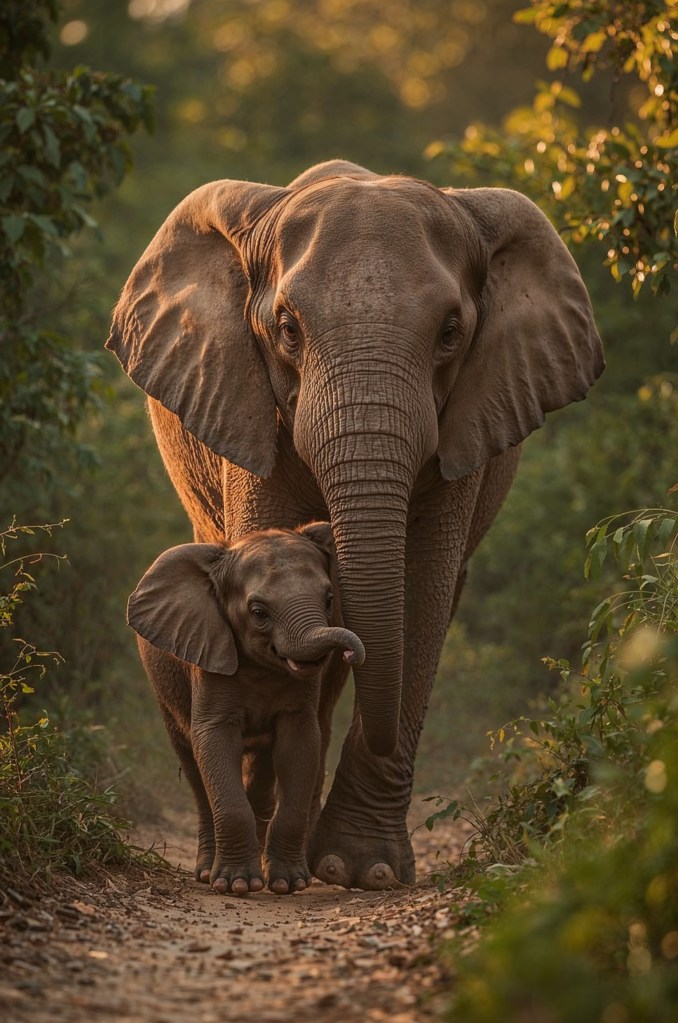
The African forest elephant lives in the dense, humid tropical forests of West and Central Africa. Females gather in social groups of around twenty, moving with their young through the the forest as they spend their days grazing. With remarkable strength and precision, they grip, twist, pull, and compress grass, fruits, seeds, leaves, and tree bark with their trunks before guiding it into their mouths—consuming up to 300 kilograms of vegetation each day. Smaller than their savanna relatives, forest elephants have grey skin with sparse black hairs, more oval‑shaped ears, a rounder forehead, and straighter, downward‑pointing tusks. They are often called the “mega‑gardeners of the forest” for their extraordinary ability to disperse seeds from at least 96 plant species across vast distances. Many of these seeds germinate in their dung, making forest elephants essential architects of their ecosystem.
African forest elephants are listed as critically endangered, with populations having declined by an estimated 86% due to poaching for ivory, habitat loss, and the fragmentation of once‑continuous forests broken up into isolated patches through expanding agriculture, construction, roads, and railways. The African savanna elephant is also classified as endangered on the IUCN Red List.
Life on this earth is woven from delicate, irreplaceable threads.
When species vanish and habitats fade, the whole tapestry begins to fray. Protecting nature is an act of devotion — a promise to the future.

