
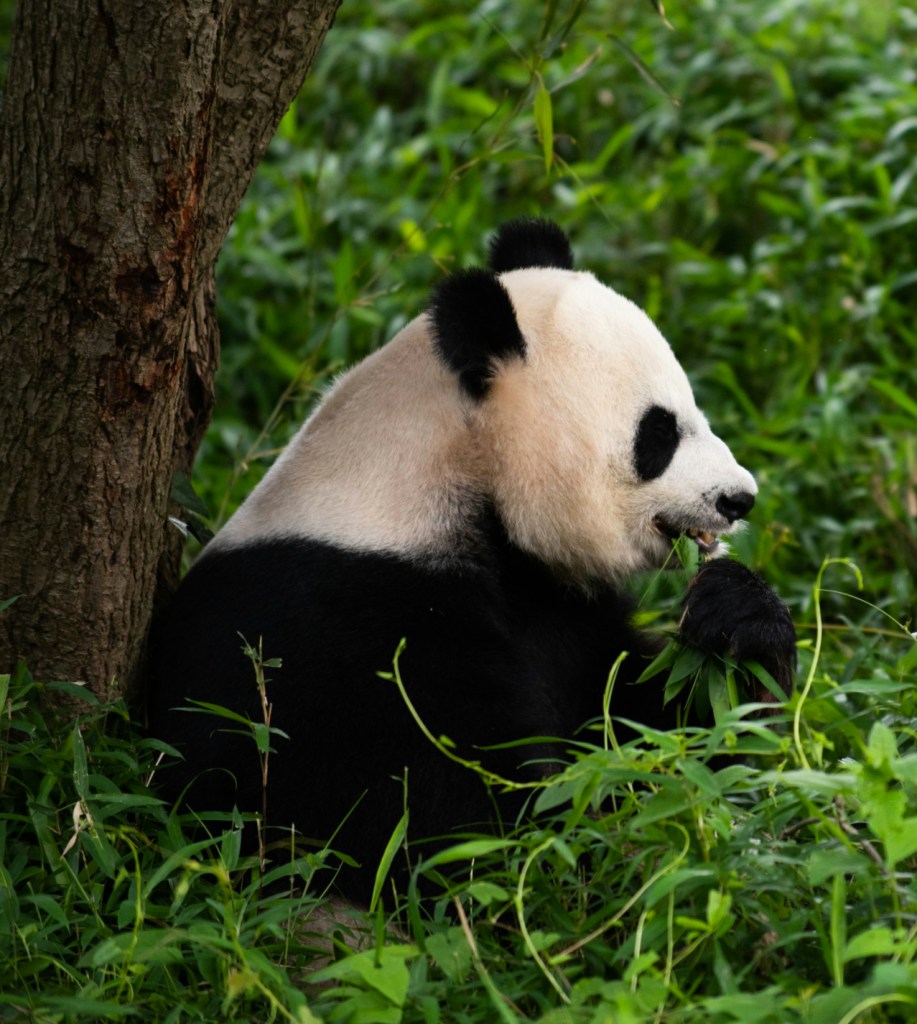
These cute, tubby giant pandas inhabit the alpine hills of the Minshan Mountains and the misty forest slopes of the Qinling Mountains in central China. They often sit with their legs outstretched while feeding on bamboo, using their specialised thumbs to grip shoots, leaves, and stems. Their flat molar teeth help grind bamboo, and their gut microbes break down cyanide, allowing them to consume up to 31 pounds daily.
These bear species have a rounded head, heavy body, and a white woolly coat with black patches on their rounded ears, eyes, legs, and shoulders. These patches act as camouflage in snow during winter and in shade in summer. During the day, they roam in search of food, climb trees, hide in rock crevices for shelter, or roll on the ground, taking dust baths. In the Tibetan Plateau, Sichuan province, they can share their habitat with the red panda but prefer lighter slopes and less shrubland than the red panda does. Unlike other bear species, they do not hibernate and are typically solitary. They gather in groups only during the spring breeding season, using urine scents on trees or stones to communicate.
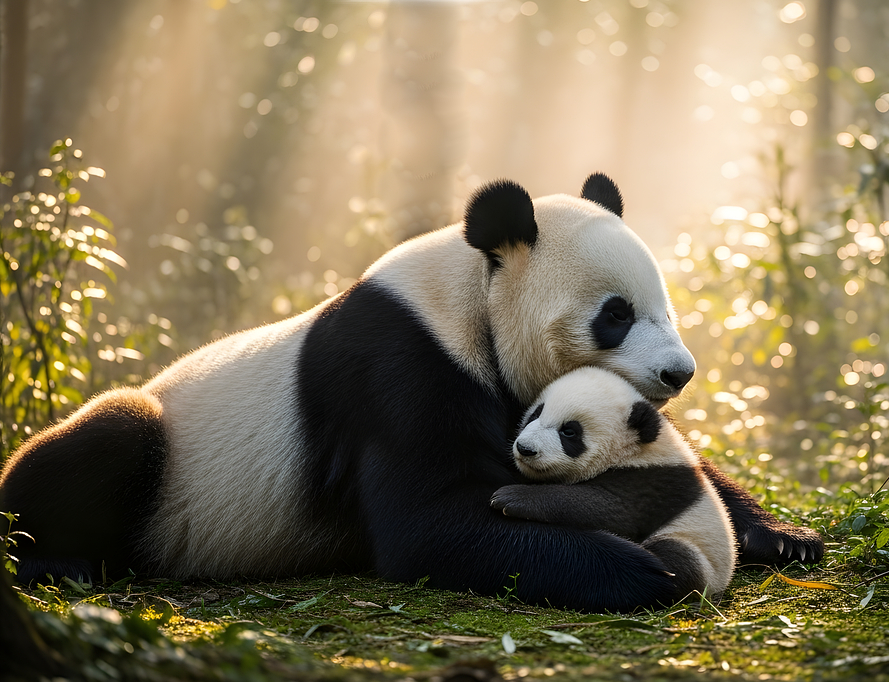
Newborn cubs are extremely vulnerable, born blind and pink in colour, relying on their mother for milk up to 14 times a day. During this period, the mother must leave the nest for as long as four hours to find food, which leaves the cubs exposed to predators. After two weeks, the cubs begin to turn grey, and within a month, they develop their distinctive black and white fur. At three months, they start crawling, often climbing onto their mother’s back and following her outside to explore. By six months, the cubs are able to start eating bamboo.
Giant pandas are listed as vulnerable on the IUCN red list, with 1,900 living in the wild. They are declining due to deforestation, farming, and infrastructure development that have caused habitat loss in lowland areas where they live, forcing them to move to other areas.

