The Koala bear is a well-known symbol of Australia and serves as a spiritual totem for many Aboriginal peoples. For thousands of years, it has featured in their dream stories and appears in the Gumbaynggir creation story, where the Koala brothers rescued the people during a flood.
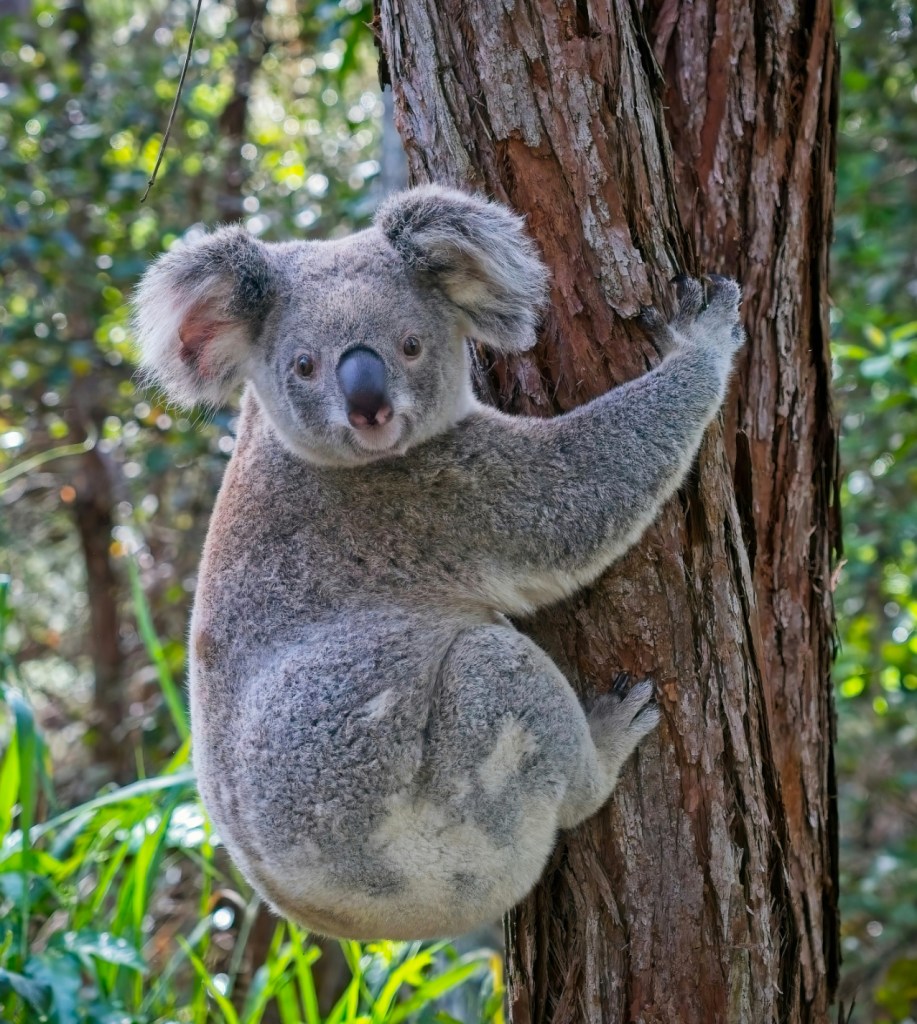
Koalas are tree-dwelling animals found in the Eucalyptus woodlands & forests of Eastern and Southern Australia using their sharp claws to grip onto the bark. Where they are often seen feeding on leaves, which are stored in their cheek pouches and later gnawed into smaller pieces using its back molar teeth for easier digestion, consuming up to 400 grams a day.
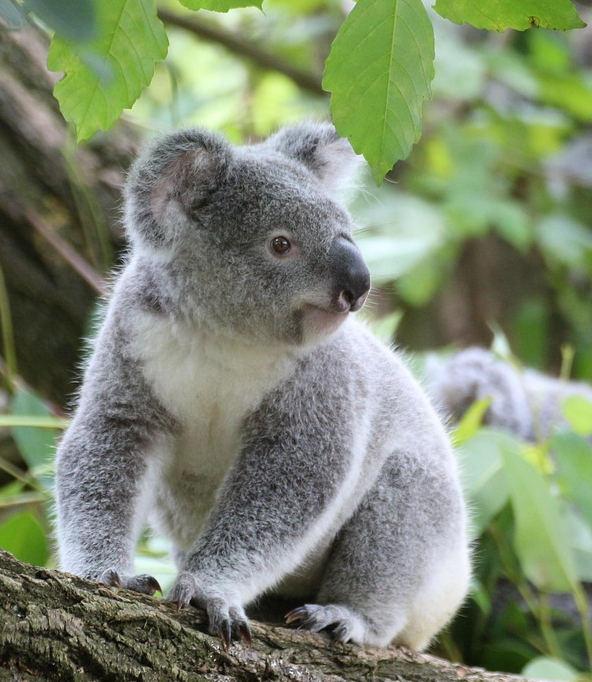
They are recognised as a type of wombat or considered closely related. There are three Koala species: the Queensland Koala, the New South Wales Koala, and the Victorian Koala. They differ in fur colour, size, build, and head shape. Generally, they are bulky and heavily built, tailless, with a large, dark, rounded nose, small, rounded eyes, soft, furry ears, a white belly, and light grey to mid-brown fur.
From the late 1800s to the late 1920s, eight million Koala bears were hunted or poisoned and their fur skins transported to Europe to make rugs, fashion accessories such as muffs, coat linings, and garment trimmings. By the 1920s and 1930s, efforts by the Lone Pine Koala Sanctuary in Brisbane and the Koala Park Sanctuary in Sydney aimed to preserve them and increase their population through breeding programs. Today, the greatest threat is habitat loss and the breaking up of natural land into smaller patches. This results from urban expansion, land clearing for agriculture, and logging. Other threats include road deaths, attacks by cats and dogs, bush fires and lack of trees for food in urban areas. They are listed as vulnerable on the ICUN red listed.

