
Chloris, the goddess of flowers, radiates her love, grace, and beauty across the woodlands, meadows, wetlands, mountains, gorges, and plains of ancient Greece. She was the nymph of Elysium, the island of the blessed, symbolising spring, growth and renewal. It is said that she exhaled roses from her lips and scattered the first seeds across distant lands. Wherever she wandered, beauty followed.
Flowers, too, carry their own mystical wonder, ones that not only bring joy to our lives but also spark our curiosity. They provide fragrances for perfumes, oils, balms, skincare, and cosmetics, enhancing the beauty of our homes, gardens, and workplaces. Their petals flavour our food and sweeten the honey gathered by bees. Flowers are gifts from the living world, inviting us to admire, nurture, and cherish them. Birds, butterflies, bees and hummingbirds depend on them for survival, and through centuries of cultivation, humans have shaped extraordinary hybrids, each one a testament to our enduring fascination with nature’s artistry.
Crete, the cradle of mountains and myth, is home to about 180 plant species found nowhere else on Earth. Some cling to sheer cliffs, hide within deep gorges, or flourish across rugged mountain ranges, while others root themselves in woodlands, wetlands, stream edges, and coastal habitats.
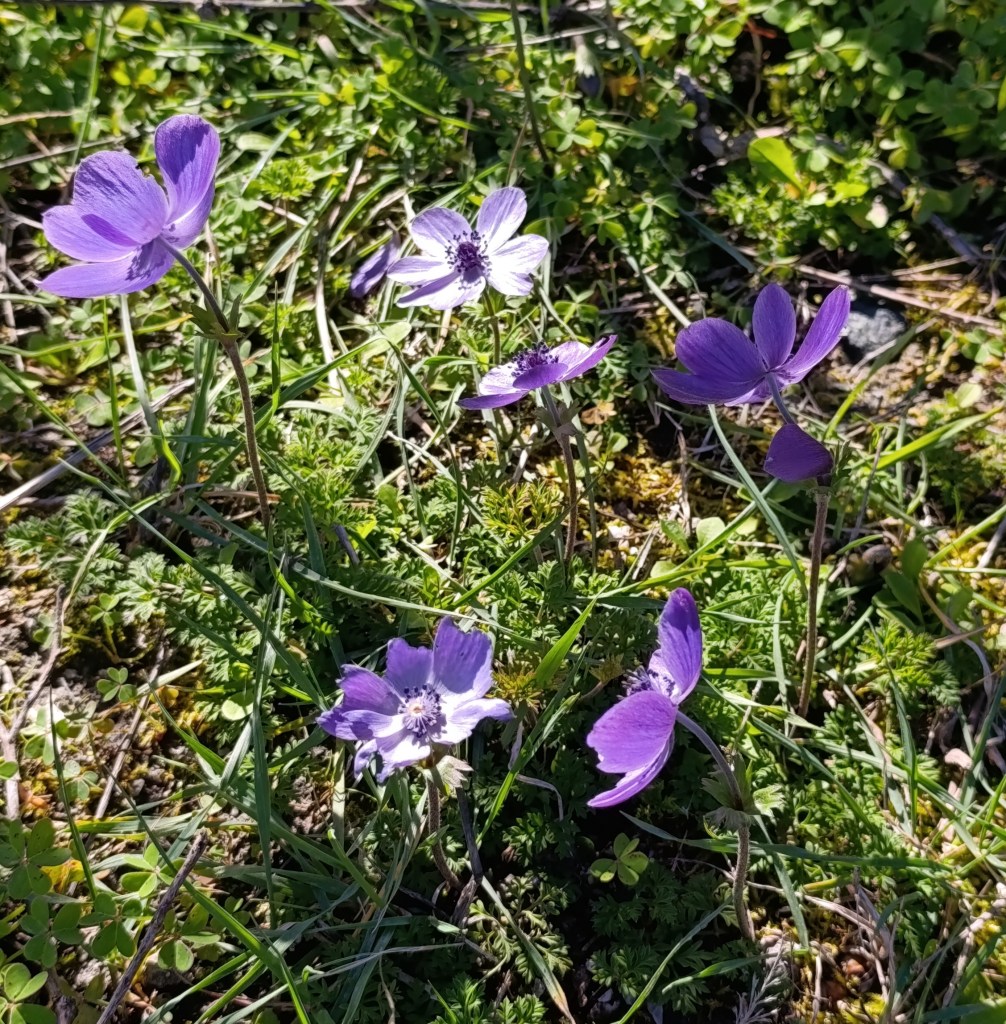
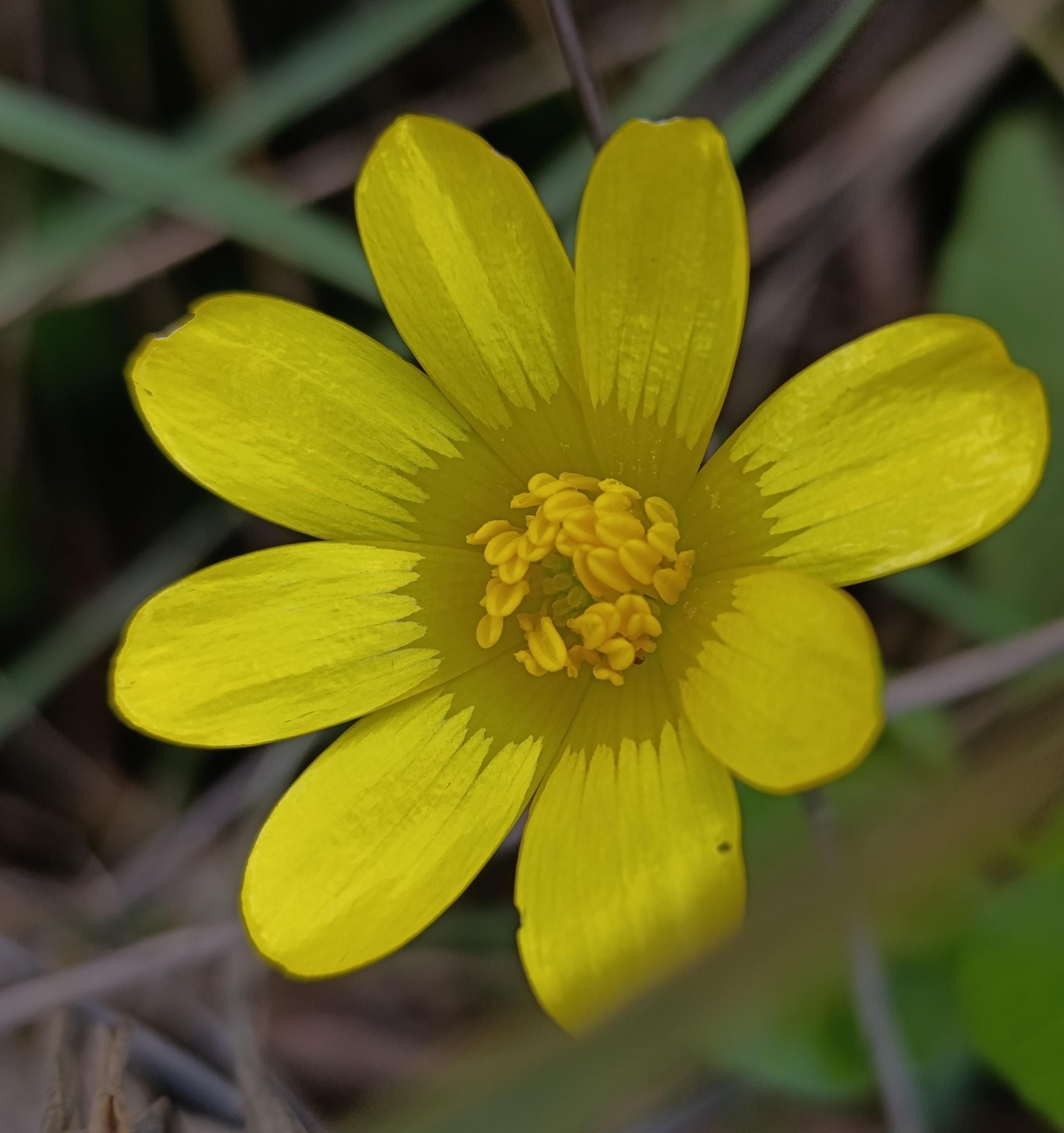
In spring, the island’s flora awakens in a burst of colour; violet crown anemones bloom and mingle in meadows, fields, and olive groves, their petals gently fluttering in the breeze. Among them gleam the bright yellow, star-like blooms of the Lesser Celandine, whose delicate petals are nibbled by snails during the rainy season.
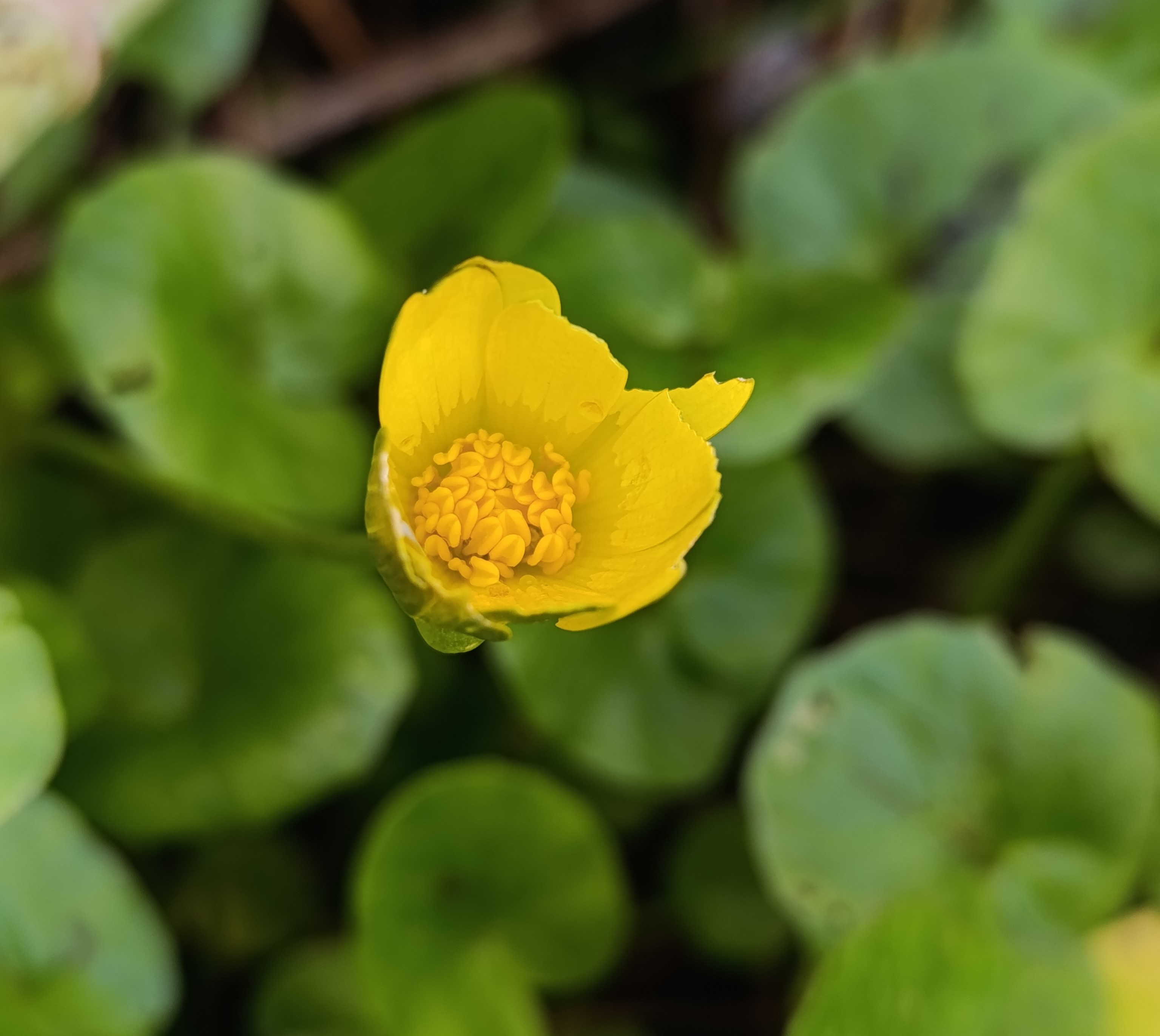
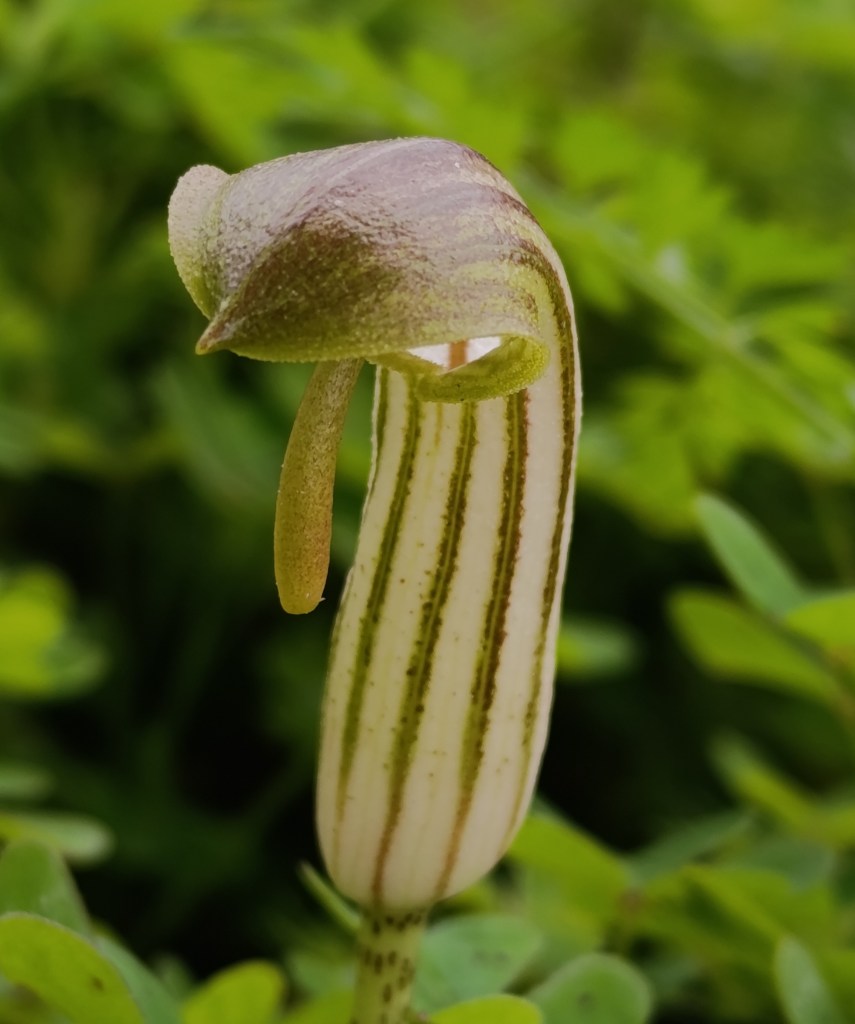
The Friar’s cowl (Arisarum vulgare)also springs up from the stony undergrowth, with its leaf-like bract forming a tube, a curved lip, and green-brown stripes that resemble a loose hood, similar to those of a monk’s habit. Its leaves are large and heart-shaped, and it grows in uncultivated fields, forests, rocky shrubland, and sometimes by roadsides in rural areas.
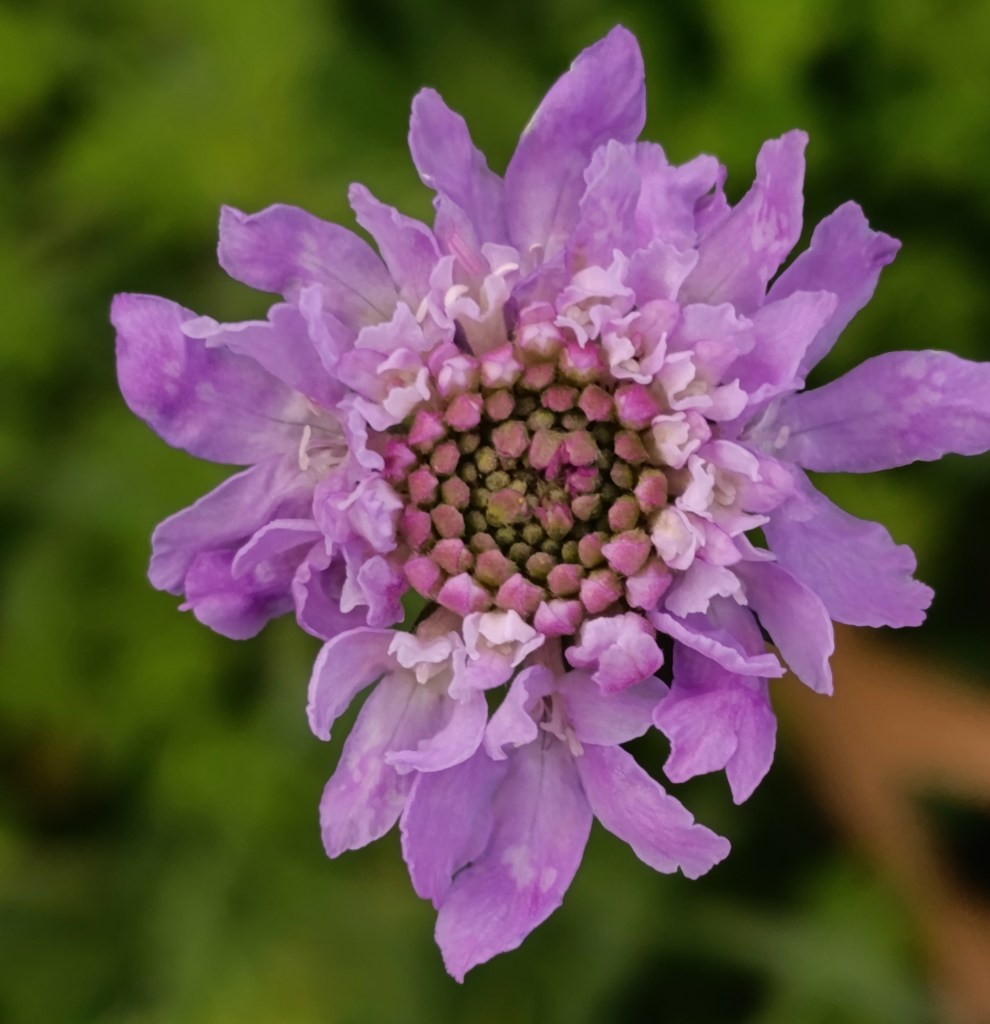
The bright pink floret flowers of Scabiosa atropurpurea, on long, slender stems, add colour in spring. A short-lived perennial or biennial, known as the pincushion flower because the centre resembles a small pincushion for storing pins. This flower is popular as a cut flower for its elegant purple to dark red blooms, which are also grown in cottage gardens.
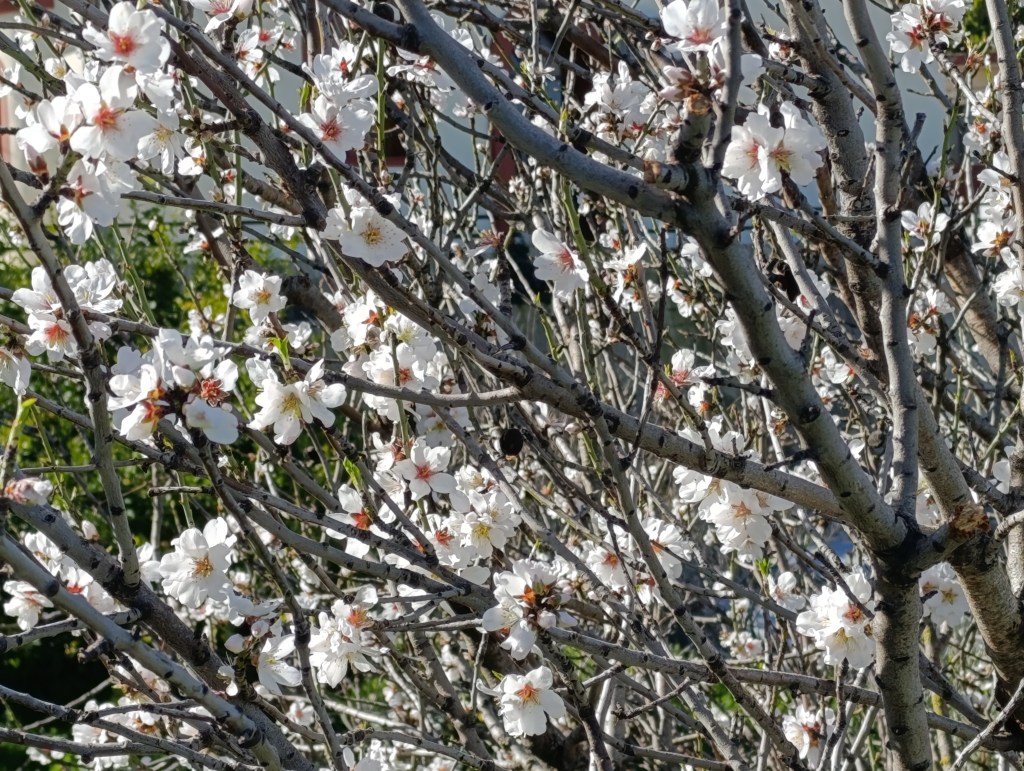
Almond trees burst into bloom, filling the air with a delicate, enchanting aroma that draws bees and pollinators near. Their white and pale pink blossoms, crowned with golden stamens, transform the landscape with beauty and fragrance.
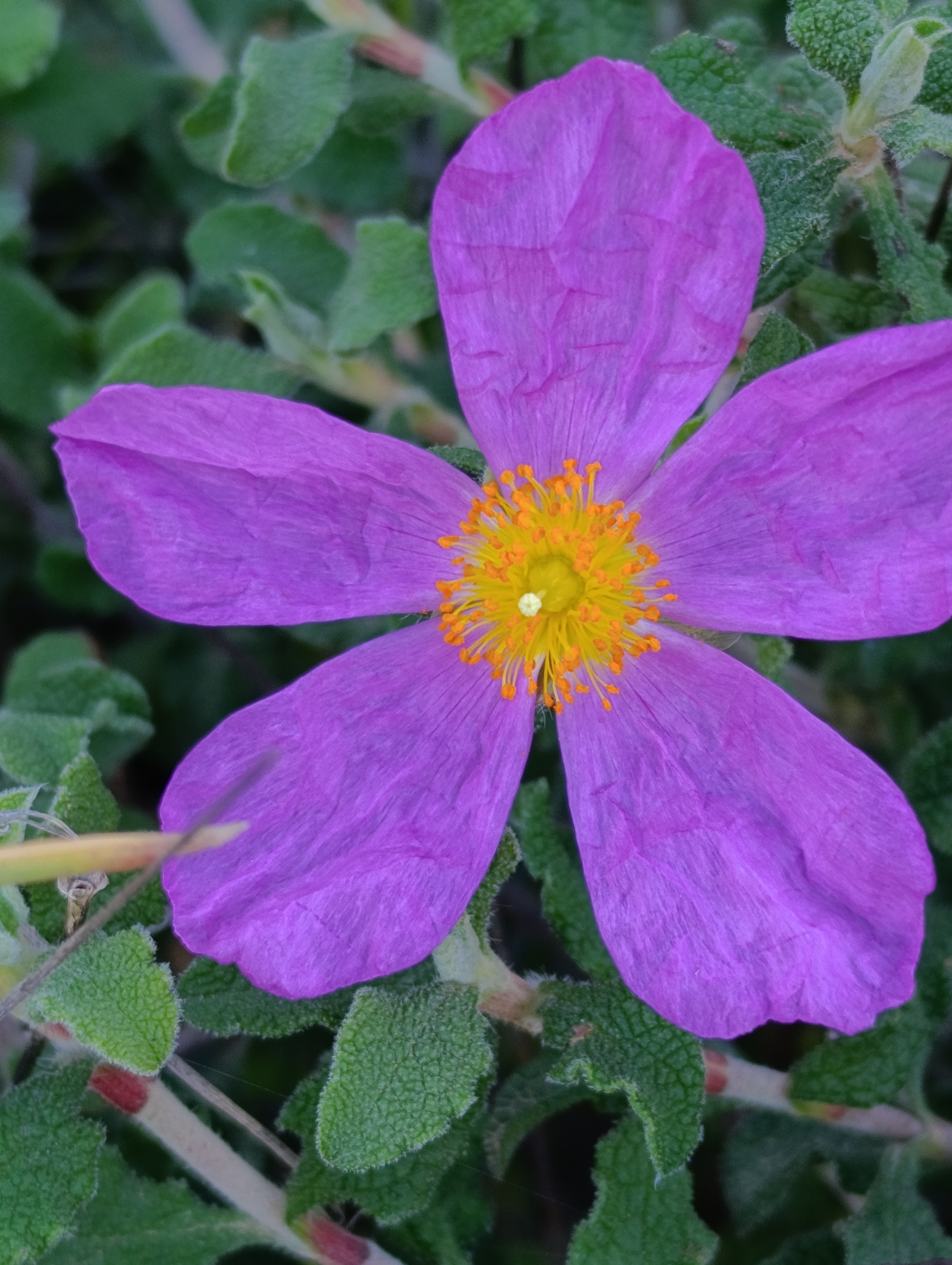
Cistus creticus, below left, is a lovely aromatic shrub with striking purple-pink to rose-pink flowers and golden stamens. Its narrow lanceolate leaves have a silvery shine due to their soft grey hairs. The resin, labdanum from this plant, was once used in perfumery and medicine.
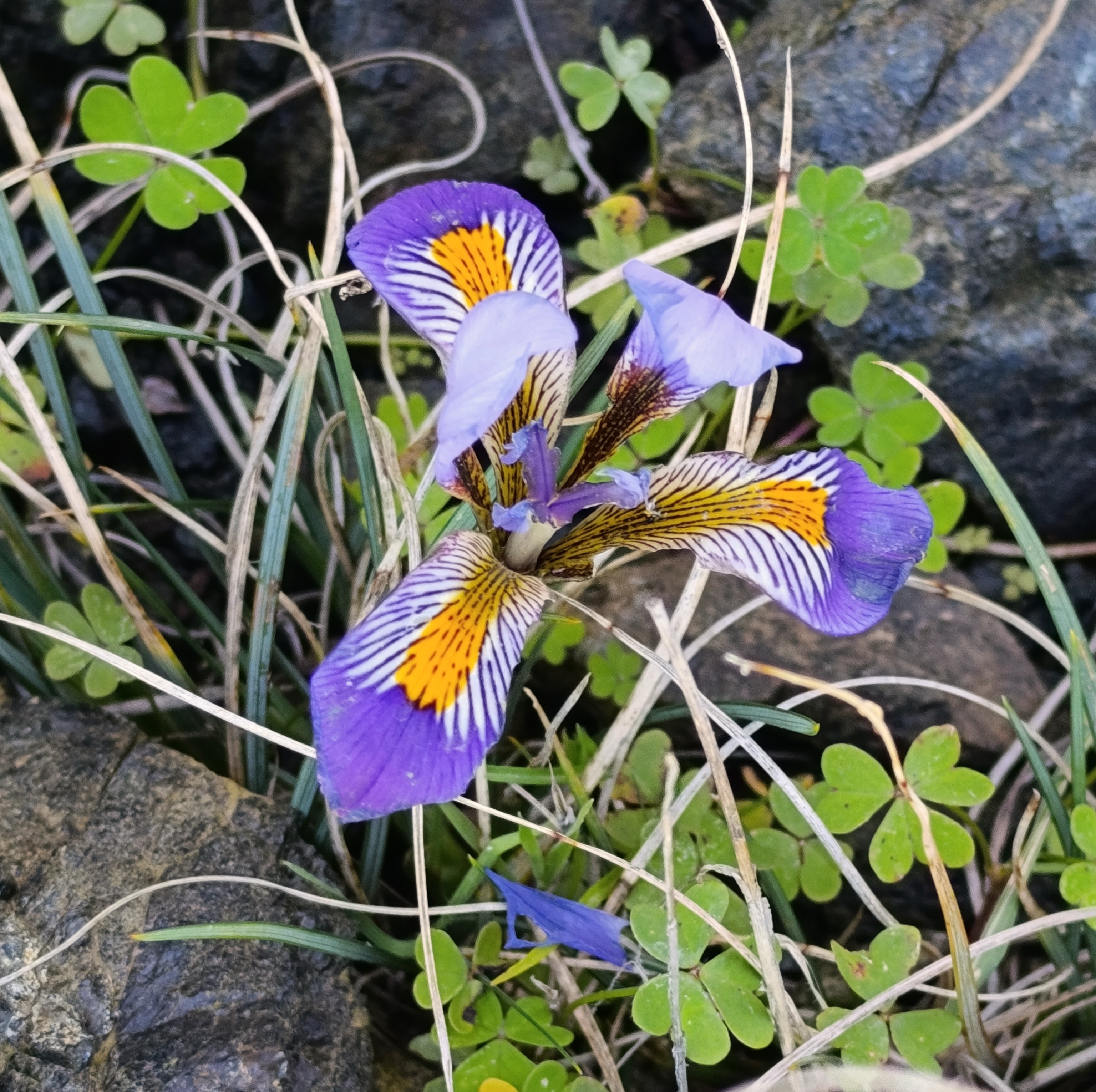
Iris cretensis, shown on the right below, has striking violet flowers with yellow and white patterns on its petals. It grows among straight, grass-like leaves in rocky places, low shrubland, and on slopes.
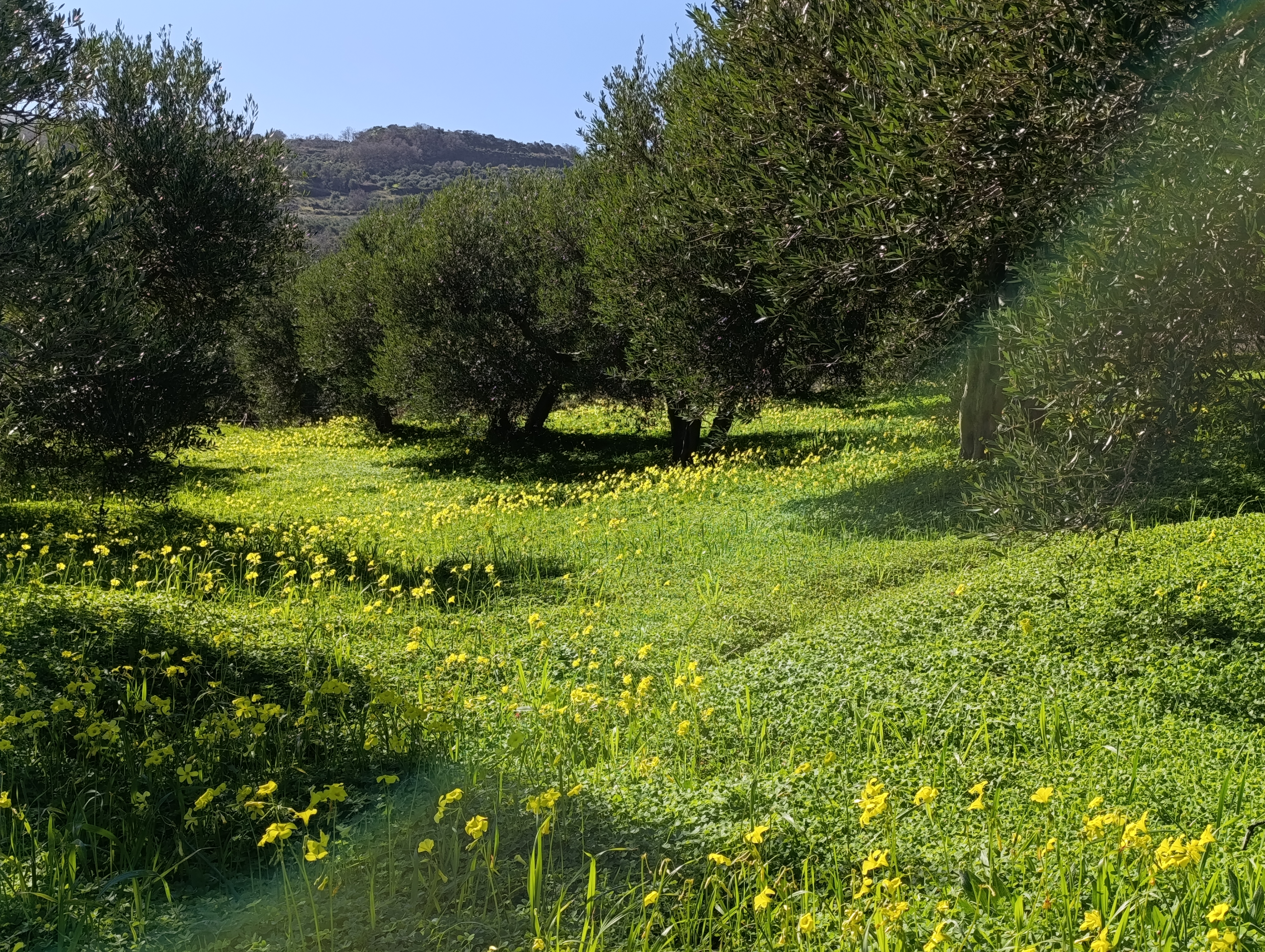
In spring, whole landscapes across Crete and the Mediterranean glow with the bright yellow sweep of Bermuda buttercups (above right). Their clover-like leaves and sun-lit petals cascade across fields, olive groves, and roadsides, so abundant that some say that their golden meadows can be seen from space. Although regarded as an invasive species, spreading from Malta in the 1800s to California, Europe, the Middle East, Australia and South Africa, their presence transforms the land with temporary radiance. Bees adore them, drifting from bloom to bloom as if moving through a sea of light.
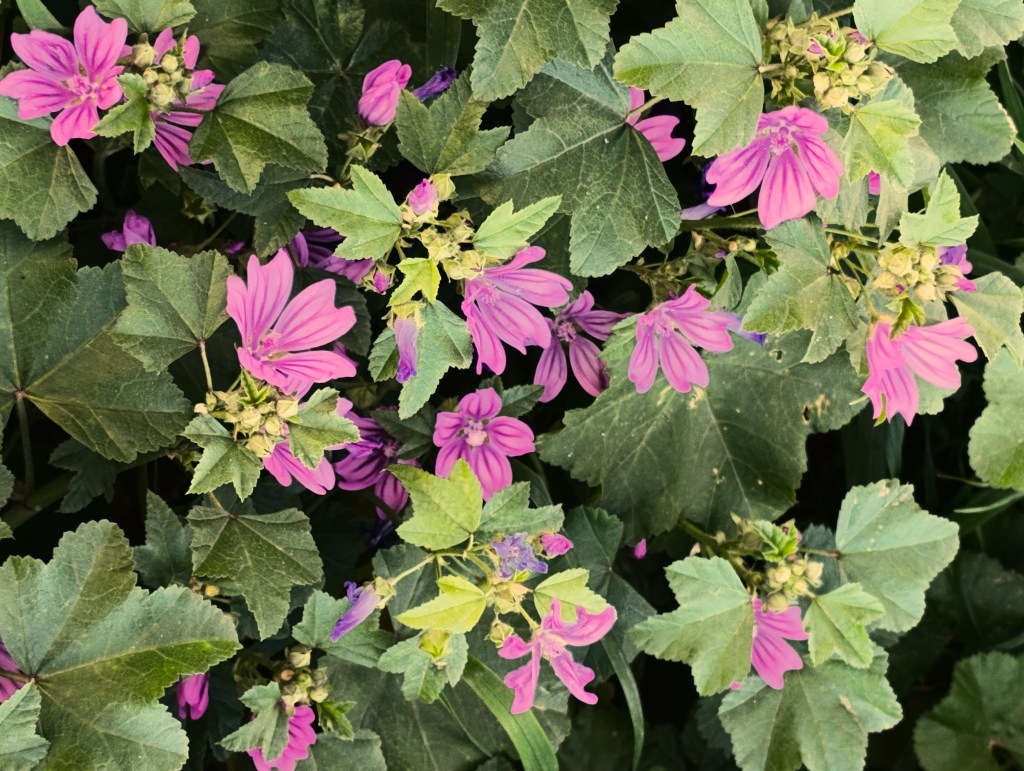
Along pathways, hedgerows, roadsides, and barren places, Malva sylvestris-the common mallow- opens its soft, pale pink flowers, each one marked with deep rose-coloured veins. Its palmately lobed leaves have long been used for cooking and can be substituted for grapevine leaves in dishes such as Greek dolmadakia (stuffed vine leaves). Traditionally, this plant has also been valued for soothing the lungs and throat, offering relief for asthma, bronchitis, and infections. It is a humble plant, yet one woven deeply into both the landscape and the old herbal knowledge of the region.
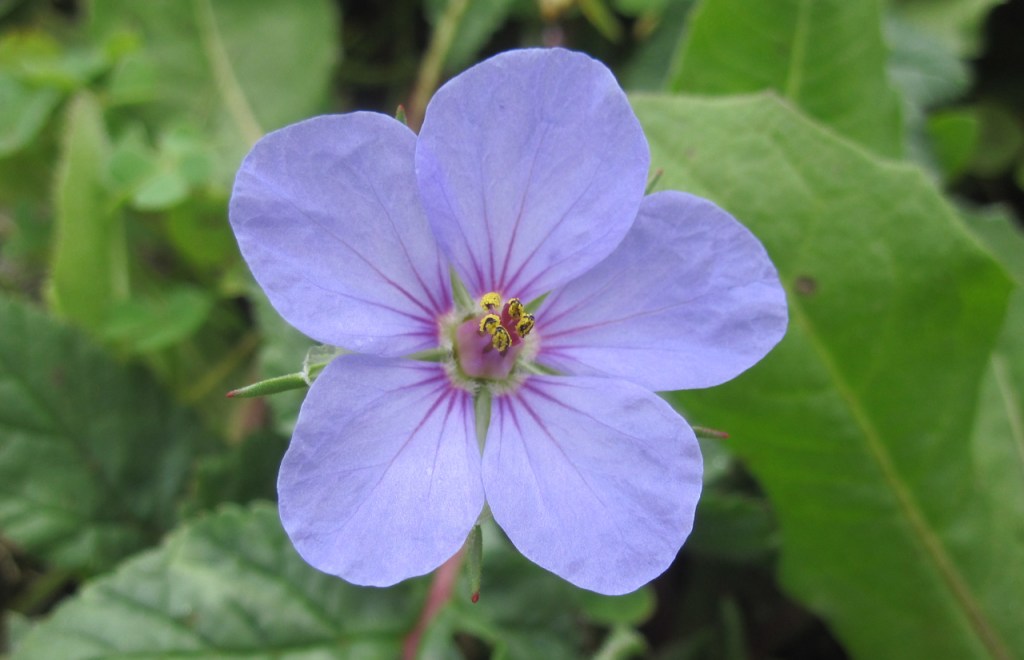
In stony, sun-warmed places, Erodum gruinum, the long-beaked heron’s bill, rises its violet blooms on slender stalks. Reddish purple veins radiate from the centre of each flower, like tiny brushstrokes. Its name comes from the remarkable shape of the fruit, a long, pointed structure that resembles a heron’s bill. Even in the most rugged ground, this plant finds a way to root itself, offering small flashes of colour where the Earth seems bare.
The wind-flowers of Greece
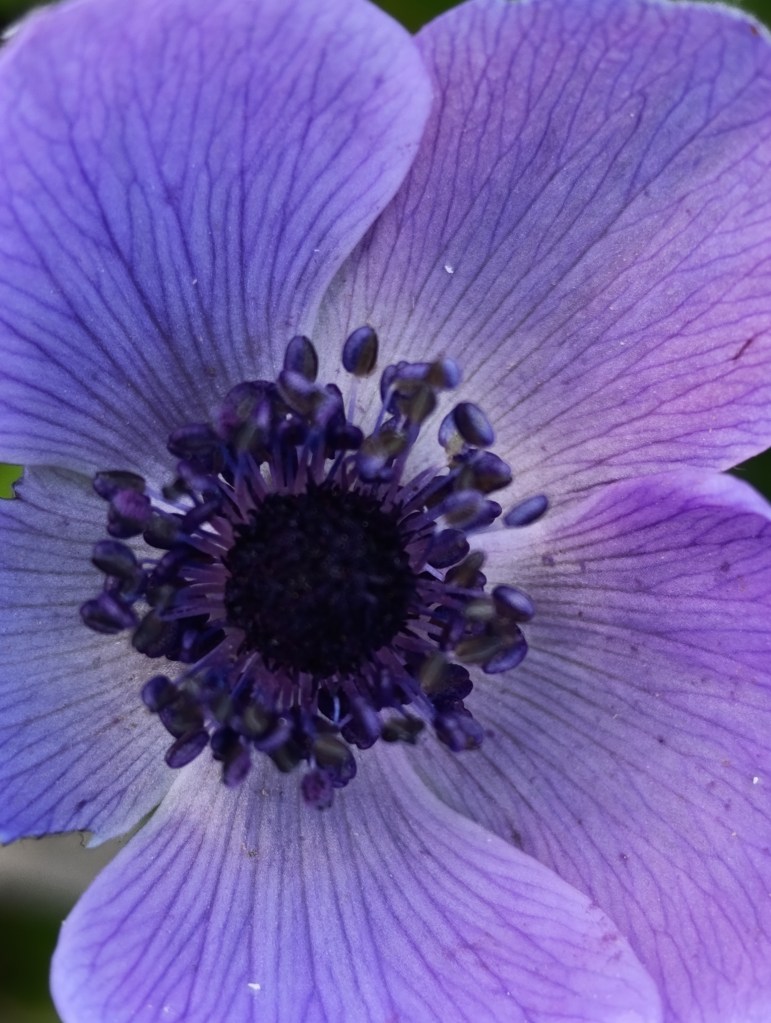
Across the landscapes of Greece, the anemones -those ancient wind-flowers-rise each spring as if stirred awake by the breath of the gods. Their petals, delicate yet determined, bloom in colourful meadows, forests, and olive groves, carrying with them stories as old as myth itself. Anemone coronaria, perhaps the most cherished of all, opens its rounded, crown-like flowers in shades of pink, violet, white, red, and blue. Its finely cut leaves gather beneath each bloom, giving the plant a regal, uplifted posture, a subtle reminder of its mythic lineage. Native to Crete, Anemone hotensis opens its white petals, tinged with blue towards the centre, each bloom encircled with purple anthers, and framed by ten or more slender sepals. The leaves beneath the flowers are short and pointed, while the lower leaves spread outward in deeply palmately lobed forms.
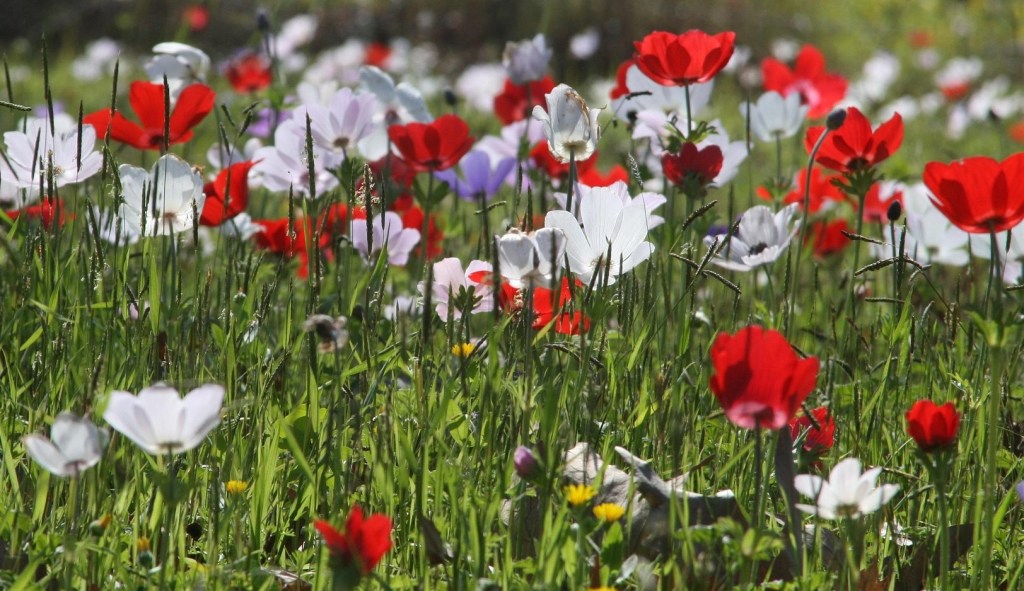
Its subspecies, anemone hortensis ssp. heldreichii hides in the shaded stillness of dry olive groves, stony clearings, and places where branches gather after the winter winds. From January to May, it offers white and pink flowers, tinted blue at the centre, their violet anthers glowing like tiny embers. As a tuberous geophyte, it rests deep in the soil until the spring calls it forth.
Anemone pavonina is the glowing-amber anemone -it’s vivid red petals, pale in the centre, and dark purple anthers light up entire pine forests, meadows, and uncultivated fields from February to May. Although pink and violet forms exist, the red anemones are the most striking, like splashes of red dotted around the landscape.
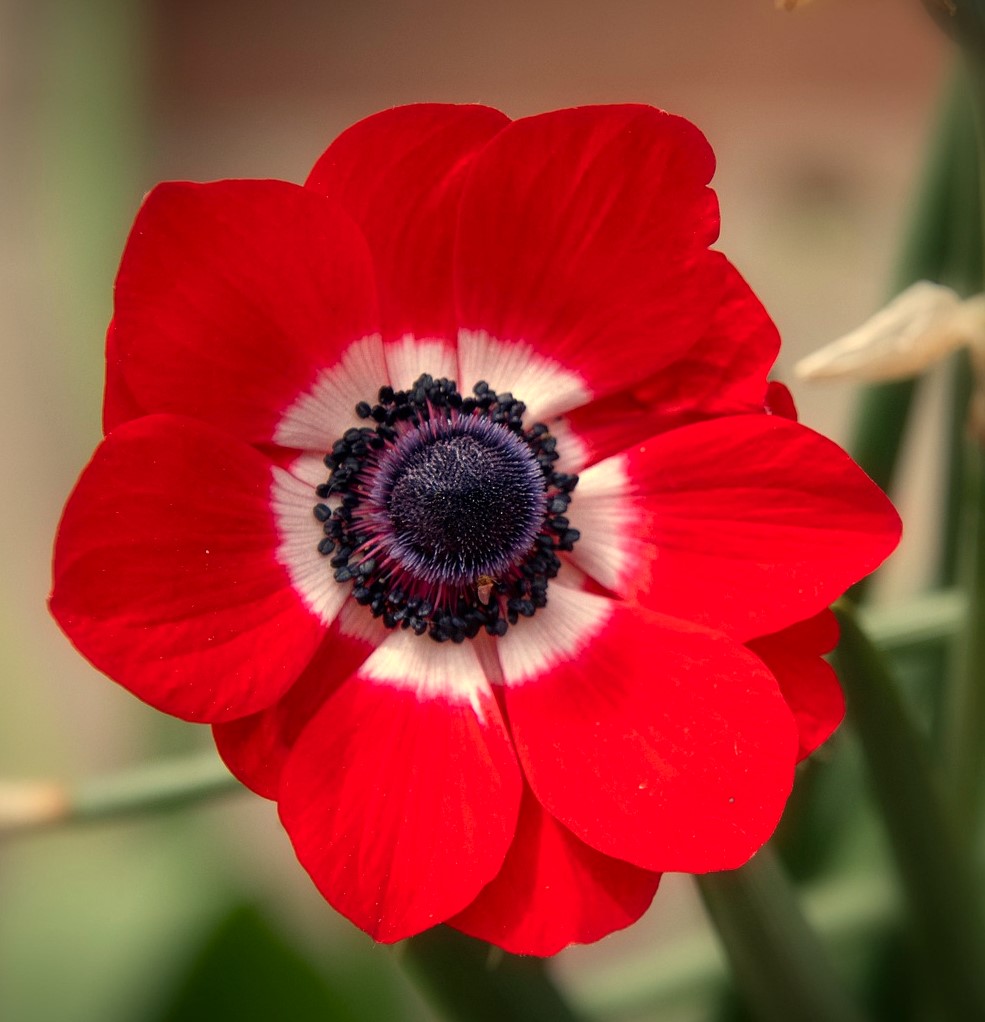
The Grecian windflower, Anemone blanda, spreads across shady areas of Greece, Turkey, and the Middle East. Its daisy-like blooms- blue-purple, pink and white with yellow anthers- open like small shining stars in early spring, drawing in bees and butterflies to their gentle radiance. Its leaves are finely divided and fern-like, softening the ground beneath it.
In the northern and Eastern regions of Greece, Anemone ranunculoides, the buttercup anemone, glows with yellow petals and yellow-green anthers, brightening rocky slopes and forest clearings nearby. Anemone nemorosa, the wood anemone, unfurls white flowers with long filaments and golden anthers, thriving in moist forest openings and subalpine meadows, where light filters softly through the trees.
The name ‘Anemone’- wind-flower, binds these plants to the Anemoi, the wind deities of Greek mythology. The winds were depicted as gusts, breezes, or winged gods, each aligned with a cardinal direction: Boreas, the cold north wind; Zephyrus, the gentle west wind of spring; Notus, the Southern bringer of late summer storms, and Eurus, the restless southeast wind.

The ancient Greeks believed that when a breeze touched an anemone, the flower would immediately open- its delicate petals released by the breath of the gods. And then there is the story of Adonis, when the mortal beloved of Aphrodite was struck by a wild boar, he died in her arms. As her tears mingled with his blood upon the Earth, the first anemone blossomed-a fragile tribute to love, loss and the beauty that can rise from sorrow.
As spring unfolds across Crete and the wider Mediterranean, these flowers remind us of the ongoing vitality of the natural world. Each bloom carries its own lineage; some rooted in myth, some in migration, and others in the quiet resilience of plants that thrive in dry stony soil or roadside dust. Together they form a living tapestry, woven from colour, scent, memory, and the ancient breath of the winds.
To walk among them is to witness the Earth’s continued act of renewal. The buttercups glowing like luminous sunlight, the mallows softening the edges of pathways, the heron’s bill lifting its violet face towards the sky- each offers a moment of wonder, an invitation to pause and observe the world more closely. Here, in these simple encounters, we are reminded that beauty is not only found in rare species or mythical origins, but also in the everyday plants that we see in our daily lives.
 Earthy Spirit