
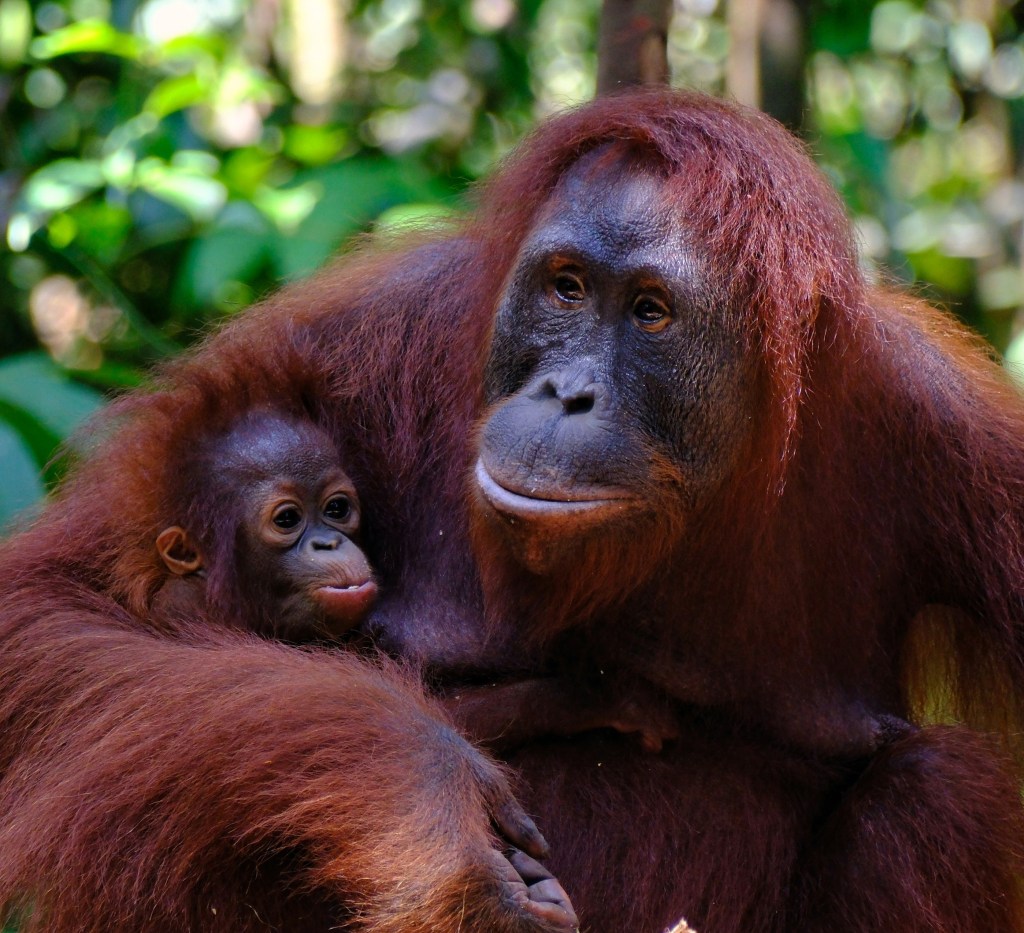
The Sumatran orangutan lives high in the montane rainforests of Sumatra, a large island in western Indonesia. These arboreal apes spend nearly their entire lives among the trees, moving with remarkable grace using long arms and flexible hands to swing through the branches. Their flowing reddish‑orange hair blends with tree bark, leaves, and mosses, offering a natural camouflage. Compared with the Bornean orangutan, this species has a slighter build, a more elongated face, and a more social nature, often gathering in groups to feed. Their diet centres on fruits and insects especially figs and jackfruits, using twigs as tools to extract seeds, ants, termites, and even honey. As they travel through the forest, they disperse seeds, playing a vital role in regenerating the rainforest and supporting the growth of new seedlings.
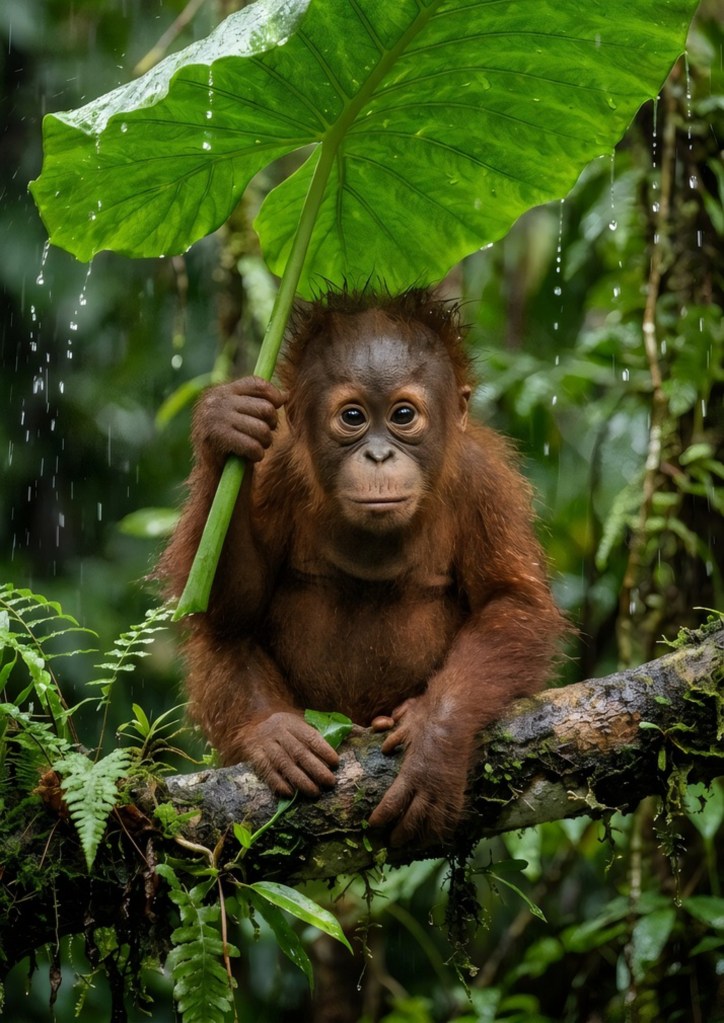
All three orangutan species—Bornean, Tapanuli, and Sumatran are listed as critically endangered on the IUCN Red List. Sumatran orangutans continue to decline due to extensive habitat loss driven by residential and commercial development, mining and quarrying, agriculture and aquaculture, road and railway construction, natural fires, illegal pet trade, logging, wood harvesting, hunting, and trapping.
The greatest threat comes from the rapid expansion of large‑scale palm oil plantations across Borneo and Sumatra. Palm oil, a low‑cost oil derived from the fruit of the African oil palm, is used in an astonishing range of everyday products—biscuits, cakes, ready meals, noodles, cosmetics, lotions, shampoos, toothpaste, detergents, and even diesel fuel. Despite rising prices, global demand remains high. Since 1999, an estimated 100,000 orangutans have been killed in Borneo alone, and around 80% of their habitat has been destroyed. The clearing of rainforests for plantations often involves logging and burning, wiping out the food sources and shelter orangutans depend on. Today, between 1,000 and 5,000 orangutans are still killed each year due to palm oil development. So before reaching for another product from the supermarket, remember it might be contributing to the decline of these precious rainforest apes, with whom we share 97% of our DNA.
 Earthy Spirit