
In the warm tranquil tropical forests, savannahs, and brushlands of Africa and Asia. These small, armoured mammals resemble anteaters, its body cloaked in overlapping keratin scales, the same protein in our nails, hair and skin. By night, it wanders softly, guided by scent, their long, sticky, worm-like tongues stretch to nearly one-third of their body length, reaching deep into ant nests and termite mounds, flicking their tongues rapidly to gather insects with remarkable ease.
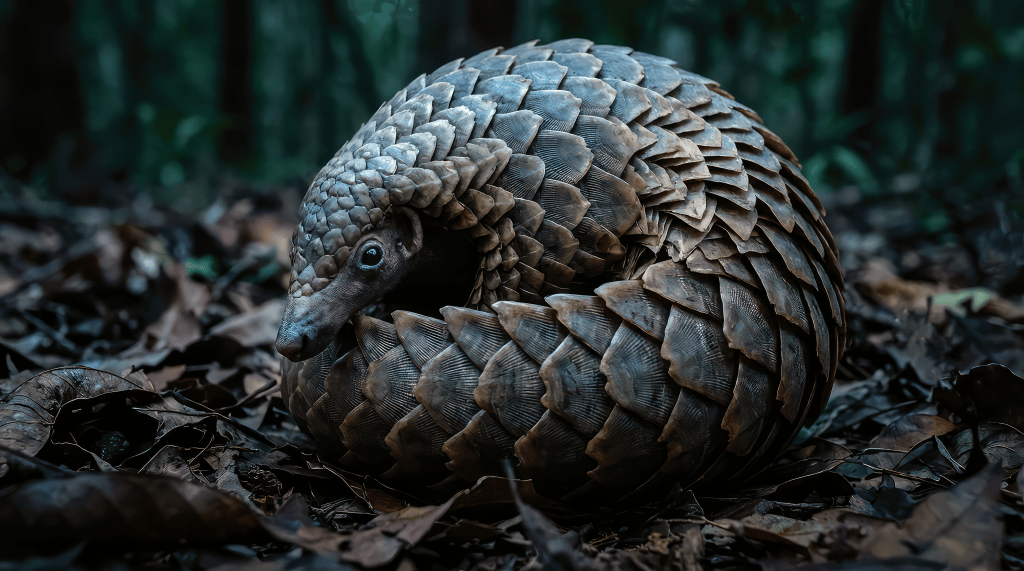
With powerful claws, a Pangolin can dig an 8-foot burrow in minutes, sealing itself inside to rest throughout the day. As it digs, it turns the soil, aerating and enriching it, a humble gardener of the ecosystem it inhabits. After birth, their young cling tightly to their mother’s tail, unable yet to walk; they rely entirely on her protection. Their family name, ‘Manes’, meaning spirit, echoes the ancient Greek and Roman deities associated with the souls of deceased loved ones. Yet these shy, gentle creatures are slipping away; all eight species are declining due to habitat loss or are hunted for their meat and scales, their lives traded in markets where tens of thousands are killed each year; in parts of Africa, their meat sells for far more than their scales.

