The mother of the mountain peaks, flanked by her two lions, was one of the most revered Minoan goddesses. She appears on seal rings and clay figurines as a powerful guardian of peaks and wild places.

Her lineage stretches beyond Crete; for she is closely linked to Cybele, the great Anatolian mother goddess worshipped since Neolithic times at Catalhoyuk in present-day Turkey. There, around 6,000 BC, she was portrayed as a full-bodied, birthing deity seated between two felines.
In Greek myth, she becomes Rheia-Cybele, a name believed to echo the Kybele mountains. As a queen-mother of the gods, she is remembered as a nature deity who rides a chariot drawn by two swift lions, or sits enthroned wearing a turreted crown and a robe woven of dark leaves, her lions standing guard at either side. Her orgiastic attendants-dancers, armed with shields and spears, served to her in frenzied devotion. She is the goddess of mountain peaks, wild animals, hawks, and the restless mountain winds. Among her sacred emblems is the silver fir, a mountain-dwelling conifer whose branches were carried by priests and priestesses during her rites.
“Cybele- Rhea, who got her name from the Kybela mountains, for she is a mountain goddess, which is why she rides in a chariot drawn by lions.” Suidas s.v. Kybele C10th A.D.
Fur trees were decorated during her orgiastic festivals, lifted high like towering cliffs, honouring the wild, untamed power of the Mountain Mother.
The silver fir carries its own mythic story. Attis, a youthful god of vegetation and fertility, was Cybele’s beloved- a radiant youth who vowed eternal fidelity. But when he betrayed her with a river-nymph, Cybele’s grief and fury bewitched him. Driven to madness, Attis castrated himself beneath a pine, and in his death ecstasy was transformed into a silver fir tree. Its cones were said to represent his severed parts, and the myth became a symbol of rebirth, sacrifice, and the eternal cycles of nature- the dying and rising of vegetation, the pulse of the seasons, the renewal of life.
The Minoans, with their deep reverence for fertility, nature, and the earth, saw trees as a living connection between heaven and earth. Tree cults appeared in Minoan art as early as the Bronze Age, depicted on jewellery, frescos, ceramics, seal stones, and rings. This sacred tree might have been an olive, fig, or palm tree, each one a carrier of divine presence.
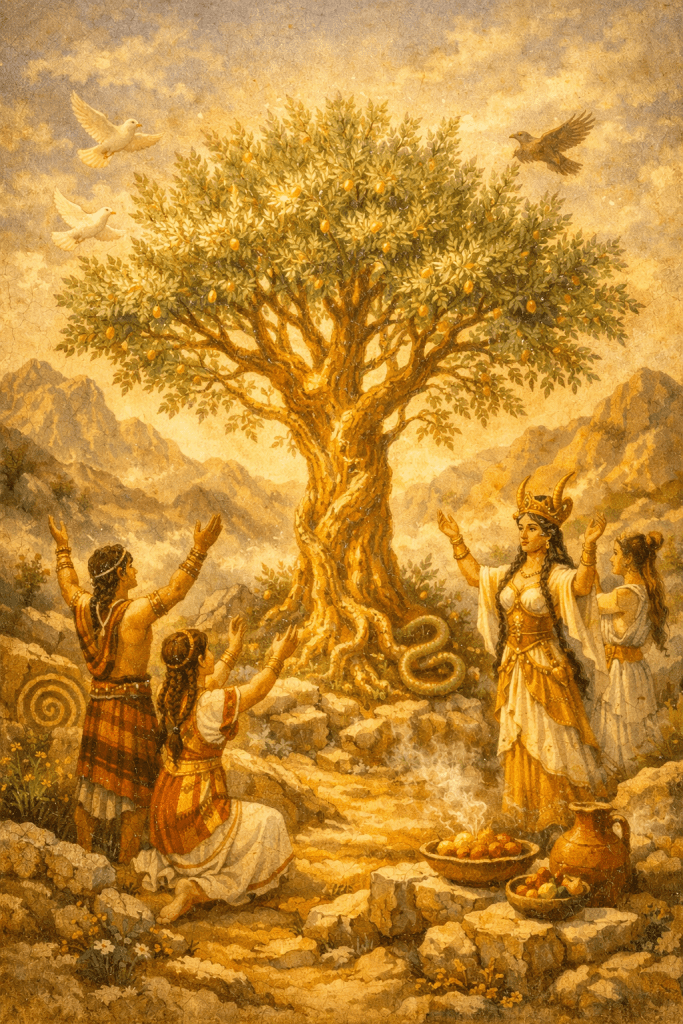
On the gold Vapheio ring, a devotee is shown pulling downwards on a tree heavy with fruit, offering it to a goddess beside him who appears to swirl in an ecstatic, almost orgiastic frenzy. Perhaps she has eaten a sacred fruit that compels her to dance, or perhaps the ritual itself draws her into union with the divine spirit dwelling within the tree.
In ‘Caught in a web of a living world; tree-human interaction in Minoan Crete’, Jo Day suggests that archaeologists remain uncertain whether these trees represent specific deities. Instead, the tree itself may have been the sacred presence, a nature being with whom humans communicated. Trees offer shelter, food, medicine, and wood; they also offer spiritual nourishment through their shimmering leaves, bird song, flickering light, and the sense of presence they hold. Pulling on trees or rocks may have been part of trance-inducing rites-states reached through breath, rhythm, chanting, meditation, or drumming-allowing worshipers to slip into communion with the living world around them.
The Minoan dove goddess
The Minoan dove goddess embodies the celestial realm-a deity of heaven, air and divine presence. She appears on clay figurines, pottery, and frescos, including a terracotta goddess figure from the Karphi sanctuary (1200-1100) with arms outstretched and wearing a crown of birds.
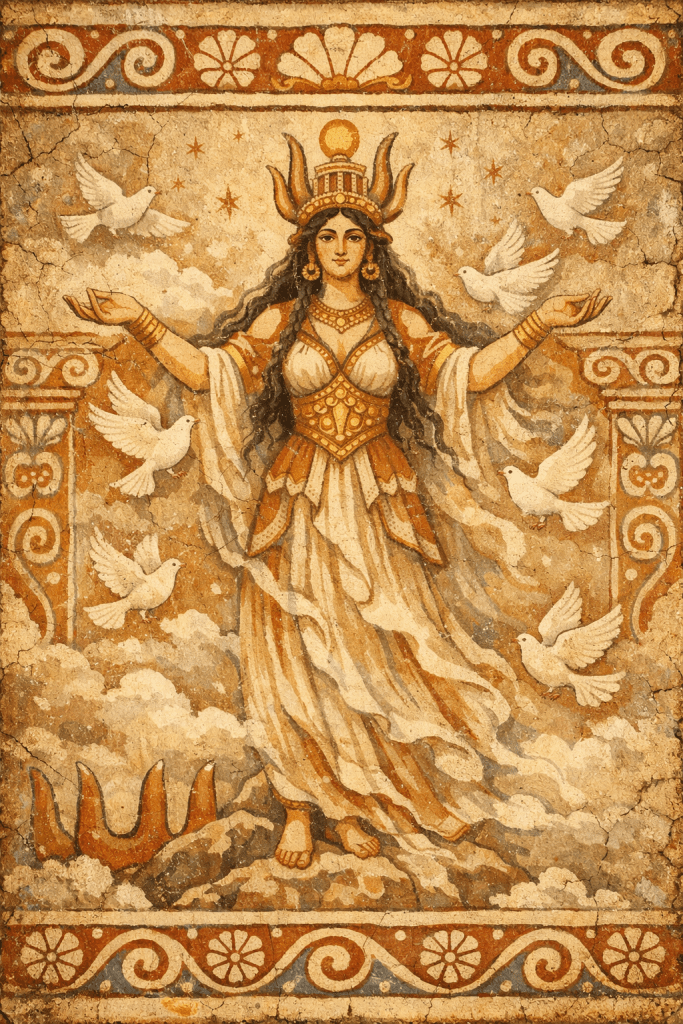
She may have been a sky-goddess connected to tree cults or shrine worship, in her dove form, linking her to the natural world.
She is also entwined with the snake goddess, who holds a serpent in each hand. Snakes represent the underworld and the Earth; doves represent the heavens. Together they form a symbolic balance-earth and sky, below and above, body and spirit.
The dove goddess also shares threads with Aphrodite, whose sacred bird was also the dove. One myth tells of Peristera, a nymph who unintentionally caused Aphrodite to lose a flower-gathering contest with Eros. In anger, the goddess transformed her into a dove, who came to love the creature so deeply that it became her sacred animal, even pulled her chariot.
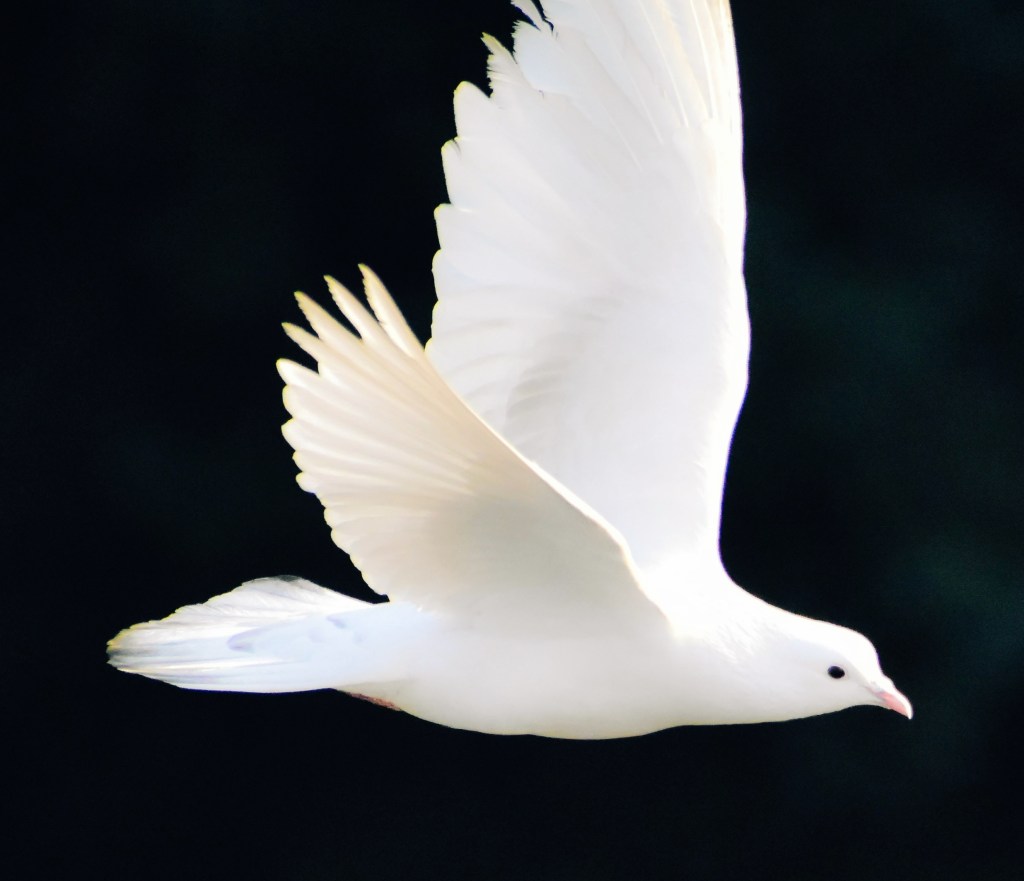
During the annual Aphrodisia festival, the blood of a sacrificed dove purified the temple and altar, which took place in late summer. The dove’s gentle nature- its soft cooing, its devotion to its mate-came to symbolise peace, love, affection and harmony.
Aphrodite’s dove also echoes the ‘bird of Ishtar’, the Mesopotamian goddess of love, sexuality, and war. A cylinder seal from 2000-1600BC (Buffalo University collection) depicts a bird-like goddess with wings, taloned feet, and a towering headdress. She stands with clasped hands, worshippers above her and underworld creatures below, a feature bridging heaven and the deep, much like the Minoan dove goddess herself.
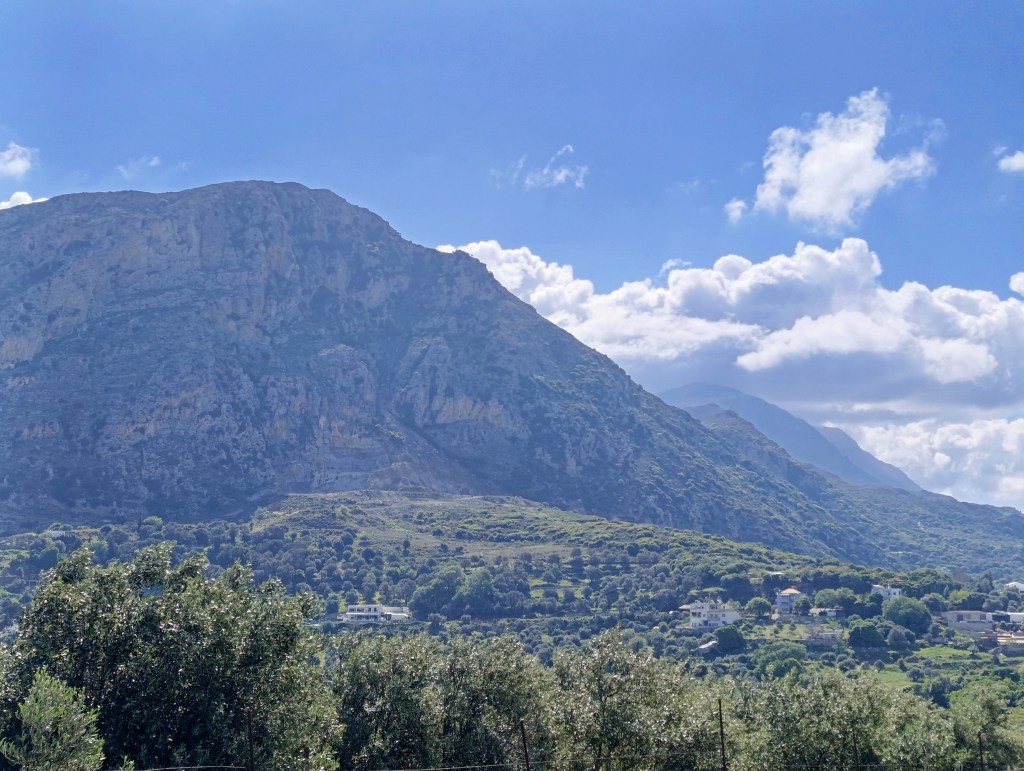
In the end, these myths, mountains, and sacred beings remind us that the ancient world was never separate from the land — it was shaped, breathed, and listened to. Here in Vorizi, where silver firs catch the light, and doves drift across the high Cretan sky, the old stories feel alive beneath every stone. The Mountain Mother, the Dove Goddess, and the whispering trees still seem to move through the landscape, inviting us to remember a time when nature was honoured as kin, and the divine was understood as something rooted, breathing, and profoundly near. To walk these slopes is to step into that memory — to feel the quiet truth that the sacred is not lost, only waiting for us to notice it again.
 Earthy Spirit
Leave a comment